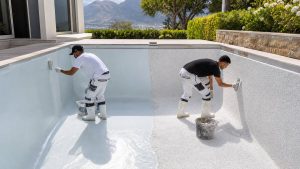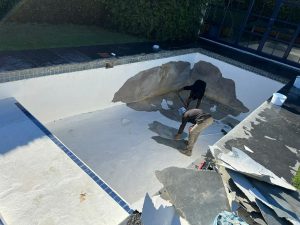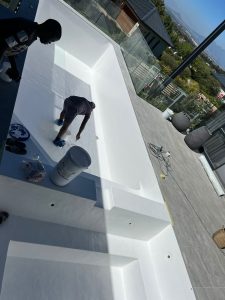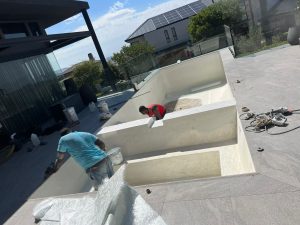
Last March we relined a 32-year-old kidney-shape in Constantia where the original fibreglass had been sitting under shade cloth and oak canopy since 1994. Thirty-two years. The owner had kept the chemistry tight, ran a cover from April to September every year, and the only reason we were there at all was that her grandkids had started complaining about a rough patch on the steps. The gelcoat on the floor still had colour. The shell underneath was sound. We could have polished it and given her another five.
That’s the top of the range. The bottom of the range is a fibreglass relining I did in Strand in 2019 that needed redoing in 2024. Same material. Same applicator team. Wildly different lifespan. Why?
That’s what this article is about. If someone tells you a fibreglass pool lining “lasts 20 years” with a straight face and no qualifications, they’re either lying or they haven’t been doing the work long enough to know better. The honest answer is 15 to 25 years, sometimes much more, occasionally less, and the variation isn’t random.
The 15-to-25-year range, broken down
Here’s what actually drives the lifespan of a fibreglass lining in Cape Town conditions:
- Quality of the original lamination. How many layers of glass mat, what weight, how well the resin was rolled out to eliminate air bubbles, how thoroughly the gelcoat was applied. This is probably 40% of the variation.
- Gelcoat thickness. A proper pool gelcoat (we use ISO-NPG marine-grade poolcoat, typically supplied by Allied Fibreglass or NCS Resins) should be sprayed at 500 to 700 microns. Cheaper jobs come in at 300 microns. That difference alone is five to eight years off the back end.
- Sun exposure. A west-facing pool in Durbanville with no shade gets hammered by UV from 11am to 7pm in summer. A south-facing pool in Newlands under oak shade gets a fraction of that dose.
- Water chemistry discipline. Aggressive chlorine, pH below 7.0, calcium hardness drifting outside 200-400 ppm — all of these eat gelcoat from the inside out.
- How heavily the pool gets used. A holiday-let pool in Camps Bay that sees 15 different guests a year is dealing with sunscreen, body oils, varied chemistry, and constant agitation. A private family pool in Plumstead sees a tenth of that.
- Salt air. Coastal homes within a few hundred metres of the sea get airborne salt deposition on the gelcoat surface. It dulls and chalks the finish faster.
Stack three or four of those factors in the wrong direction and you’ve got a 12-year lining. Stack them in the right direction and 25 is realistic. That gap in longevity is exactly why so many Cape Town owners weigh up fibreglass against a fresh marbelite surface before committing to either.
What Cape Town sun actually does to gelcoat
We’re at 33 degrees south, which sounds like nothing until you check the actual UV index numbers. Cape Town hits UV 11 to 13 routinely between November and February. That’s “extreme” on the WHO scale. Brisbane and Cairns are the only major comparable cities in the world.
What that means for your lining: the polyester resins and pigments in a gelcoat are UV-sensitive. Over years of exposure, the surface oxidises. The colour starts to chalk. Dark colours (blacks, deep blues, charcoals) show it first because the contrast is sharper. Light colours (pale blue, white, light grey) hide it longer but suffer the same chemistry underneath.
A pool cover used between 11am and 4pm during the summer peak isn’t just a water-saving tool. It’s the single biggest thing you can do to extend the life of your gelcoat. I’d bet a properly covered pool in Stellenbosch lasts 30% longer than the same pool, same applicator, uncovered.
Salt air on the Atlantic Seaboard
If your pool is in Sea Point, Bantry Bay, Camps Bay, Llandudno, or Hout Bay near the beach, you’re in a different micro-environment from the rest of the city. The constant southwesterly wind in summer carries microscopic salt particles inland. They settle on every horizontal surface, including your pool surround and the waterline of your lining.
The lining itself doesn’t suffer from chloride attack the way metal fittings do. But the salt deposit acts as a kind of slow abrasive on the gelcoat surface, especially at the waterline where wet-dry cycling concentrates it. A coastal pool waterline tends to chalk first.
The fix isn’t complicated. Wipe the waterline monthly with a mild cleaner (we use a diluted Pool Wax product), keep a cover on it, and re-polish the gelcoat every three to four years instead of every five to seven. Add maybe R3,500 a year to your maintenance budget if you’re within 500 m of the beach. That’s the salt-air tax.
What “end of life” actually looks like
Most owners think their lining is finished long before it actually is, and a few owners think theirs is fine when it’s leaking quietly into the garden. Here’s how to read the signs honestly.
Cosmetic ageing (not end of life): colour fading, slight chalking on the steps, a dull patch in the section that gets direct afternoon sun. This is normal at year 8 to 12. It can be addressed with an acid wash and a wax polish, which buys you another 4 to 6 years easily. Cost: R6,000 to R12,000 depending on pool size.
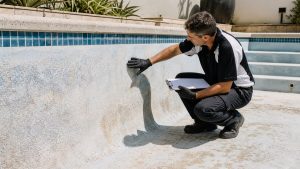
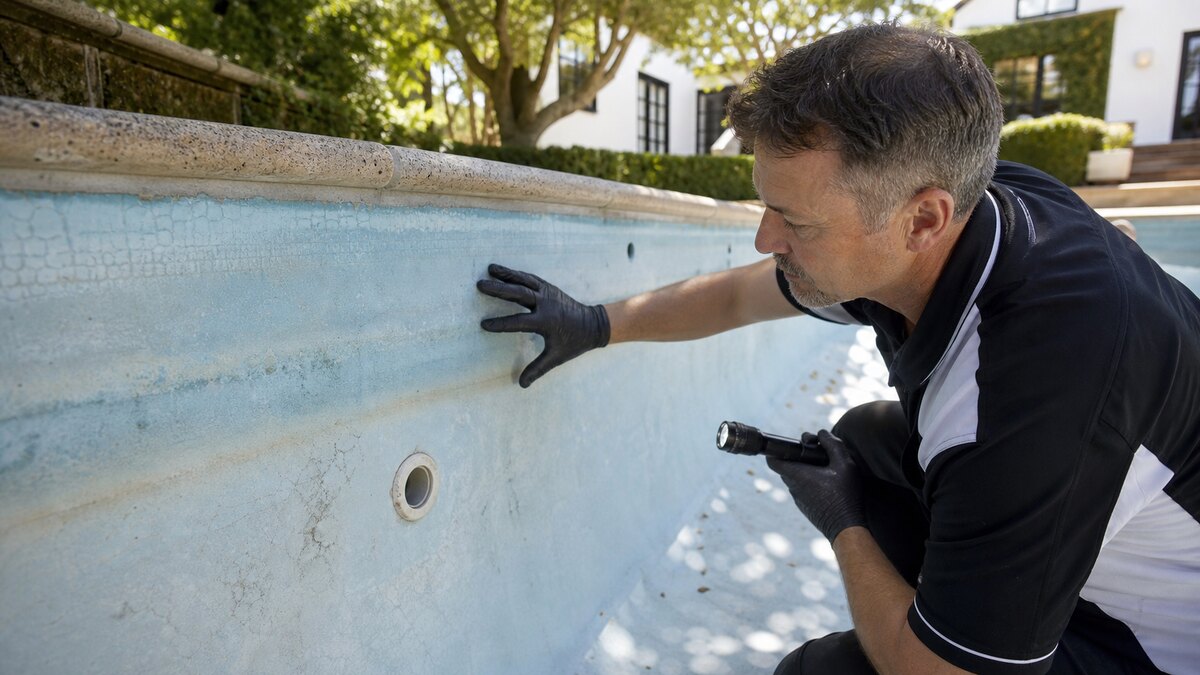
Surface degradation (mid-life): noticeable roughness underfoot, particularly on the floor and steps. Visible spider-cracking in the gelcoat that hasn’t reached the laminate underneath. Mild staining that won’t wash out. This is year 12 to 18 for most pools. You can still extend it — a gelcoat reapplication (basically spraying a fresh poolcoat layer over the existing one) costs around R25,000 to R40,000 and gives you another 6 to 10 years.
Genuine end of life: osmotic blistering (small fluid-filled bumps under the gelcoat), delamination (sections where the gelcoat is lifting off the glass mat), structural cracks that show daylight, or a measurable water loss that isn’t from evaporation. At this point a fresh laminate over the existing shell is the right call. That’s a full fibreglass pool lining job at R55,000 to R110,000 depending on size and complexity.
The mistake I see most often is owners panicking at year 10 because the pool “looks tired” and spending R70,000 on a full reline when an R8,000 acid wash and polish would have given them another half-decade. Get a second opinion before you commit to a major job.
How warranties actually work in South Africa
The South African standard is a 5-year workmanship guarantee from the applicator. That covers delamination, failure of the lamination bond, and gelcoat defects attributable to the install. It does not cover damage from chemistry abuse, structural movement in the shell, or impact damage.
The gelcoat manufacturer (NCS, Scott Bader, or the local equivalent) usually carries a separate warranty on the gelcoat material itself, typically 7 to 10 years against premature chalking and colour failure when applied per spec. This is the warranty that’s almost impossible to claim against in practice, because the manufacturer will always argue the application was outside their spec.
What this means for you: pick a contractor whose 5-year workmanship guarantee is worth something, which means picking a contractor who’s been in business for more than five years and can show you jobs from year 6, 8, 10 that are still sound. Anyone offering 10-year workmanship guarantees on fibreglass is either a very large company underwriting the risk themselves, or they’re hoping you won’t read the small print.
What fibreglass doesn’t fix
This is the conversation I have weekly. Owners assume a fibreglass relining is going to solve everything. It isn’t.
A fibreglass lining will not fix a leaking plumbing system. If your pool is losing water through a cracked skimmer pipe, a perished return line, or a failed main drain seal, putting a fresh laminate over the shell does nothing. The water still escapes through the pipes that come into the shell. We always pressure-test the plumbing before quoting a relining job — if your contractor doesn’t, ask why not.
It will not fix a structurally failing shell. If the concrete or gunite shell is moving (subsidence, expansive clay, tree root pressure from a nearby oak), fibreglass laminated over the inside will crack along the same lines the shell does. We’ve had to refuse jobs in Tokai and Diep River where the shell was so far gone that the right answer was to demolish and rebuild. A reline would have been money set on fire.
It will not fix bad coping, broken paving, or worn-out filtration equipment. None of those things are inside the pool. Reline the lining when the lining needs it. Address the surround, the pump, and the plumbing on their own timeline.
Extending the life of the lining you already have
If you’ve got a fibreglass pool that’s somewhere in the middle of its life and you want to get the most out of it, here’s what actually works (in order of impact):
- Run a cover during summer peak. 11am to 4pm in December, January, February. This single habit can add five years to your lining. A solar cover or solid PVC cover both work for UV; solid is better.
- Keep the chemistry tight. pH between 7.2 and 7.6. Free chlorine 1.0 to 3.0 ppm. Total alkalinity 80 to 120 ppm. Calcium hardness 200 to 400 ppm. Test weekly in summer, every two weeks in winter. A R450 digital tester pays for itself in a season.
- Don’t shock with granular chlorine. Pre-dissolve in a bucket and pour around the perimeter. Dropping granules directly on the floor bleaches the gelcoat in patches that never recover. I see this damage in maybe one in five pools I assess.
- Wax the gelcoat every three years. A proper marine-grade wax (the stuff used on boat hulls) lays down a UV-resistant sacrificial layer. About R1,800 for the product, half a day’s work to apply properly. Some pool services do it. Most don’t, unless you ask.
- Never let the pool sit empty. Even for a week. Empty fibreglass pools can float off the shell if the water table rises. Empty fibreglass pools in summer can cook in the sun and craze the gelcoat. If you’re doing repairs that need the pool drained, get a contractor who has a plan for refilling within 48 hours.
When to actually start planning the next reline
If your lining is past year 12 and you’re starting to see the cosmetic ageing signs, this is the right moment to start budgeting. Not panicking. Budgeting. A fresh acid wash and polish at year 13 might give you to year 19 or 20 before you need the full reline. That timeline lets you save toward it properly instead of being caught out by a sudden leak in year 15.
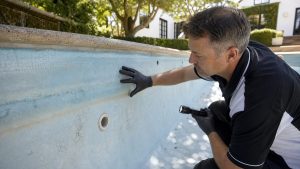
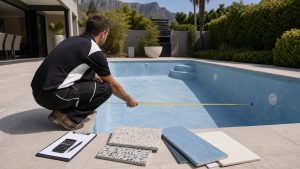
If your lining is past year 18 and you’re seeing surface roughness, mild blistering, or any unexplained water loss, get someone out to assess it before next summer. We do a full inspection (visual, dye-test for cracks, plumbing pressure test) for about R1,200 and write you a written report so you know what you’re dealing with.
If you’d like a straight assessment of where your existing lining sits on the lifespan curve — without a sales pitch for a job you might not need yet — request a site visit through the quote form or phone +27 62 635 8990. I’d rather tell you your pool has six more good years in it than sell you a reline you don’t need.