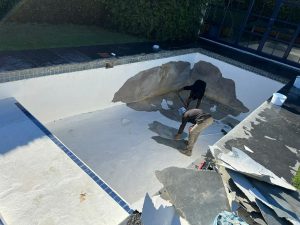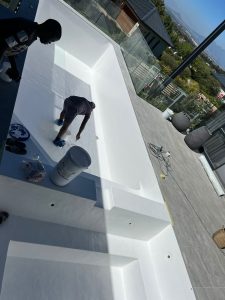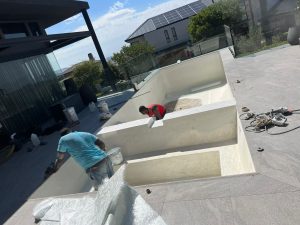
Many older Cape Town pools are built from concrete or finished in marbelite — and after years of sun, salt air and shifting clay soils, they start to leak, crack, stain and feel rough underfoot. The good news: you usually don’t need to rebuild. Converting your concrete or marbelite pool to a fibreglass lining is a faster, more affordable way to get a brand-new, watertight pool that lasts.
This guide explains why so many Cape Town homeowners are making the switch, what the process involves, and what it costs.
Why convert your pool to fibreglass?
Marbelite and bare concrete are porous — water seeps in, algae takes hold, and the surface gradually breaks down. Fibreglass solves the root problems:
- Stops leaks — a fibreglass conversion creates one seamless, non-porous shell with no cracks or joints for water to escape.
- Resists cracking — fibreglass flexes with Cape Town’s clay-soil ground movement instead of cracking like rigid marbelite.
- Far less maintenance — algae and dirt can’t penetrate the surface, so you scrub less and use fewer chemicals.
- Smooth and comfortable — no more rough marbelite grazing feet and costumes.
- Holds its colour — a quality gelcoat keeps its finish for years.
For a deeper side-by-side, see our guide on fibreglass vs marbelite.
Concrete/marbelite vs fibreglass at a glance
- Marbelite: classic plaster look, lower upfront cost, but porous and typically needs redoing every 7–10 years.
- Concrete (bare/painted): strong but prone to cracking and leaks, high maintenance.
- Fibreglass: non-porous, crack-resistant, low-maintenance, 15+ year lifespan.
The conversion process, step by step
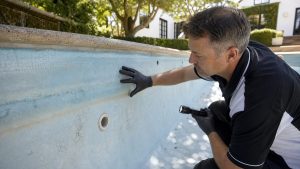
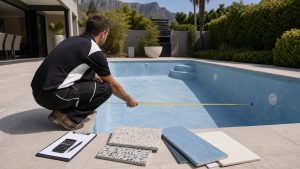
- Inspection & quote. We assess your pool’s condition, cracks and structure.
- Drain & preparation. The pool is drained and the old surface ground back.
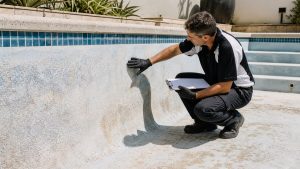
- Crack & hollow-spot repair. Cracks are stitched and filled and drummy areas reinforced — fixing the leak at its source.
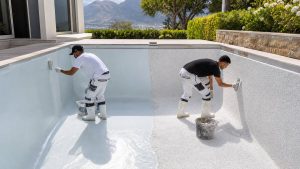
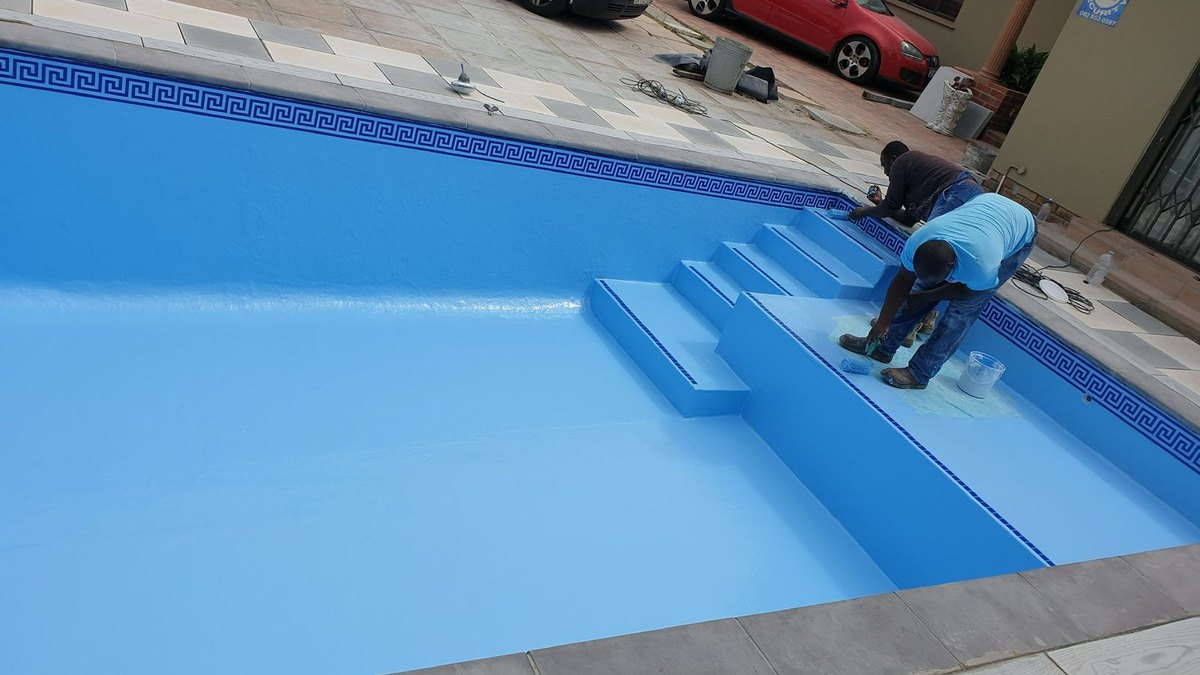
- Fibreglass application. Layers of fibreglass matting and resin form a strong, seamless, waterproof shell over the old pool.
- Gelcoat colour finish. A smooth, UV-stable colour coat is applied.
- Cure, refill & balance. Once cured, the pool is refilled and the water balanced, ready to swim.
Most residential conversions take a few days to a week, depending on size and condition.
How long does it take and when should you do it?
Late spring to early autumn is ideal in Cape Town — surfaces must be dry to cure, and you’ll be swim-ready for summer. Don’t wait for a leak to drain your pool over winter.
What does a fibreglass conversion cost in Cape Town?
As a rough 2026 guide, fibreglass relining/conversion runs from around R600 to R850+ per square metre, depending on the pool’s size, condition and how much crack repair is needed. For a full breakdown, see what it costs to resurface a pool in Cape Town. The only accurate figure is a free on-site quote.
Is a conversion right for your pool?
Conversion is ideal if your pool is structurally sound but leaking, porous, cracked or tired. If the shell has failed completely, a more extensive rebuild may be needed — we’ll tell you honestly which you need. Either way, fibreglass adds 15+ years of pool life.
How fibreglass holds up in Cape Town conditions
Cape Town is tough on pools: intense UV, salty coastal air on the Atlantic and False Bay sides, and clay soils that move with our wet winters and dry summers. A quality fibreglass shell is UV-stable, unaffected by salt, and flexible enough to ride out ground movement — which is exactly why conversions outlast a patched marbelite pool here.
Does converting to fibreglass add value to your home?
A leaking, stained or rough pool is a liability when you sell; a smart buyer sees a costly repair. A freshly converted, watertight, low-maintenance fibreglass pool is a genuine selling point — it photographs well, swims beautifully, and reassures buyers there’s no hidden pool problem to inherit.
Frequently asked questions
Is a fibreglass pool surface slippery?
The gelcoat is smooth but not dangerously slippery; steps and tanning ledges can be finished with a non-slip texture for safety.
Can I change my pool’s colour during a conversion?
Yes — a conversion is the perfect time to choose a new gelcoat colour, from classic blues to modern darker finishes.
Can you fibreglass over a marbelite or concrete pool?
Yes — after proper preparation and crack repair, a seamless fibreglass shell is applied over the existing pool. It’s one of the most common pool renovations in Cape Town.
Will converting to fibreglass stop my pool leaking?
In almost all cases, yes. Fibreglass is a continuous, non-porous shell with no joints, so it seals leaks from cracks and porous surfaces.
How long does a fibreglass conversion last?
A correctly applied fibreglass lining typically lasts 15 years or more.
How much does it cost?
Roughly R600–R850+ per m² in 2026, depending on pool size and condition. Get a free quote for an accurate price.
Ready to convert your pool?
If your pool is tired, leaking or rough underfoot, a fibreglass conversion is usually the smartest fix. Get a free on-site quote and we’ll tell you honestly what your pool needs.
You can also read more about our pool services or the fibreglass pool lining we do in Durbanville and the surrounding northern suburbs.