Dark spots clinging to your pool walls, or stubborn stains that won’t brush away, are a common Cape Town pool problem — especially on older marbelite. But “black spots” aren’t all the same: some are black algae, others are mineral or organic stains, and the fix is different for each. Here’s how to identify and remove them.
Black algae vs stains: how to tell the difference
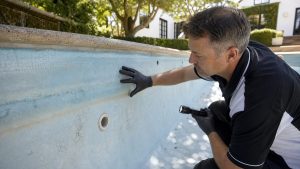
- Black algae — raised, dark blue-green/black spots with a protective layer, often in shady, rough or porous areas. It has “roots” that dig into the surface, so it brushes but comes back.
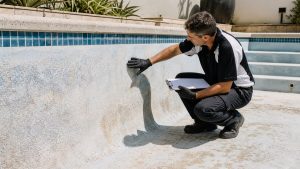
- Metal stains — flat brown, grey, green or blackish discolouration from iron, copper or manganese in the water (often from fill water or corroded fittings).
- Organic stains — brown/green marks left by leaves, berries or algae die-off.
A quick test: hold a chlorine tablet on the spot for 30 seconds. If it lightens, it’s organic/algae; if not, it’s likely a metal stain.
What causes black algae and stains
- Porous surfaces — old marbelite and bare concrete give algae and minerals somewhere to lodge.
- Low or inconsistent chlorine and poor circulation
- Metals in the water from fill water, borehole water or corroding fittings
- Shady, low-flow areas where algae thrives
How to remove black algae
- Balance the water (pH 7.2–7.6) and ensure good circulation.
- Brush aggressively with a stiff brush (use a soft brush on fibreglass) to break the algae’s protective layer.
- Apply chlorine directly — rub a chlorine tablet on the spots or spot-treat with a strong dose.
- Shock the pool at a high dose and run the filter continuously.
- Brush daily and repeat until the spots are gone.
- Use an algaecide rated for black algae as a follow-up.
How to remove metal and organic stains
- Organic stains: shock and brush; they usually lift with chlorine.
- Metal stains: use a stain remover/sequestrant (ascorbic acid for iron, specific products for copper) and a metal sequestrant to keep metals in solution. Avoid chlorine on metal stains initially — it can set them.
Why porous marbelite is the real culprit
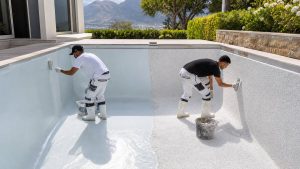
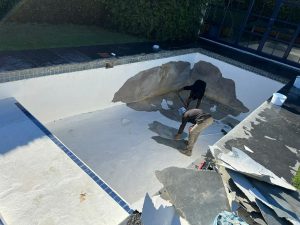
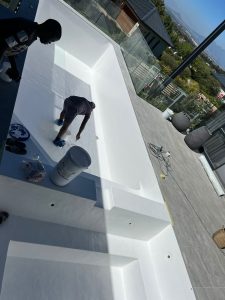
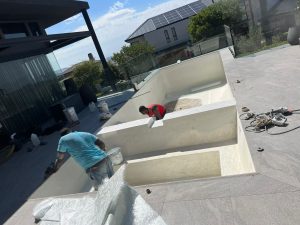
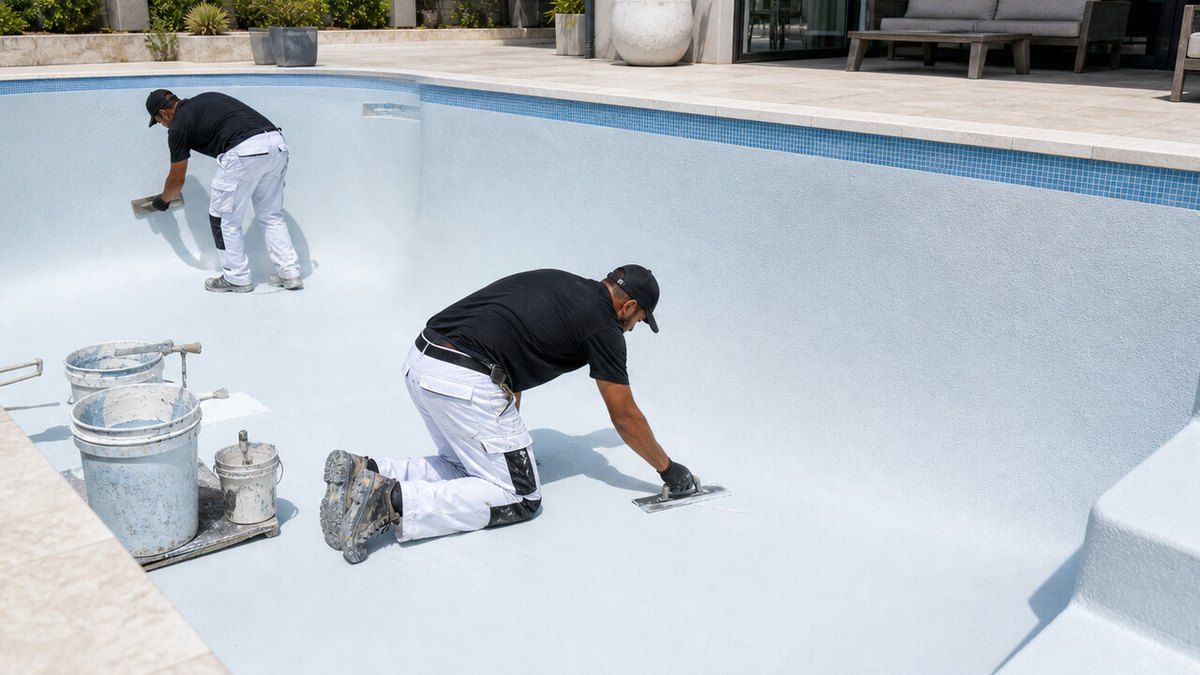
Black algae and stains take hold because porous surfaces give them somewhere to root. A non-porous fibreglass lining leaves nothing for algae or minerals to grip, which is why converted pools stay cleaner with less effort. If your marbelite is rough, stained and constantly spotting, resurfacing may be the lasting fix — see the signs your pool needs resurfacing.
How to prevent black algae and stains
- Keep chlorine and pH balanced year-round (our maintenance calendar helps)
- Brush regularly, especially shady corners and steps
- Use a sequestrant if you fill from borehole or hard water
- Improve circulation and run the filter longer in summer
How long does it take to kill black algae?
Black algae is stubborn because of its protective layer and roots. Expect to brush, spot-treat and shock daily for several days — sometimes up to two weeks for a bad case — before it’s fully gone. Consistency is everything: skip a day of brushing and it recovers.
When stains mean it’s time to resurface
If your marbelite is so porous that algae and stains return no matter what you do, you’ve reached the point of diminishing returns. Resurfacing — ideally a fibreglass lining — gives you a fresh, non-porous surface that simply doesn’t hold algae or stains, and ends the constant battle.
Frequently asked questions
Is black algae dangerous?
Black algae itself isn’t highly toxic, but it shelters bacteria and signals poor sanitation, so it should be removed and the water properly balanced before swimming.
Why does black algae keep coming back?
Because its roots dig into porous surfaces and shaded, low-flow areas. You must break the protective layer by brushing and treat repeatedly; on failing marbelite, resurfacing is often the only permanent fix.
How do I get rid of black algae in my pool?
Balance the water, brush hard to break the algae’s layer, spot-treat with chlorine, shock the pool, run the filter continuously and repeat daily until gone, then use a black-algae algaecide.
Why does my pool keep staining?
Usually a porous surface plus metals or organics in the water. Sequester metals, keep chlorine balanced, and consider resurfacing if the marbelite is failing.
Will fibreglass stop black algae?
A non-porous fibreglass finish gives algae nowhere to root, making black algae and staining far less likely and much easier to clean.
Get a surface that stays clean
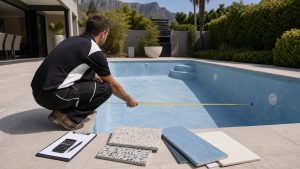
If black algae and stains keep coming back no matter how hard you scrub, a porous surface is usually the reason. Get a free on-site quote and we’ll advise whether resurfacing will end the battle, or browse our pool services.