A concrete swimming pool is a long-term investment, but concrete is naturally porous and will slowly leak or absorb groundwater unless it is properly sealed. In South African conditions, where summer heat, winter rain and hard water all take their toll, effective concrete pool waterproofing is the difference between a shell that lasts decades and one that develops persistent leaks, hollow spots and staining. This guide walks you through the full process from start to finish so you understand what a quality job actually involves.
Why Concrete Pools Need Waterproofing
Poured or gunite concrete forms a strong structure, but it is never fully watertight on its own. Micro-cracks, construction joints and the natural capillaries in the concrete allow water to migrate in both directions. Over time this causes efflorescence, delamination of the internal finish and, in severe cases, structural damage to the shell and surrounding paving. Waterproofing seals the shell so the interior finish can do its job and the water stays where it belongs.
Common Signs Your Pool Needs Attention
- A water level that keeps dropping faster than evaporation explains.
- Damp patches, staining or lifting paving around the pool surround.
- White, chalky efflorescence bleeding through the surface.
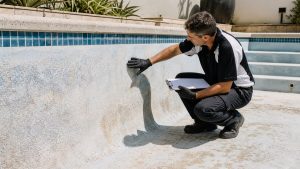
- Blistering, flaking or hollow-sounding areas on the internal finish.
- Cracks that reopen after previous patch repairs.
Step One: Inspection and Surface Preparation
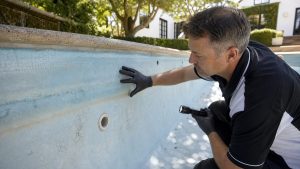
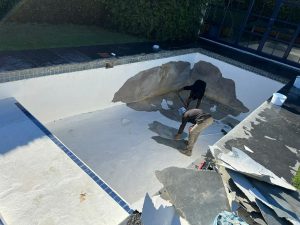
Every successful waterproofing project begins with an honest assessment of the shell. The pool is drained and the existing finish is inspected for cracks, movement joints and areas of debonded plaster. Preparation is the stage that most determines the final result: the surface must be clean, sound and free of loose material. This usually involves pressure cleaning, grinding back failed coatings, cutting out and repairing structural cracks, and rebuilding any spalled concrete back to a stable profile.
Step Two: Choosing the Right Waterproofing Method
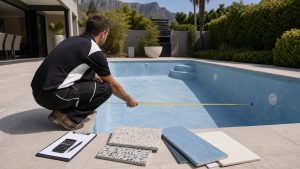
There is no single correct product for every pool. The choice depends on the condition of the shell, the desired finish and your budget. The most common approaches used on South African concrete pools include:
- Cementitious slurry systems that bond directly to the concrete and are ideal beneath a plaster or marbelite finish.
- Flexible membrane coatings that bridge hairline cracks and accommodate minor structural movement.
- Full re-lining, where a new watertight surface is installed over the prepared shell.
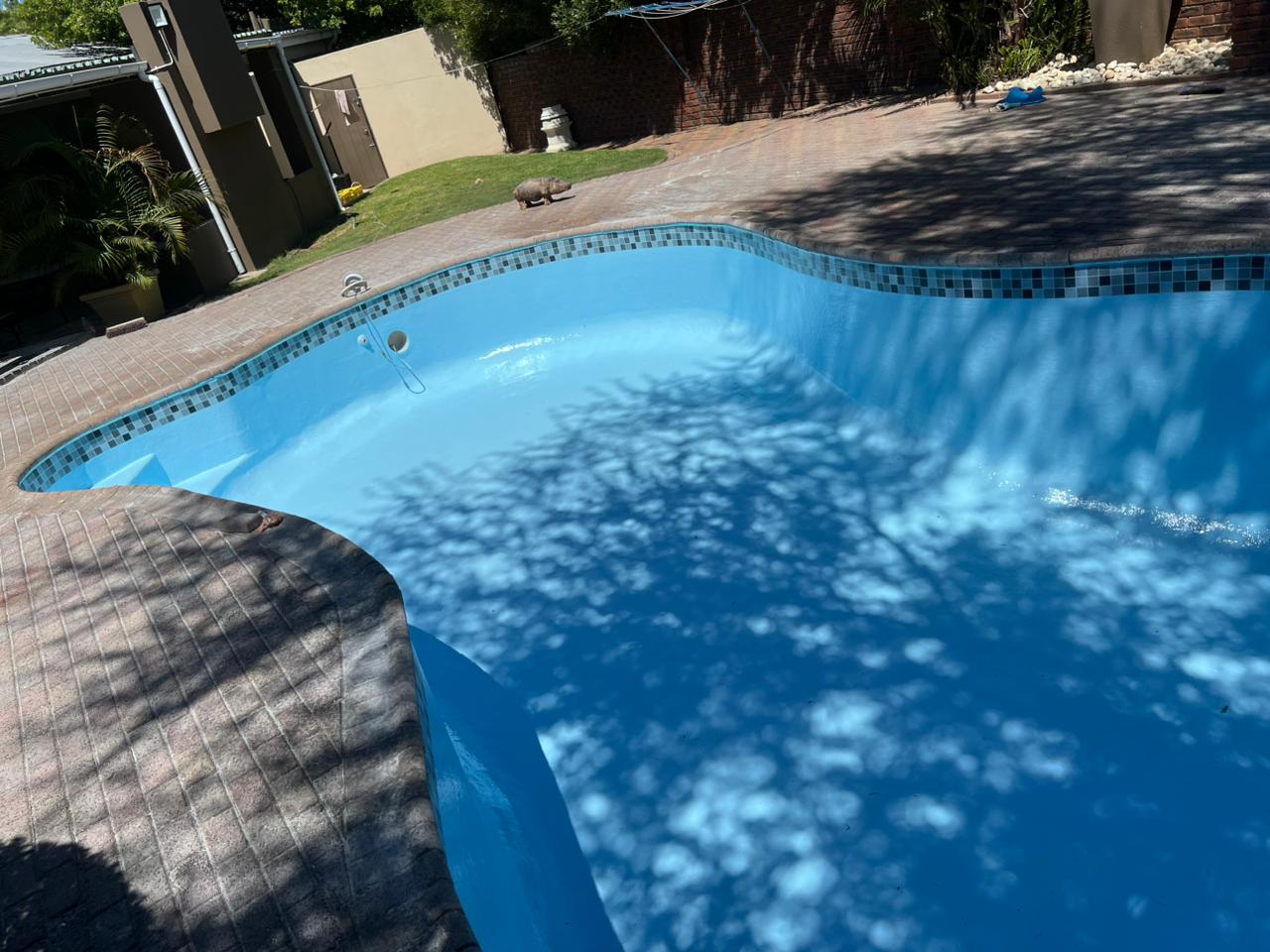
If your finish is tired as well as leaking, it often makes sense to combine waterproofing with a fresh surface. A marbelite resurfacing project restores the classic plastered look, while a fibreglass pool lining adds a seamless, flexible layer that resists cracking particularly well in reactive Cape soils.
Step Three: Application and Building Up the Layers
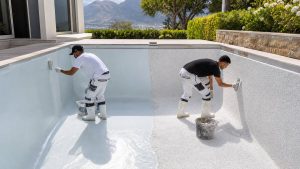
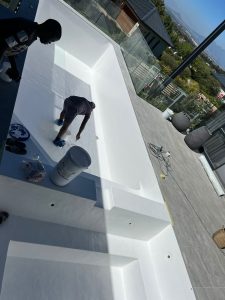
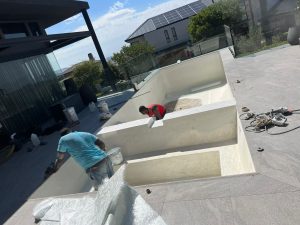
Waterproofing is applied in controlled coats rather than one thick layer. Cementitious systems are brushed or trowelled on and worked into every corner, cove and fitting, with special attention paid to the transitions around lights, returns, skimmers and the main drain, as these penetrations are the most common leak points. Membrane systems are built up to the manufacturer’s specified thickness, allowing each coat to set before the next is applied. Rushing this stage or applying in the wrong weather is the fastest route to failure.
The Importance of Curing
Once the waterproofing and finish are in place, curing cannot be skipped. Filling too soon or leaving new plaster to dry out in direct summer sun leads to shrinkage cracks and a weak surface. A professional installer manages the fill rate and initial water balance carefully so the new finish cures evenly and reaches full strength. Getting the start-up chemistry right in the first few weeks also protects your investment for years to come.
Step Four: Long-Term Care
Even a perfectly waterproofed pool benefits from ongoing maintenance. Keeping water chemistry balanced prevents aggressive water from etching the surface, while attending to small cracks early stops them becoming expensive structural problems. Regular inspection of the surround, coping and expansion joints keeps water out of the shell from the outside as well.
Getting It Done Right
Concrete pool waterproofing rewards patience and proper technique at every stage, from preparation through to curing. If you are unsure which system suits your pool or you are dealing with a stubborn leak, it is worth having the shell assessed by an experienced team rather than guessing. You can explore the full range of renovation options on the Aquatic Pools website, or get in touch for a site assessment to discuss the best approach for your specific pool.