When you install a fibreglass swimming pool in the Western Cape, the shell itself gets most of the attention — but what goes in around it matters just as much. The backfill material packed between the pool shell and the excavated ground is what holds everything in place, manages water movement, and keeps your pool level for decades. For South African conditions, clean crushed gravel (stone) is widely regarded as the best backfill choice, and here is why it beats the alternatives.
What backfill actually does for a fibreglass pool
A fibreglass pool is a one-piece shell dropped into a hole. Unlike a concrete or marbelite pool, it flexes slightly and relies entirely on the surrounding material for structural support. Backfill has three jobs: to carry the load of the shell walls, to allow groundwater to drain away, and to stay stable through wet winters and dry summers. Get it wrong and you risk bulging walls, floated shells, or an out-of-level pool.
Why gravel outperforms sand and soil
Many older installations used river sand or simply backfilled with the excavated site soil. Both cause problems in our climate. Sand shifts and washes out when it gets saturated, and clay-rich Cape soils swell when wet and shrink when dry — constant movement that stresses the shell over time. Crushed gravel avoids these traps because it locks together mechanically and does not hold water against the pool.
- Free drainage: Gravel lets groundwater pass straight through, relieving hydrostatic pressure that can push an empty shell upward.
- Dimensional stability: Stone does not expand, contract, or slump with moisture changes the way clay and sand do.
- Even load transfer: The angular pieces interlock to support the walls uniformly, reducing flex points.
- No compaction settling: Properly placed gravel stays put, so your paving and coping do not crack from later subsidence.
- Reusable and clean: It will not rot, attract pests, or break down over the life of the pool.
Gravel backfill and Western Cape conditions
Cape Town and surrounds see wet, windy winters and long dry summers — a cycle that punishes any backfill prone to moisture movement. In low-lying suburbs and areas with a high winter water table, hydrostatic uplift is a real threat to fibreglass shells. Free-draining gravel, often paired with a hydrostatic relief valve in the floor, gives rising groundwater somewhere to go instead of lifting the pool. On sloping Cape properties, the interlocking nature of stone also resists the lateral creep that sandy backfill is prone to.
How it is done properly
Good backfilling is a staged process, not a single dump of material. The shell is levelled on a compacted stone base, then filled with water and backfilled with gravel in equal stages — the water level always kept ahead of the backfill height so the walls are supported from both sides. The gravel is worked in around plumbing and under the steps, never left with voids. This balanced approach keeps the shell true while the surround is built up. Cutting corners here is the single most common cause of fibreglass pool failures we are called out to repair.
What happens when backfill goes wrong
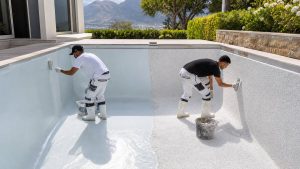
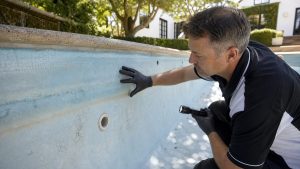
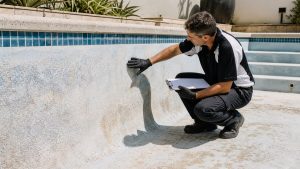
When sand or soil backfill fails, the symptoms show up years later: a pool that no longer sits level, cracked coping and paving, walls that bow inward, or in the worst cases a shell that has floated during a wet winter. In many of these situations the fibreglass itself is still sound, and the fix is to expose the affected side, re-backfill correctly with gravel, and refinish the surface. This is where a proper fibreglass pool lining or relining restores both the look and the watertight integrity of the pool without a full rebuild.
Is gravel more expensive?
Crushed stone can cost a little more to supply and place than site soil, but it is the cheapest insurance you can buy against structural failure. The cost of re-excavating, re-backfilling, and refinishing a settled or floated pool far outweighs the modest premium on doing the backfill correctly the first time. We always recommend investing in the backfill — it is the part you can never see but can never ignore.
Get expert advice for your pool
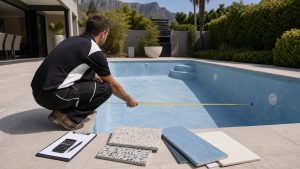
Whether you are planning a new fibreglass installation or worried about an existing pool that has shifted, the backfill is worth a professional opinion. Our team works with pools across the Western Cape every day and knows how local soils and water tables behave. If you would like your pool assessed or want to plan a renovation the right way, get in touch with us for honest, experienced guidance.