A glowing pool light transforms an ordinary Cape Town evening into something special, so a burnt-out bulb is more than a minor annoyance. The good news is that many pool owners can change a pool light bulb themselves with a little patience and a strong respect for electrical safety. This step-by-step guide walks you through the process the right way, with the Western Cape climate and local pool setups in mind.
Safety First: Always Isolate the Power
Water and electricity are a dangerous combination, so this is the one rule you must never skip. Before you touch anything, switch off the pool light circuit at your main distribution board (DB board). If your pool light has its own dedicated switch, turn that off too, then double-check that the light is truly dead before starting.
If you are ever unsure about the wiring or you notice damaged cables, corrosion or a tripping circuit, stop and call a qualified electrician or your pool professional. It is never worth the risk. You can always get in touch with our team if you would rather have the job handled safely.
What You Will Need
- A correct replacement bulb or LED unit that matches your existing fitting
- A screwdriver (usually a flathead for the securing screw)
- A clean, dry towel and an old towel to kneel on
- A fresh rubber gasket or seal if yours looks perished
- Silicone lubricant suitable for pool seals
Step-by-Step: Changing the Bulb
Most pool lights in South Africa are fitted into a niche in the pool wall and held in place with a single screw at the top of the housing. Once the power is safely isolated, follow these steps. For related pool renovation planning, Aquatic Pools services can help match the repair method to the pool surface and Cape Town conditions.
1. Remove the Light Fixture
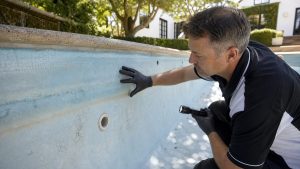
Loosen the securing screw at the top of the light housing. The fixture is designed to lift out of the niche, and there is usually enough cable slack to bring it up onto the pool deck. Do not yank the cable; ease it out gently.
2. Work on a Dry Surface
Lay the fixture on a dry towel on the paving. Open the housing by removing the clamp or screws around the rim. Keep every part in order so reassembly is straightforward, and make a note of how the seal sits.
3. Replace the Bulb or LED
Remove the old bulb and fit the new one, making sure it matches the wattage and voltage of the original. Never touch a new halogen bulb with bare fingers, as skin oils can shorten its life; hold it with a clean cloth instead. Many Cape Town owners now upgrade to LED units, which run cooler and last far longer.
4. Check and Replace the Seal
The rubber gasket is what keeps water out of the housing. If it looks cracked, flattened or perished, replace it. A little pool-safe silicone lubricant helps it seat properly and keeps it supple in our hot, dry summers.
5. Reassemble and Reseat
Close the housing, tighten the clamp evenly, and gently coil the excess cable back into the niche as you slide the fixture into place. Secure the top screw so the fixture sits flush against the pool wall.
Test the Light Safely
With everything back in position, restore power at the DB board and switch the light on. It should glow cleanly with no flickering. Watch the housing over the next day or two for any signs of water ingress or condensation, which would signal a seal that needs attention.
When It Is About More Than the Bulb
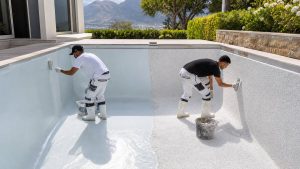
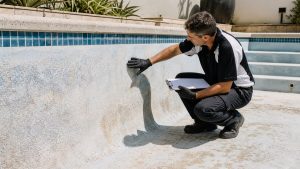
Sometimes a recurring light problem points to a bigger issue with the pool shell or the niche itself. Cracks, leaks and water seeping behind a fitting are common in older marbelite pools around the Western Cape. If you are already noticing surface wear, it can be the right moment to consider a full refresh.
Our marbelite pool resurfacing in Cape Town restores a smooth, watertight finish, while a fibreglass pool lining upgrade gives you a durable, low-maintenance surface that protects your fittings for years. To explore your options or book an inspection, visit our pool renovation specialists.
Final Thoughts
Changing a pool light bulb is a manageable job for most South African pool owners, provided you isolate the power first and take care with the seals. Work slowly, respect the electrics, and your pool will be lighting up those long Cape Town evenings again in no time.