If your pool pump hums but refuses to start, trips the DB board, or spins up slowly and then stalls, the humble capacitor is one of the first components worth checking. In South African pools — especially older installations around Cape Town where summer heat and winter damp both take their toll — the start or run capacitor is a common failure point long before the motor itself gives up. Testing it is straightforward, inexpensive, and can save you the cost of an unnecessary new pump. This guide walks pool owners through how to safely test a pool pump capacitor and what the readings actually mean.
What the capacitor does
The capacitor is a small cylindrical (or sometimes oval) component bolted under the cover on top of your pump motor. Its job is to store and release an electrical charge to give the motor the extra torque it needs to start turning, and in dual-capacitor motors, to keep it running efficiently. When it weakens or fails, the motor loses its “kick” — which is why a dying capacitor usually shows up as a pump that hums without spinning, starts sluggishly, or cuts out under load.
Common signs of a failing capacitor
- The pump hums loudly but the impeller does not turn.
- The motor needs a manual push (spinning the shaft) to get going.
- The pump starts slowly, overheats, or trips the breaker after a few minutes.
- A visibly bulging, leaking, or swollen capacitor top — a dead giveaway.
- A burnt or acrid smell around the motor housing.
Safety first: discharge before you touch it
This is the step you cannot skip. A capacitor stores an electrical charge even after the power is switched off, and a fully charged unit can deliver a nasty — potentially dangerous — shock. Always isolate the pump at the isolator or the DB board and confirm it is dead before opening anything.
Once the power is off, remove the cover to expose the capacitor. Discharge it by bridging its two terminals with an insulated-handle screwdriver, or more safely with a resistor across the terminals. You may hear a small snap or see a spark — that is the stored charge releasing. Only handle the capacitor after it has been discharged. If you are at all unsure about working near mains wiring, this is the point to call a qualified pool technician or electrician rather than risk it.
How to test the capacitor with a multimeter
The most reliable way to test a capacitor is with a multimeter that has a capacitance setting (marked with the µF or “F” symbol). Note the microfarad (µF) rating and voltage printed on the side of the capacitor before you start — you will compare your reading against this figure.
Step by step
- With the power off and the capacitor discharged, disconnect the wires from the capacitor terminals so you are testing it in isolation.
- Set your multimeter to the capacitance (µF) mode.
- Touch one probe to each terminal. It does not matter which probe goes where for a standard capacitor.
- Wait for the reading to settle and note the value.
A healthy capacitor should read within roughly 5–10% of its stated µF rating. If the reading is significantly lower, drifting, or shows zero (open circuit) or a dead short, the capacitor has failed and needs replacing. A like-for-like replacement matching both the µF rating and the voltage is essential — fitting the wrong value can damage the motor.
No capacitance setting on your meter?
If your multimeter only measures resistance (ohms), you can do a rough check. Set it to a high ohm range, touch the probes to the terminals, and watch the needle or digits: a good capacitor will show a low resistance that steadily climbs as it charges. A reading that stays at zero (shorted) or never moves (open) points to a faulty unit. This method confirms life or death but not the exact µF value, so a capacitance test remains the gold standard.
When it is more than just the capacitor
Replacing a capacitor is one of the cheaper pool repairs, but it is worth remembering that a capacitor rarely fails in isolation. Persistent overheating, moisture ingress, or a seized shaft can burn out a new capacitor within weeks.
If you have already swapped the capacitor and the problem returns, the motor bearings, windings, or the pump seal may be the real culprit. Recurring electrical faults are also often a symptom of an ageing pool system that has been patched too many times.
If your pump troubles are part of a bigger picture — a tired shell, staining, or a pool that simply needs a full refresh — it may be time to think beyond the plant room.
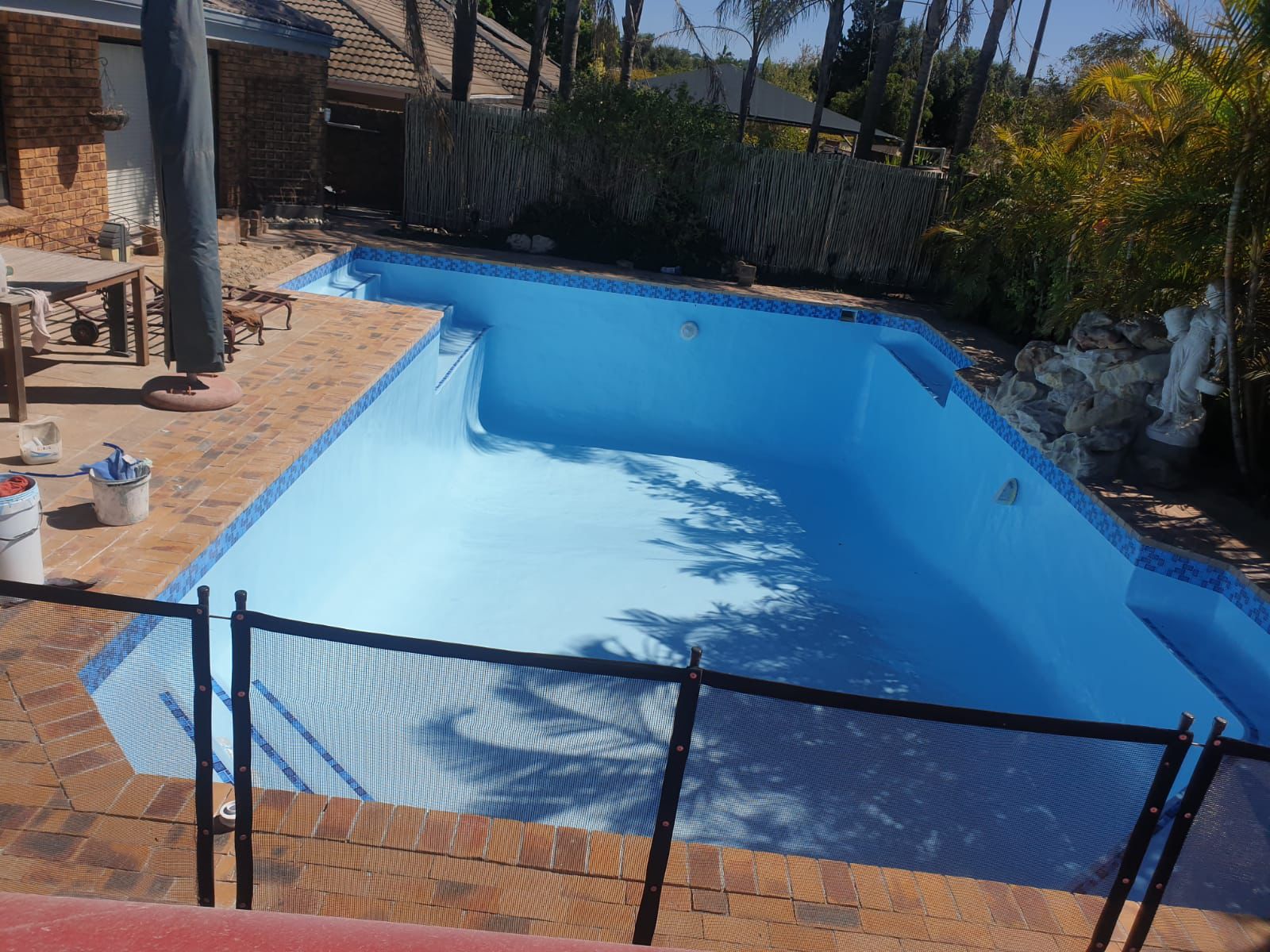
Our team handles complete pool restorations, from marbelite pool resurfacing in Cape Town to a full refresh of the shell. A durable fibreglass pool lining brings older pools back to life.
You can explore the full range of work on our Aquatic Pools homepage. Our pool relining and renovations service covers the bigger jobs from start to finish.
Get expert help when you need it
Testing a capacitor is well within reach for a confident DIY pool owner, provided you respect the electrical safety steps. But if the readings are inconclusive, the motor keeps failing, or you would simply rather leave the wiring to a professional, don’t take chances with mains power around water. Get in touch with our Cape Town team and we’ll help you diagnose the fault and get your pool circulating cleanly again.