A slowly dropping water level is easy to shrug off in the Western Cape sun, but a genuine leak wastes precious water, inflates your bills and can quietly undermine the structure around your pool. With water restrictions still a reality in much of the Cape, learning proper swimming pool leak detection is one of the most useful skills a pool owner can pick up. This guide walks you through simple at-home tests, the warning signs to watch for, and when it’s time to call in the professionals.
Is It a Leak or Just Evaporation?
Before you panic, remember that every pool loses some water to evaporation, especially during a hot, windy Cape summer. On a typical day you might lose a few millimetres purely to the elements. The trick is telling normal evaporation apart from an actual leak, and for that there’s a reliable, decades-old method.
The Bucket Test
The bucket test is the easiest way to confirm whether you have a leak:
- Fill a bucket with pool water and place it on the second step of your pool so it’s partly submerged.
- Mark the water level inside the bucket and the pool level outside it with tape or a marker.
- Leave both for 24 hours, keeping the pump running as normal and avoiding swimming.
- Compare the two drops. If the pool level has fallen noticeably more than the bucket, you almost certainly have a leak.
Run the test again with the pump switched off. If the pool loses more water while the pump is running, the leak is likely on the pressure side of the plumbing. If it loses more while off, suspect the shell, suction lines or the light housing.
The Dye Test
Once you suspect a leak, a dye test helps you pinpoint it. On a still day, switch off the pump and let the water settle. Slowly release a few drops of leak-detection dye (or ordinary food colouring) near suspected cracks, the skimmer, the pool light and the steps. If there’s a leak, the dye will be drawn towards it in a thin ribbon. This works best around the waterline, tiling and any visible hairline cracks in the plaster or marbelite.
Common Warning Signs of a Pool Leak
Sometimes the clues appear long before you think to test. Keep an eye out for:
- A water level that keeps dropping despite regular top-ups.
- Soggy, spongy or unusually green patches in the lawn or paving around the pool.
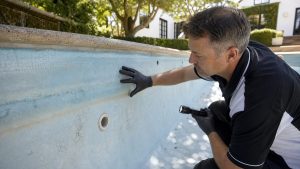
- Cracks in the pool shell, coping or surrounding deck.
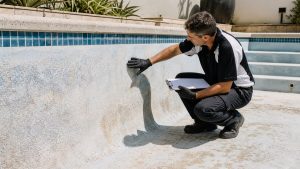
- Loose or lifting tiles and hollow-sounding plaster.
- Air bubbles blowing back through the return jets, hinting at a suction-side leak.
- Higher-than-usual water and chemical costs, since fresh water constantly dilutes your chlorine.
The Risks of Ignoring a Leak
A small leak rarely stays small. Water escaping behind the shell can erode the soil that supports your pool, leading to shifting, further cracking and eventually structural failure. On sloped Cape properties this can also cause retaining walls and paving to move. There’s the ongoing waste of water and chemicals, and in older pools a persistent leak often signals that the waterproofing layer or lining has reached the end of its life. Catching it early is almost always cheaper than dealing with the consequences.
Professional Solutions and What Drives the Cost
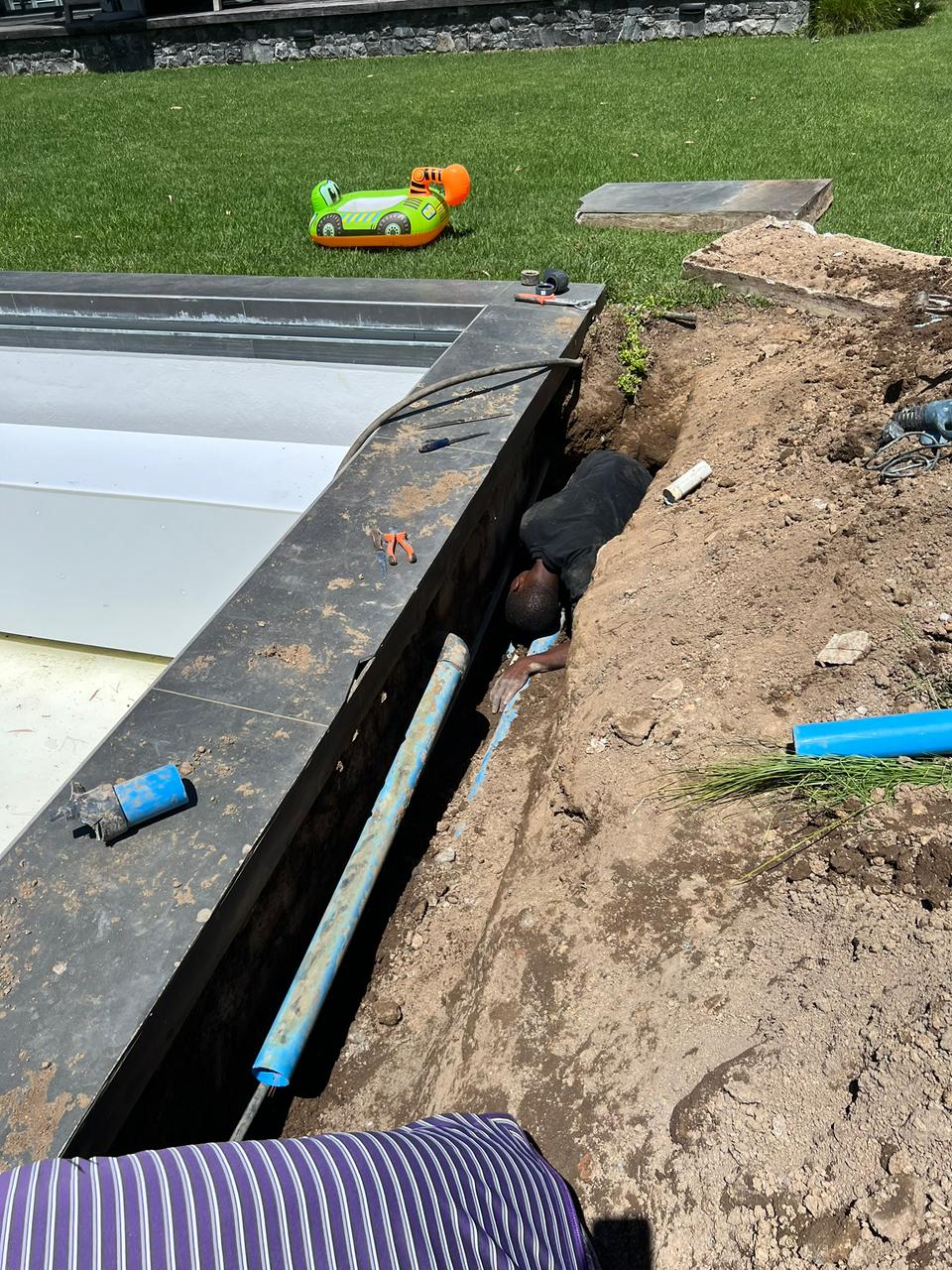
If your DIY tests confirm a leak but you can’t find the source, it’s worth bringing in a specialist. Professionals use pressure testing on the plumbing lines and acoustic or electronic equipment to trace leaks without ripping up your whole deck. The right fix depends entirely on what’s failing.
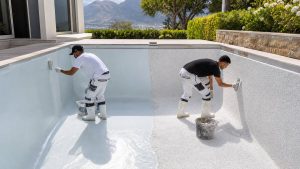
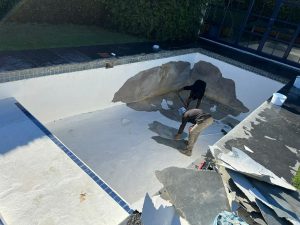
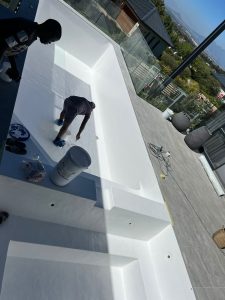
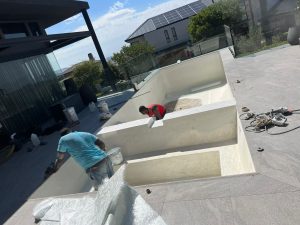
For cracked or porous shells, resurfacing is often the long-term answer. A fresh marbelite resurfacing in Cape Town seals hairline cracks and renews the waterproof finish, while a full fibreglass pool lining creates a flexible, watertight membrane that’s particularly good for pools that keep re-cracking. Plumbing leaks, by contrast, may only need a section of pipe or a fitting replaced.
Rather than quote fixed prices, it’s more honest to talk about the factors that move the cost. These include:
- Whether the leak is in the plumbing, the fittings or the shell itself.
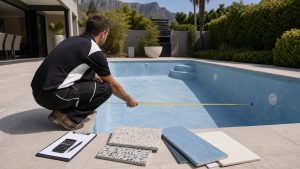
- The size and depth of your pool and how easy it is to access.
- The condition of the existing surface and how much preparation is needed.
- The finish you choose, from patch repairs to a complete reline or resurface.
Get an Expert Eye on It
Regular checks, a quick bucket test each season and prompt attention to warning signs will keep most leaks from becoming expensive problems. If you’ve confirmed a leak or you’re simply not sure, the team at Aquatic Pools can inspect your pool, trace the source and recommend the right solution for Western Cape conditions. Feel free to get in touch for advice tailored to your pool.