If you have ever wondered whether your pool pump is actually moving the water it should be, a flow meter is the simple gauge that answers the question. It tells you exactly how many litres per minute are passing through your circulation system, which takes the guesswork out of running your pool. For Cape Town pool owners dealing with warm summers, seasonal algae pressure and ongoing efforts to use water and electricity wisely, a flow meter is a small addition that pays for itself in confidence and efficiency.
Why a Flow Meter Matters for Your Pool
Good water circulation is the foundation of a clean, safe pool. Your filter, chlorinator and heat pump are all rated to work within a certain flow range. Too little flow and your filtration and sanitising suffer; too much and you waste power and put strain on the equipment. A flow meter gives you a live reading so you can dial your pump in correctly rather than simply hoping for the best.
This is especially useful if you own a variable-speed pump, which lets you run at lower speeds for longer to save electricity. Without a flow meter you are guessing at the right speed. With one, you can find the sweet spot that keeps the water turning over properly while keeping your Eskom bill in check. It also acts as an early warning system: a sudden drop in flow usually points to a blocked skimmer basket, a dirty filter or a failing pump before those problems become expensive.
What You Will Need
Installing a flow meter is a manageable job for a hands-on pool owner, provided you are comfortable working with your pool’s plumbing. Before you start, gather the following: For related pool renovation planning, Aquatic Pools services can help match the repair method to the pool surface and Cape Town conditions.
- A flow meter rated for your pipe diameter (commonly 50mm on South African pools)
- PVC pipe, couplings and solvent cement, or a saddle-clamp fitting depending on the meter type
- A hacksaw or pipe cutter, tape measure and a marker
- Thread tape (PTFE) for any threaded connections
- Clean cloths and a bucket to catch residual water
Always check the manufacturer’s instructions, as insertion-style and inline meters have slightly different requirements. If your plumbing is old or brittle, it is worth having a professional assess it first.
Step-by-Step Installation
1. Choose the Right Location
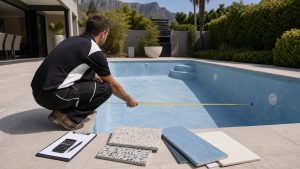
Flow meters need a stretch of straight pipe to read accurately. As a general rule, allow roughly ten pipe diameters of straight run before the meter and about five after it. The ideal spot is on the return line after the filter, so you are measuring the clean water heading back to the pool rather than debris-laden water on the suction side.
2. Switch Off and Drain
Turn off the pump at the isolator and let the system settle. Close any isolation valves and open a drain plug to relieve pressure. Keep your bucket and cloths handy, as there will always be a little water in the lines.
3. Fit the Meter
For an inline meter, cut a section of pipe to match the meter length, dry-fit everything first, then solvent-weld the joints, working quickly and neatly. For a saddle or insertion meter, drill the pipe to the specified size, seat the fitting and tighten it down. Make sure the direction arrow on the meter matches the flow of water.
4. Test for Leaks and Read the Flow
Allow solvent joints to cure for the recommended time before restarting. Prime the pump, switch it on and watch every joint carefully. Once you are confident there are no leaks, note the flow reading and compare it against your equipment’s recommended range.
Reading and Using Your Numbers
Your target is a full turnover of the pool’s volume, ideally once or twice a day. Divide your pool volume by your flow rate to work out how many hours of pumping you need. On a variable-speed pump, nudge the speed up or down until you hit a comfortable flow that still meets that turnover without running flat out. Keep a note of your baseline reading so you can spot changes over time.
When to Call in the Professionals
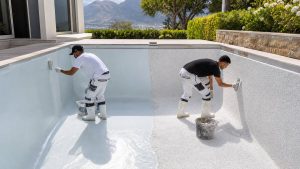
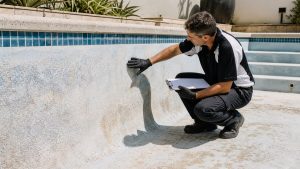
A flow meter is a diagnostic tool, not a cure. If your readings stay stubbornly low even after cleaning baskets and backwashing, the issue may be deeper, such as a worn pump impeller, a hidden leak or a pool surface that is shedding material and clouding the water. If you notice rough, stained or failing surfaces, it may be time to consider marbelite pool resurfacing in Cape Town or a more durable fibreglass pool lining to restore both looks and function.
At the end of the day, a flow meter is one piece of a well-maintained pool. If you would like a proper assessment of your circulation, plumbing or pool surface, the team at Aquatic Pools works with pool owners across the Cape Town area. Feel free to get in touch with our team for advice tailored to your setup, and enjoy the peace of mind that comes from knowing exactly how your pool is performing.