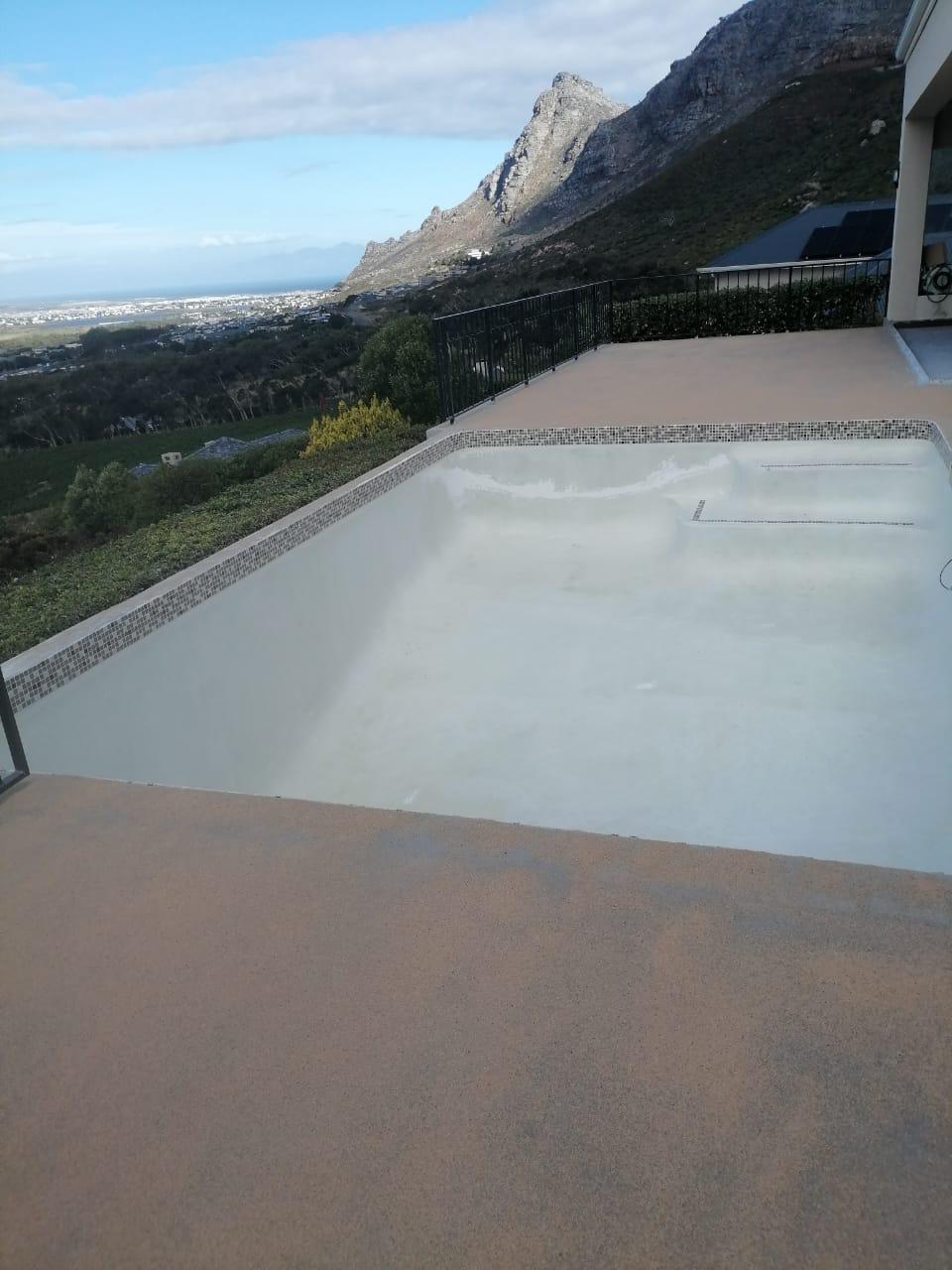
If you own a swimming pool in Cape Town or anywhere across the Western Cape, you have probably heard the terms marbelite and gunite thrown around by contractors. Both describe the way your pool shell is built and finished, and both can be given a fresh lease on life with a modern epoxy coating and safer, non-slip steps. Understanding the difference helps you make the right call when your pool starts showing its age.
Marbelite Versus Gunite: What Is Actually Under Your Water?
Gunite refers to the sprayed concrete shell that forms the structural body of most in-ground pools in South Africa. Marbelite is the smooth plaster finish — a blend of white cement and crushed marble — that is trowelled over that concrete to give you the water-tight, swimmable surface. In other words, gunite is the bones and marbelite is the skin. Over years of Cape sun, salt-laden coastal air and chlorine, that marbelite skin wears thin, stains, and grows rough underfoot.
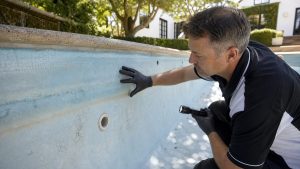
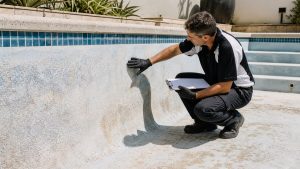
Common signs your finish needs attention
- Chalky white residue that rubs off on your hands and costume
- Dark grey or black staining that no amount of brushing removes
- Rough patches that scrape feet and snag pool nets
- Persistent water loss that hints at hairline cracks in the plaster
- Faded, patchy colour that makes clean water look murky
Why Epoxy Coating Is a Smart Upgrade
Rather than re-plastering with traditional marbelite every few years, many Western Cape pool owners are switching to a two-pack epoxy coating. Epoxy bonds tightly to a properly prepared gunite or marbelite surface and forms a hard, non-porous shell that resists chlorine, UV and staining far better than bare plaster. The result is a smoother finish, easier cleaning and a colour that holds up under our fierce summer sun.
Epoxy is not a magic paint you slap on over dirt, though. Preparation is everything: the old surface must be acid-etched or sanded, cracks repaired, and the shell completely dry before the first coat goes down. Done correctly, a quality epoxy system gives you years of low-maintenance swimming. If your shell is beyond patching, a full fibreglass pool lining is the longer-life alternative worth weighing up alongside epoxy.
Epoxy or a fresh marbelite finish?
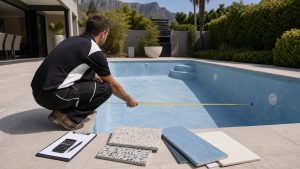
There is no single right answer — it depends on the condition of your shell and how long you plan to keep the pool. A traditional marbelite pool resurfacing restores that classic plaster look and feel, while epoxy leans towards durability and lower ongoing upkeep. A proper on-site assessment is the only honest way to recommend one over the other, because coastal Cape Town pools behave very differently to those inland in the winelands.
Non-Slip Steps: The Safety Upgrade People Forget
Wet pool steps are one of the most common places for slips, especially with children and older swimmers. Original marbelite steps become dangerously smooth once the surface polishes down. When we resurface or coat a pool, we can build a fine anti-slip texture into the step and shallow-end zones so grip returns without turning the surface into sandpaper.
- A gentle, textured epoxy layer applied specifically to steps and entry points
- Clearly defined step edges so swimmers can judge depth at a glance
- A finish that stays grippy underwater but still feels comfortable barefoot
This small detail makes a real difference for family pools, holiday rentals and estates where liability matters just as much as looks.
What the Process Looks Like in the Western Cape
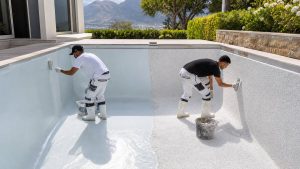
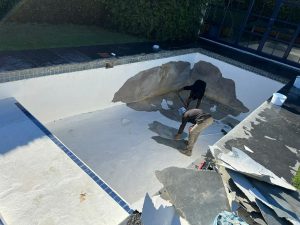
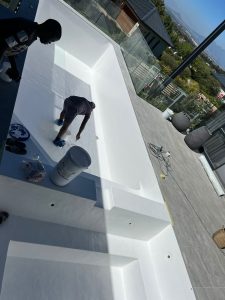
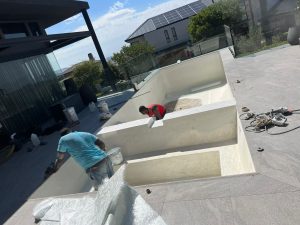
A typical renovation starts with draining the pool and inspecting the gunite shell for structural cracks. Old, flaking marbelite is removed or keyed, the surface is cleaned and etched, and any repairs are cured. Coats of epoxy or fresh plaster are then applied under the right weather window — something we watch carefully, because a cold, damp Cape winter’s day is no friend to a curing coating. Non-slip texturing is worked into the steps before the final coat, and the pool is left to cure fully before refilling and balancing the water.
Planning around Cape Town weather
Timing matters. Dry, mild spring and autumn conditions give the best cure, while the peak of summer heat or a wet Cape Town winter can slow things down. Booking your resurfacing in a favourable window helps the finish set hard and last longer.
Ready to Refresh Your Pool?
Whether your shell is gunite or marbelite, an epoxy coating with proper non-slip steps can turn a tired, rough pool into a safe, sparkling feature you actually want to swim in. To find out which option suits your pool, browse the full range of services on our pool renovation services or get in touch for a site visit anywhere across Cape Town and the Western Cape.