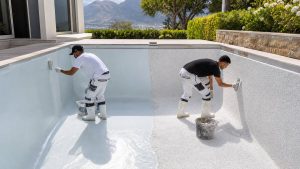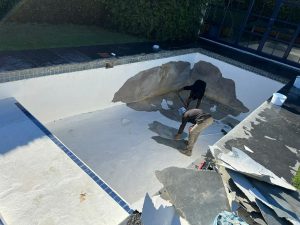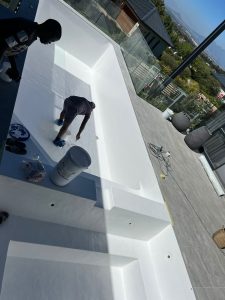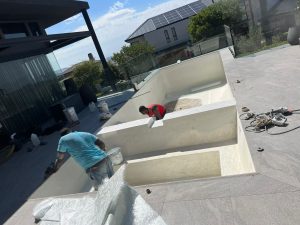
Getting the plaster right is the difference between a marbelite finish that lasts fifteen years and one that blisters within a season. In the Western Cape, where summer heat, winter rain and hard borehole or municipal water all work against a pool shell, the base coat and any waterproofing additives you choose matter just as much as the marbelite itself. This guide walks through correct plaster thickness, why it varies, and which additives actually earn their place in the mix before you resurface.
Why Plaster Thickness Matters Before Marbelite
Marbelite (a white cement, marble-dust and pigment plaster) is only as sound as the substrate beneath it. If the underlying plaster or screed is too thin, it cracks under thermal movement and hydrostatic pressure. Too thick, and it is prone to shrinkage cracking and delamination as the outer layers cure faster than the core. The goal is an even, well-bonded layer that gives the marbelite a stable, slightly rough key to grip.
General Thickness Guidance
Exact figures depend on the pool’s condition and the applicator’s system, but as a rough guide many South African plasterers work to the following ranges:
- Base/scratch coat: roughly 8–12 mm over a sound gunite or brick shell, keyed to help the next layer bond.
- Marbelite finish coat: commonly applied at around 6–12 mm, depending on the product and whether it is trowelled in one or two passes.
- Patch repairs: feathered to match surrounding thickness rather than built up in thick islands, which tend to crack at the edges.
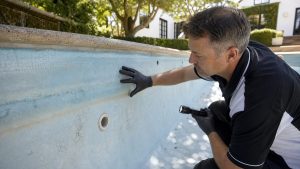
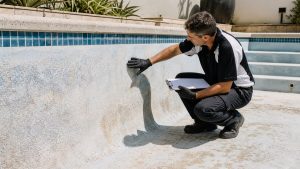
Treat these as guidance, not gospel. A shell that has been re-plastered several times may need old, drummy material chipped back to solid concrete first, and total build-up should stay reasonable to avoid trapping stress in thick sections. When in doubt, ask an experienced applicator to sound the surface with a tap test before deciding how much to remove.
The Best Waterproofing Additives to Consider
South African pool builders rely on a handful of proven additive types rather than one miracle product. Each does a different job, and they are often combined.
Acrylic and SBR Bonding Agents
Styrene-butadiene rubber (SBR) and acrylic bonding liquids are added to the mix water or brushed onto the substrate as a slurry. They dramatically improve adhesion between old concrete and new plaster, reduce shrinkage cracking, and lower water absorption. For a resurfacing job over an aged shell, a bonding slurry coat is one of the most reliable steps you can take.
Integral Waterproofing Compounds
Crystalline and pore-blocking waterproofers are mixed into the plaster to reduce permeability from within. As the cement hydrates, they help fill capillary paths so water struggles to migrate through the layer. These are especially useful where a pool sits in a high water table or on a slope with seasonal ground water – common enough around the Cape.
Fibres and Plasticisers
Polypropylene micro-fibres help control early shrinkage cracking, while plasticisers improve workability without adding excess water. Keeping the water-to-cement ratio down is itself a waterproofing measure: a leaner, well-compacted mix is far less porous than a sloppy one.
Getting the Surface Ready
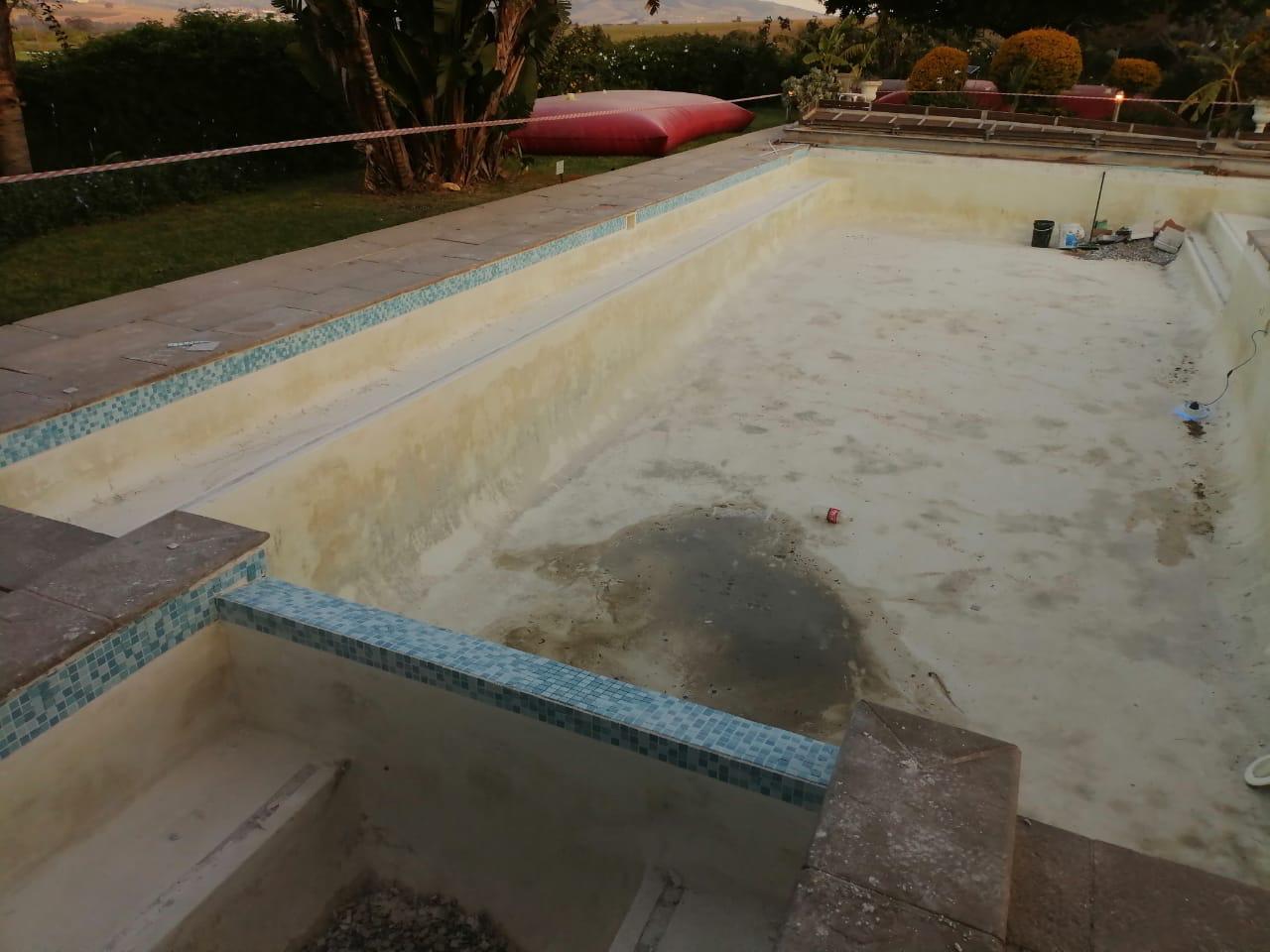
No additive fixes a dirty or unstable surface. Before any new plaster goes on, the shell should be free of loose material, laitance, algae and old paint. Hollow-sounding areas are chipped back, cracks are cut out and filled, and the whole surface is dampened (but not flooded) so it does not draw water out of the fresh mix. For badly deteriorated pools, some owners weigh up a full fibreglass pool lining instead, which behaves very differently to a cementitious finish and suits certain shells better.
Curing: The Step Most People Rush
Even perfect thickness and the best additives will fail if the plaster is allowed to dry too fast. Marbelite and its base coats need to stay damp while they cure, ideally by filling the pool slowly and steadily once the finish has set enough, then balancing the water chemistry promptly. In Cape summers, a surface left to bake in direct sun will craze and chalk. Slow, controlled curing gives you a denser, more waterproof finish and truer colour.
When to Call a Specialist
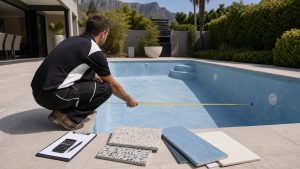
Plastering a pool is unforgiving work: you get one continuous pour per section, and mistakes show up as blisters, colour blotches or leaks months later. If your pool is losing water, staining unevenly or the old marbelite is flaking, a professional assessment is worth it before you commit to materials. Our team handles this daily – from thickness and additive selection through to application – and you can read more about our approach to marbelite pool resurfacing across Cape Town. For advice on your specific shell, or a site visit, get in touch with us and we will talk you through the right build-up for your pool. You can also explore the full range of pool renovation services on our main site.
Key Takeaways
- Aim for an even, well-bonded plaster within sensible thickness ranges rather than one thick, stress-prone layer.
- Use a bonding agent (SBR or acrylic) plus an integral waterproofer for the most reliable results on an older shell.
- Keep the water-to-cement ratio low and cure slowly – especially through a Western Cape summer.