Out in the Swartland, a swimming pool works hard. Malmesbury sits inland from Cape Town where summers run long, hot and bone dry, the borehole and municipal water carries a heavy mineral load, and a fine farm dust settles over everything. Those conditions are tough on an older pool, and the first thing to give way is the interior finish. If your marbelite has gone chalky, patchy or rough underfoot, you are not imagining it, and you have two proven ways to bring the pool back to life: marbelite resurfacing or fibreglass relining. This guide explains why Malmesbury pools age the way they do, and how to choose between the two.
Why Malmesbury Conditions Wear a Pool Out
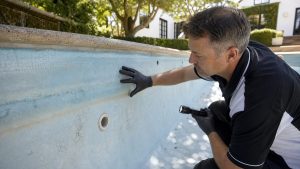
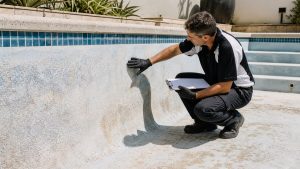
Marbelite is a cement-based plaster, and cement is porous. In a climate like the Swartland’s it takes a beating from several directions at once. Hard water leaves scale and slowly leaches the cement matrix, so the smooth top layer breaks down and the surface turns gritty. The intense summer sun heats the shell and drives rapid evaporation, which concentrates minerals and pushes chemistry out of balance, especially when a pool is topped up often during a dry spell. Wind-blown dust and organic matter feed algae that root into any open pore. Over ten to fifteen years all of this shows up as staining, rough patches, hairline cracking and that tell-tale white bloom where the plaster has worn thin.
None of it means the pool is finished. The concrete shell underneath is usually sound. What has failed is the waterproof, swimmable skin on top, and that is exactly what a good pool renovation renews. The team at Aquatic Pools works on exactly these ageing Boland and West Coast pools, so the decision comes down to which finish suits your pool and how you use it.
Marbelite Resurfacing: The Traditional Refresh
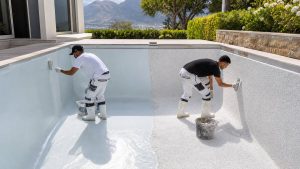
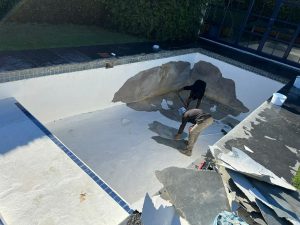
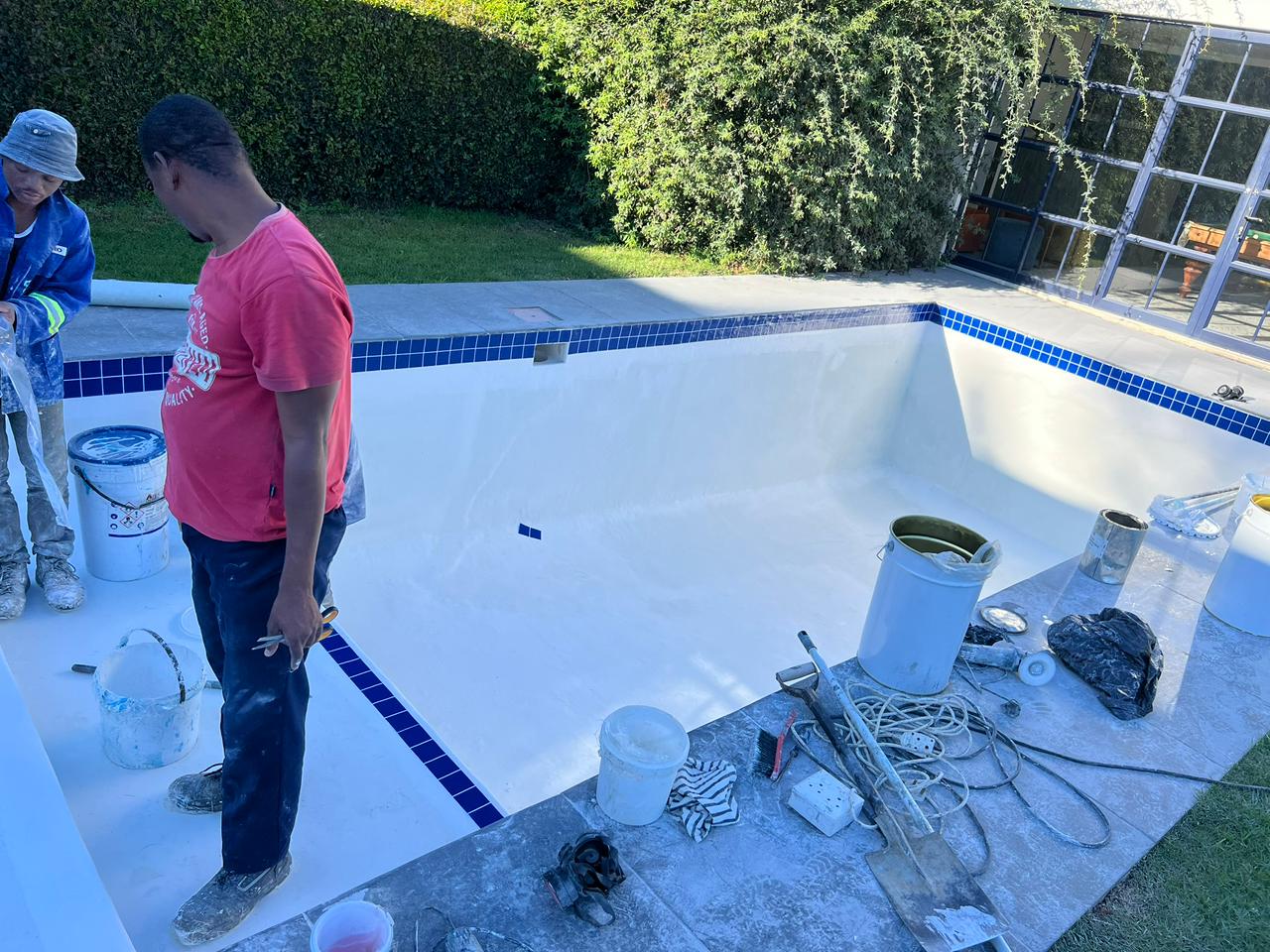
Marbelite resurfacing strips back the tired plaster and applies a fresh cement-based coat, returning the pool to a clean, uniform finish. It is the classic, budget-friendly way to renew a concrete pool and it keeps the familiar look and feel many owners prefer. Done properly, the surface is chipped back where needed, cracks are cut and sealed, and the new layer is floated smooth and cured under controlled conditions before the pool is refilled and re-balanced.
Marbelite tends to be the right call when:
- The shell is structurally solid and you simply want to renew the finish.
- You like the traditional plaster look and are happy to maintain water chemistry attentively.
- You want the most cost-effective route back to a clean, comfortable pool.
The trade-off is that marbelite is still a cement product, so in Malmesbury’s hard water it will eventually face the same wear again. Careful chemical control and regular brushing stretch its life considerably. You can read more about the process on our marbelite resurfacing page.
Fibreglass Relining: The Sealed, Longer-Life Option
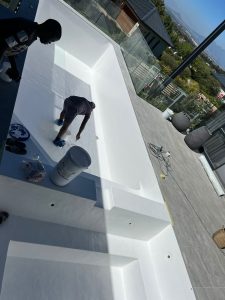
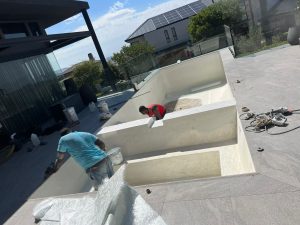
Fibreglass relining takes a different approach. Instead of another layer of plaster, the interior is bonded with fibreglass matting and resin, then topcoated to create a single, continuous, non-porous shell inside the existing concrete. Because there are no pores for minerals, algae or scale to grip, a fibreglass lining stands up far better to hard water and heat, and it feels smooth rather than gritty underfoot.
Fibreglass relining often makes sense when:
- The pool has had recurring leaks, cracks or persistent staining.
- You want a lower-maintenance surface that resists Malmesbury’s mineral-heavy water.
- You are after the longest practical lifespan and are willing to invest a little more upfront.
The sealed surface also helps hold water in a region where every litre counts during the dry months. Full details are on our fibreglass relining page.
Marbelite vs Fibreglass: Which Suits Your Malmesbury Pool?
There is no single right answer; it depends on your budget, how hard your water is and how much maintenance you want to do. As a rule of thumb, marbelite resurfacing is the economical, like-for-like renewal that keeps the traditional finish, while fibreglass relining is the sealed, longer-life upgrade that shrugs off hard water and cuts down ongoing upkeep. A pool that keeps developing leaks or won’t hold clear water is usually a strong candidate for fibreglass; a sound shell that just looks tired is often perfectly served by marbelite.
Book a Renovation Assessment
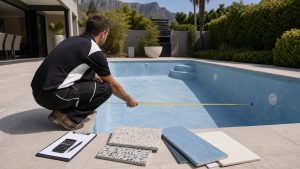
The best way to decide is to have the pool looked at in person. The state of the shell, the water history and how you use the pool all point toward one finish or the other. Send us a few photos and details through the contact page and we will arrange a site visit and a free, no-obligation quote for resurfacing or relining your Malmesbury pool, so you can enjoy those long Swartland summers in water that looks and feels brand new.
We renovate pools right across the Swartland and West Coast, including gunite relining in Yzerfontein. Our crews also cover the northern suburbs such as Durbanville on the way back to Cape Town.