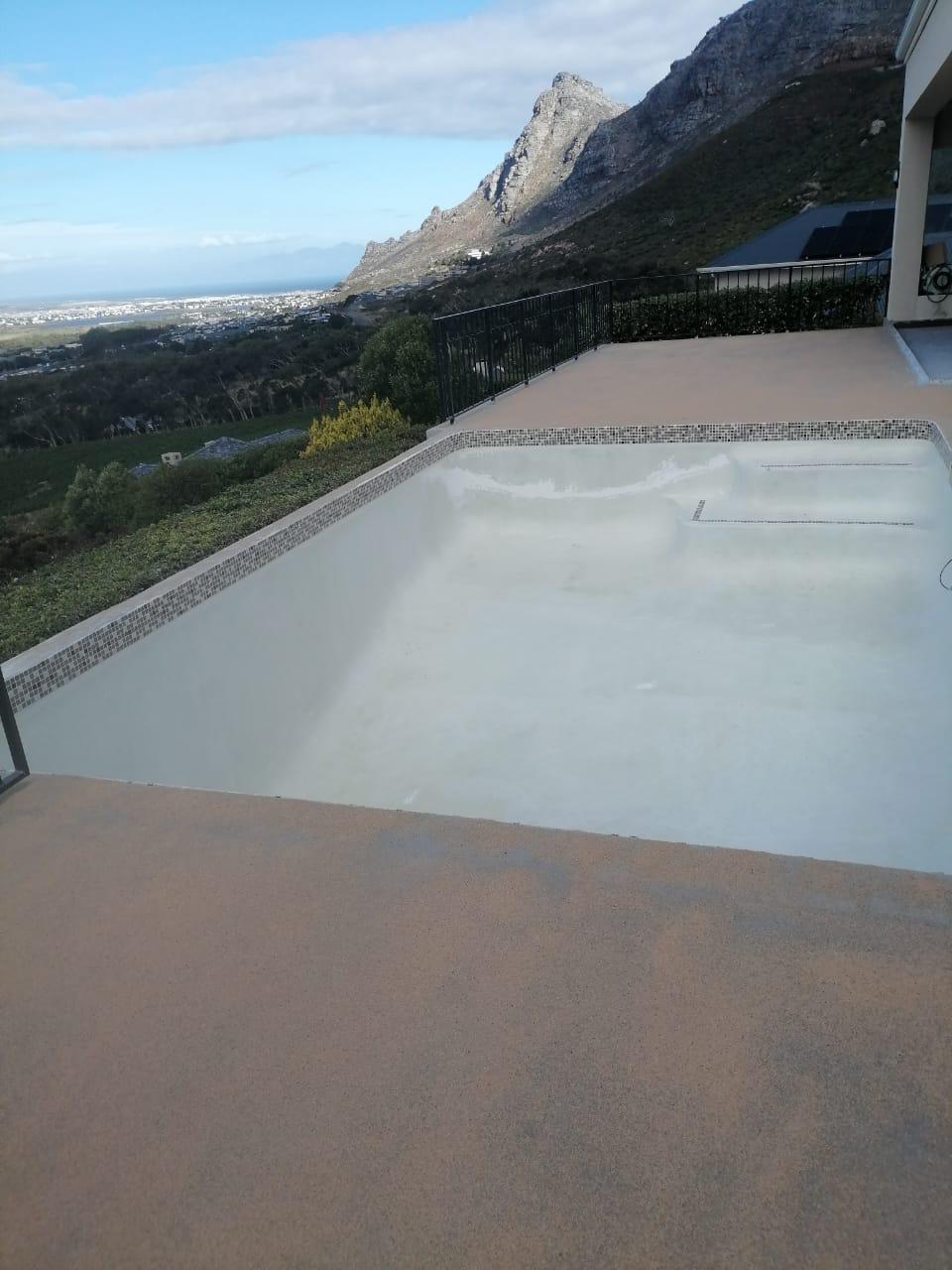
Beach-entry pools — sometimes called zero-entry or Baja-shelf pools — are a favourite in Cape Town gardens because they wade you in gently, mimicking the slow shoreline of a real beach. But that gorgeous sloping shallow end is also the part that ages fastest. Constant foot traffic, sunscreen, and standing sun-warmed water wear the marbelite thin, and before long the slope feels chalky, stains cling to it, and the colour goes patchy. The good news: you rarely need to rip everything out to fix it. With a considered approach, resurfacing a marbelite beach-entry pool can cost a lot less than owners fear.
Why beach-entry slopes wear out first
A conventional pool has a fairly even depth of water sitting over the marbelite. A beach entry does not. The tapered shelf holds only a thin film of water in places, so the surface heats up, dries at the waterline, and takes the brunt of every person walking in and out. That combination — abrasion plus thermal stress — breaks down the cement-and-marble finish quicker on the slope than anywhere else in the shell.
Understanding this matters for your budget, because it means the damage is often localised. When only the shelf is failing while the deep end is still sound, you are not automatically committed to the most expensive route.
The signs it is time to act
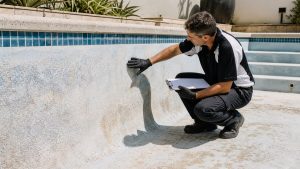
- The slope feels rough or chalky underfoot, and your hand comes away white.
- Colour on the shelf no longer matches the rest of the pool.
- Persistent staining or algae grip that returns days after brushing.
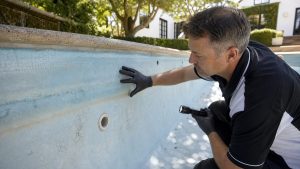
- Small pit marks or a thin, worn-through feel over the marbelite.
- You are constantly adding chemicals to keep the shallow end looking clean.
Where the cost actually hides
Owners often assume the finish itself is the big expense. In reality, the price of any resurfacing job is driven more by preparation, access, water, and how much sound material has to be removed. If you know where the money goes, you can steer the job toward the cheaper end without cutting corners that matter.
The main cost factors on a beach-entry pool are:
- Surface preparation — chipping out only what has failed versus stripping the whole shell.
- Draining and refilling — municipal water is not free, so an efficient timeline keeps this down.
- The chosen finish — a fresh marbelite coat, a bonded overlay, or switching to a fibreglass lining.
- Access and curing conditions — Cape Town wind and sun affect how a coating goes on and sets.
The cheaper route: resurface, don’t rebuild
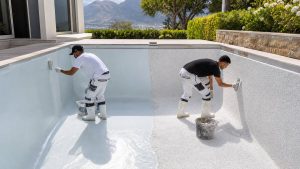
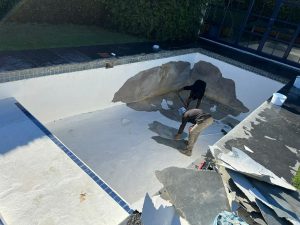
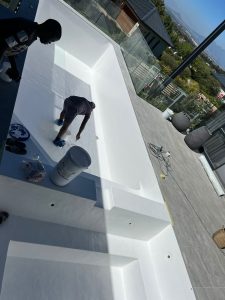
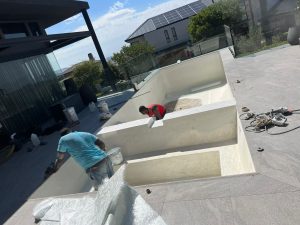
The most cost-effective plan for a tired shelf is usually to key into the existing sound structure and re-coat rather than demolish. A skilled applicator prepares the failing marbelite, repairs the worn slope, and lays a fresh finish that bonds to the old shell. Because the shape of a beach entry is already built into the concrete, you keep that structure and simply renew the skin over it.
This is exactly the kind of work covered in our marbelite pool resurfacing in Cape Town service, where the goal is to restore the finish without the demolition bill that comes with a full rebuild. Getting the preparation right is what makes a re-coat last, so it is worth using a team that treats the shelf as its own challenge rather than an afterthought.
When fibreglass lining is the smarter long-term spend
If your marbelite has been patched several times already, endless re-coating can become a false economy. In that situation a fibreglass pool lining can be the better value over time. It seals the entire shell, including the awkward beach-entry slope, in a smooth, low-maintenance surface that resists the abrasion and chemical wear that chew through marbelite. It is a bigger upfront choice, but for a repeatedly failing shelf it can cost less across the years you actually own the pool.
How to keep your resurfacing quote lean
You have more influence over the final figure than you might think. A few practical moves:
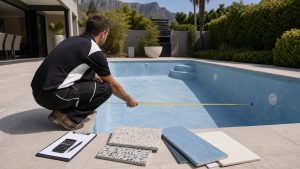
- Book an on-site assessment so only the failed areas are scoped — avoid paying to strip sound marbelite.
- Fix the underlying cause (poor drainage, harsh chemical dosing) so the new finish is not attacked from day one.
- Time the work for stable, calm weather to help the finish cure cleanly the first time.
- Ask for a finish matched to how the shelf is actually used, not just the cheapest coating on the shelf.
A tired beach-entry pool does not have to mean a frightening invoice. Start with an honest inspection of what has really failed, keep as much sound structure as possible, and choose a finish that suits how hard that shallow slope gets used.
Want a straight answer on the most economical way to bring your beach-entry pool back to life? Get in touch with our Cape Town team for an assessment, or browse the rest of Aquatic Pools to see how we approach relining and resurfacing across the peninsula.