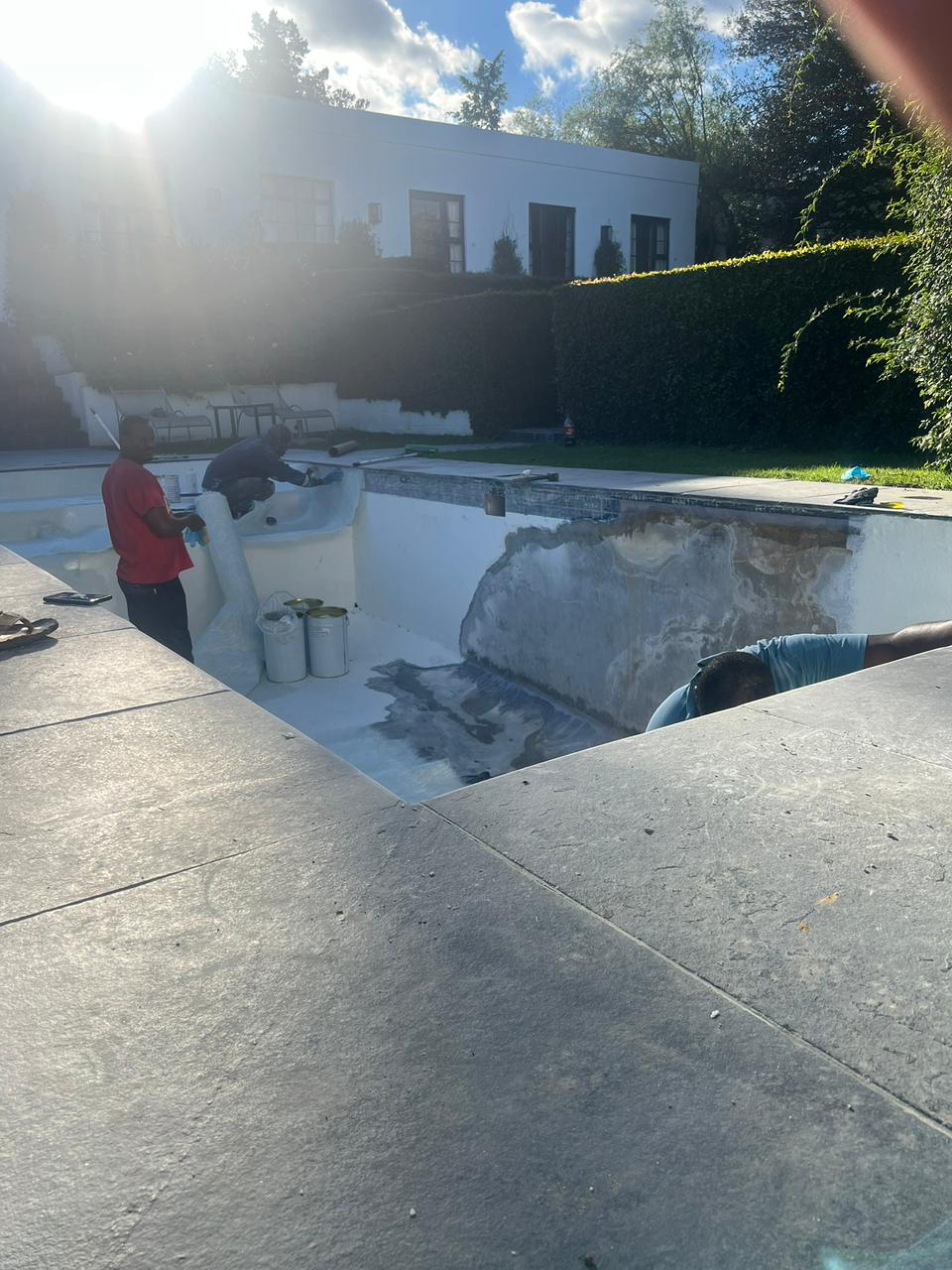
A swimming pool is one of the best ways to enjoy the long Western Cape summers, but wet surfaces around steps, ledges and coping are also where most pool-related slips happen. Whether you have a fibreglass pool in the Southern Suburbs or a marbelite pool up the West Coast, building slip resistance into your steps and surrounds is one of the smartest safety upgrades you can make. Here is a practical look at how non-slip surfaces work across different pool types, and where to focus your attention.
Why Non-Slip Surfaces Matter Around Pools
Water, sunscreen and fine Cape sand form a surprisingly slippery film on smooth surfaces. Steps and entry points are the highest-risk zones because that is where bare feet transition between wet and dry, often carrying the weight of a child scrambling out or an older swimmer steadying themselves. A properly textured surface gives feet something to grip, reducing the chance of a fall before it starts.
Good slip resistance does not mean rough, uncomfortable finishes. Modern pool interiors and surrounds balance grip with comfort, so the surface feels secure underfoot without grazing skin. Getting that balance right is really about matching the finish to how, and by whom, the pool is used.
Non-Slip Options by Pool Type
Every pool surface behaves differently, so the right non-slip approach depends on what your pool is made of.
Fibreglass Pools
Factory and reline fibreglass surfaces are naturally smooth, which is great for cleaning but can be slick on steps. A quality fibreglass pool lining can incorporate textured step treads and a slightly grippier finish on entry areas while keeping the walls and floor smooth and easy to maintain. This targeted texture is the ideal compromise for families who want a low-maintenance interior without turning the steps into a hazard.
Marbelite and Plaster Pools
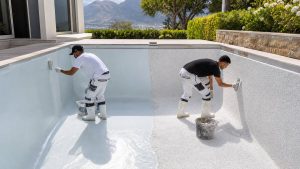
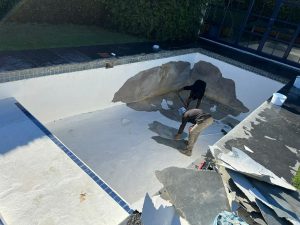
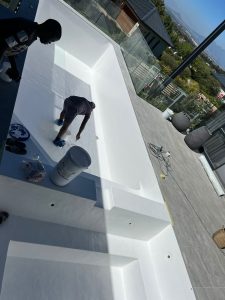
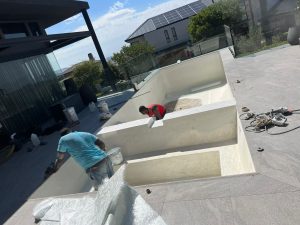
Marbelite has a naturally granular feel that offers decent grip when new, but years of brushing and acid washing can polish it smooth. Restoring the surface with fresh marbelite pool resurfacing in Cape Town brings back that fine texture on steps and benches, while a resurface is also the perfect time to define step edges more clearly and add a contrasting nosing so swimmers can judge each step.
Concrete and Tiled Surrounds
The coping and paving around the pool matter as much as the interior. Smooth porcelain or polished concrete looks sharp but can be treacherous when wet. Look for pavers and coping rated for wet, barefoot areas, and consider a slip-resistant sealer on existing surfaces rather than replacing everything.
Key Areas to Focus On
- Steps and entry ledges — the single most important zone for added texture.
- Tanning ledges and benches — shallow spots where people stand and pivot.
- Coping and the first row of paving — the wet border where swimmers climb out.
- Pathways to the pool — often overlooked, but a common slip point.
- Contrast markings — a visible edge colour helps swimmers judge step depth.
Maintenance Keeps Grip Working
Even the best non-slip finish loses effectiveness if it is buried under algae, calcium scale or a slick biofilm. In our Cape climate, wind-blown pollen and dust settle quickly, so regular brushing of steps and surrounds keeps the texture doing its job. Balanced water chemistry also protects the surface from etching that would otherwise wear grip away over time. A quick weekly scrub of the steps with a stiff pool brush makes a noticeable difference to how secure they feel.
Signs It Is Time to Resurface
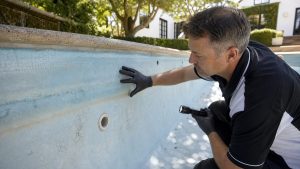
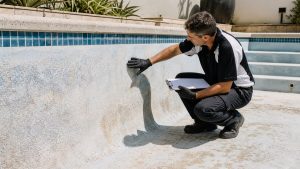
If your steps feel glassy underfoot, show worn patches, or the interior colour has faded and chalked, the surface has likely lost both its finish and its grip. Hairline cracks or rough, chalky residue on your hands after touching the wall are further clues. Resurfacing solves the cosmetic and the safety problem in one project rather than patching over a slippery step year after year.
Getting Safety Right for Your Pool
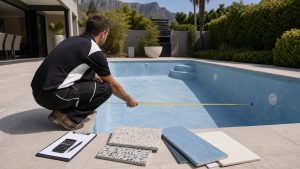
The best non-slip solution is the one matched to your specific pool, its material, and how your household uses it. A family with young children and elderly grandparents has different priorities to a lap swimmer, and a holiday rental has different needs again. If you are planning a renovation or reline anywhere in the Western Cape, it is worth building slip resistance into the specification from the start rather than adding it as an afterthought. To talk through the right approach for your pool, take a look at the full range of services on our pool renovation home page or get in touch via our online quote request for tailored advice.