With the Western Cape’s long dry summers and the memory of Day Zero still fresh, many Cape Town homeowners look at borehole or well water as a smart, restriction-friendly way to fill or top up a swimming pool. It can be — but well water behaves very differently to municipal supply, and getting it wrong can stain your surface, cloud the water or shorten the life of a fresh finish. Here’s what you need to know before you run that hose.
Why Well Water Is So Popular in the Western Cape
Municipal water restrictions have made pool owners across Cape Town, the Winelands and the West Coast far more careful about where their water comes from. Boreholes and wells offer an independent, often cheaper supply that isn’t subject to the same limits. During a heatwave, being able to top up an evaporating pool without breaching restrictions is a real advantage. The catch is that groundwater is untreated, and its mineral content varies enormously from one property to the next.
The Hidden Problem: Metals and Minerals
Unlike treated municipal water, well water frequently carries dissolved metals and minerals picked up as it moves through rock and soil. The usual culprits in our region include:
- Iron — causes brown, rusty or greenish staining and can turn water cloudy or tea-coloured once chlorine hits it.
- Manganese — leaves purple-black or dark stains, often on steps and the shallow end.
- Copper — produces blue-green tints and staining, especially near fittings.
- Calcium hardness — high levels lead to scaling and chalky deposits on the waterline and surface.
- Total dissolved solids (TDS) — very high readings make the water hard to balance and keep clear.
These minerals are invisible in the borehole, but the moment you add chlorine to sanitise the pool, iron and manganese oxidise and drop out as stubborn stains. On a newly resurfaced pool, that’s the last thing you want.
Test Before You Fill
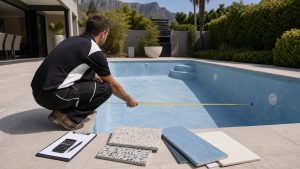
The single most important step is to get your well water tested before it goes anywhere near the pool. A basic pool-shop test won’t cut it here — ask specifically for iron, manganese, copper, calcium hardness, pH, alkalinity and TDS. If the metals come back high, you don’t necessarily have to abandon the idea, but you’ll need a plan to manage them.
Managing Metals When You Fill
If your water carries metals but you still want to use it, a few practical steps make a big difference:
- Fill through a hose-end pre-filter or sediment filter designed to capture iron and fine particles.
- Add a quality metal sequestrant (stain and scale preventer) as you fill, so metals stay locked in solution rather than staining the surface.
- Balance pH and alkalinity gently before you shock or chlorinate heavily.
- Run the filter continuously for the first few days and clean or backwash as it loads up.
How Your Pool Surface Affects the Risk
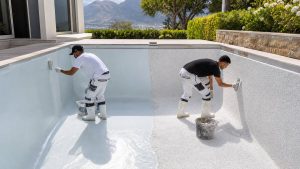
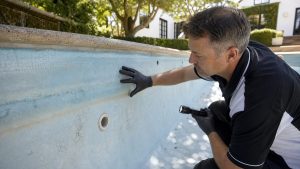
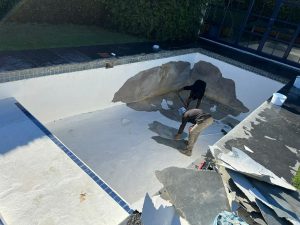
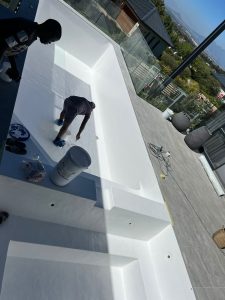
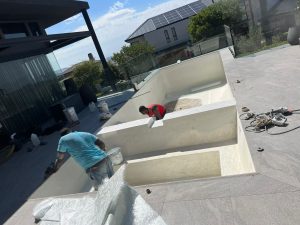
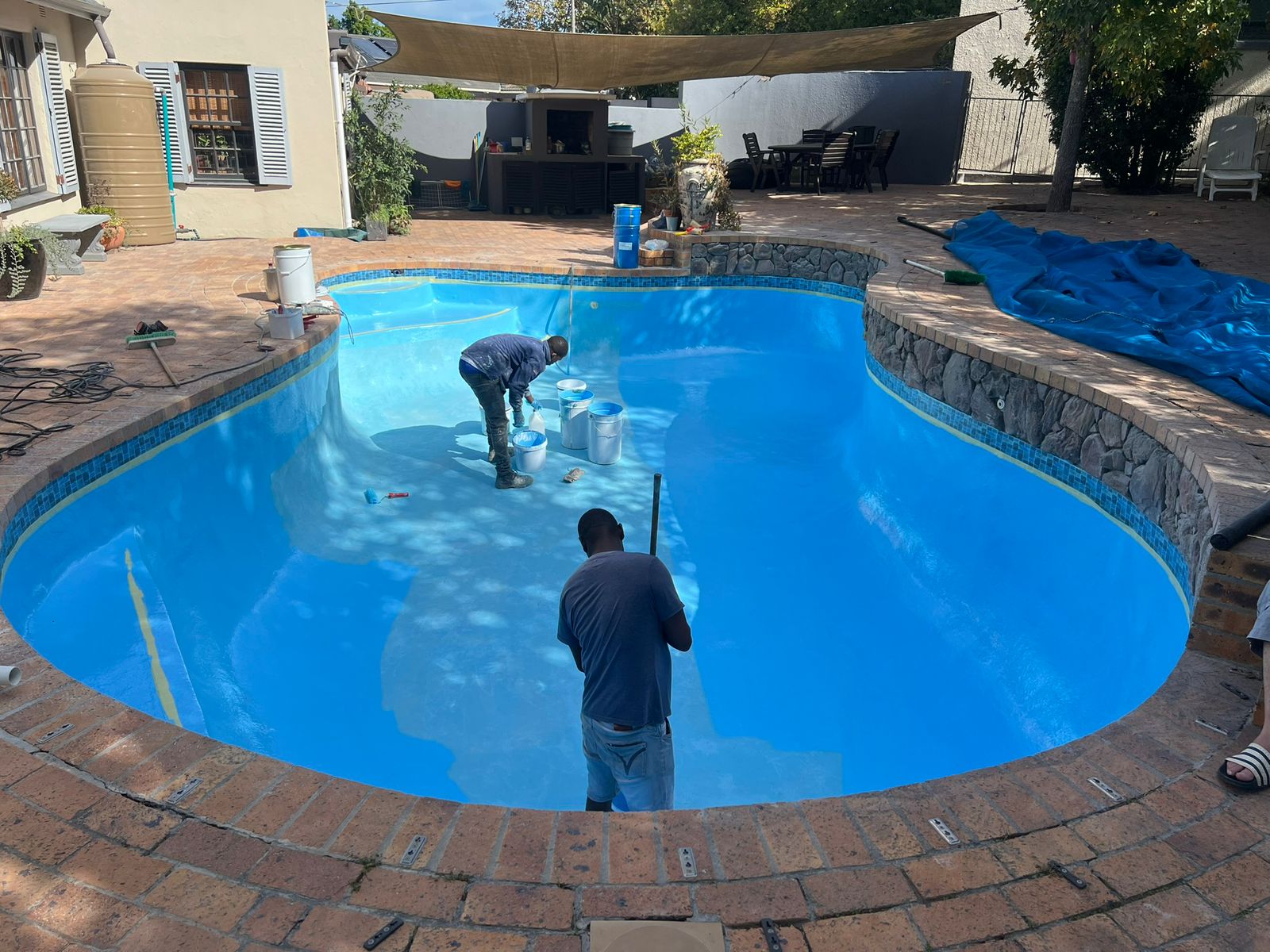
The type of finish in your pool changes how forgiving it will be with mineral-heavy water. Porous or ageing surfaces grab stains far more readily than smooth, well-sealed ones. If your pool is already showing rough patches, etching or old staining, mineral-rich well water will only make it worse. This is often the point where owners decide to refresh the interior first. A modern fibreglass pool lining gives a smooth, non-porous surface that resists staining and is much easier to keep clear, while a professional marbelite resurfacing restores a durable, attractive finish that stands up better to Western Cape water conditions.
Topping Up vs Filling From Empty
There’s a big difference between topping up an already-balanced pool and filling one from empty. Small, regular top-ups dilute into a large, treated body of water, so even slightly hard borehole water usually causes few problems if you keep an eye on your chemistry. Filling an entire pool from scratch with untreated well water is where the real staining risk lies, because every litre carries its full mineral load straight onto the surface.
Is Well Water Worth It?
For many Western Cape homeowners, the answer is yes — provided you test first, manage metals properly and start with a surface that’s in good condition. Used carefully, borehole water is a sustainable, restriction-friendly way to keep your pool full through our dry season. Used carelessly, it can leave permanent stains that are expensive to remove.
If you’re unsure about your water, your surface or the best way to protect a new finish, it’s worth getting expert eyes on it. The team at Aquatic Pools works with pools all over Cape Town and the Western Cape and can advise on the safest way forward. Get in touch for a chat before you fill, and you’ll save yourself a lot of scrubbing later.