If your swimming pool water feels a little rough on the skin, leaves a chalky film on the tiles, or clouds up no matter how much you balance the chemicals, you are almost certainly dealing with hard water. Across Cape Town and the wider Western Cape, mineral-rich source water is a common headache for pool owners, and left unchecked it can shorten the life of your pool surface and equipment. The good news is that hard water is a manageable problem once you understand what is causing it.
What Is Hard Water in a Swimming Pool?
Hard water simply means water with a high concentration of dissolved minerals, mainly calcium and magnesium. In a pool, the measure that matters most is calcium hardness. When calcium levels climb too high, the water becomes saturated and those minerals start to drop out of solution, settling on surfaces as scale. When levels are too low, the water becomes aggressive and begins pulling minerals out of the pool surface itself. Both extremes cause damage, which is why calcium hardness is one of the core readings every pool owner should track.
Why Hard Water Is Common in the Western Cape
Municipal and borehole water in parts of the Cape carries a naturally high mineral load, and evaporation makes it worse. Under the strong Cape summer sun, water evaporates but the minerals stay behind, so hardness concentrates over the season. Owners who top up frequently from a borehole or who rarely dilute their water tend to see hardness creep steadily upward year after year.
Signs You Have a Hard Water Problem
- A white, crusty scale line forming at the waterline on tiles or the pool edge.
- Persistent cloudy or dull water that will not clear despite balanced chlorine.
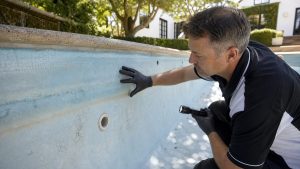
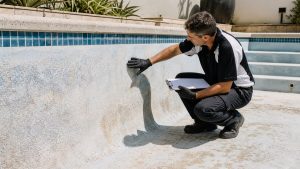
- Rough or scaly patches on marbelite, plaster or steps.
- Scale build-up inside the filter, pump, salt chlorinator cell or heater.
- Reduced water flow and equipment that works harder than it should.
The Effects of Ignoring Hard Water
Scale is more than a cosmetic nuisance. Once it coats heating elements and chlorinator cells, those components lose efficiency and fail sooner. Rough scale on the pool floor and walls traps dirt and algae, making the surface harder to clean and easier to stain. On older marbelite finishes, ongoing mineral imbalance accelerates surface wear and can leave the shell looking tired and patchy. Catching the problem early is always cheaper than repairing the consequences.
How to Solve Hard Water in Your Pool
1. Test and Balance Your Water
Start with an accurate calcium hardness test, ideally alongside pH and total alkalinity. The three work together, and a scale problem is often really a pH problem in disguise. Keeping pH in the correct range is the single most effective way to stop dissolved minerals from crystallising onto surfaces.
2. Dilute to Reduce Hardness
The only reliable way to lower calcium hardness is to partially drain the pool and refill with softer water. Where the fill water is also hard, a smaller, more frequent dilution combined with careful balancing keeps levels in check. A sequestering or scale-control agent can help hold minerals in solution between water changes.
3. Remove Existing Scale
Light scale at the waterline can often be brushed and treated, but heavy build-up on the pool surface usually needs professional attention. Aggressive acid washing can thin an already worn finish, so it is worth getting an expert assessment before taking that route.
4. Consider Resurfacing When Damage Is Done
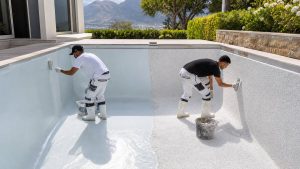
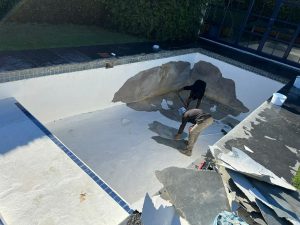
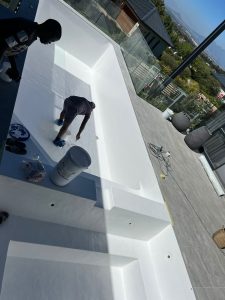
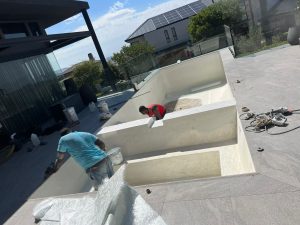
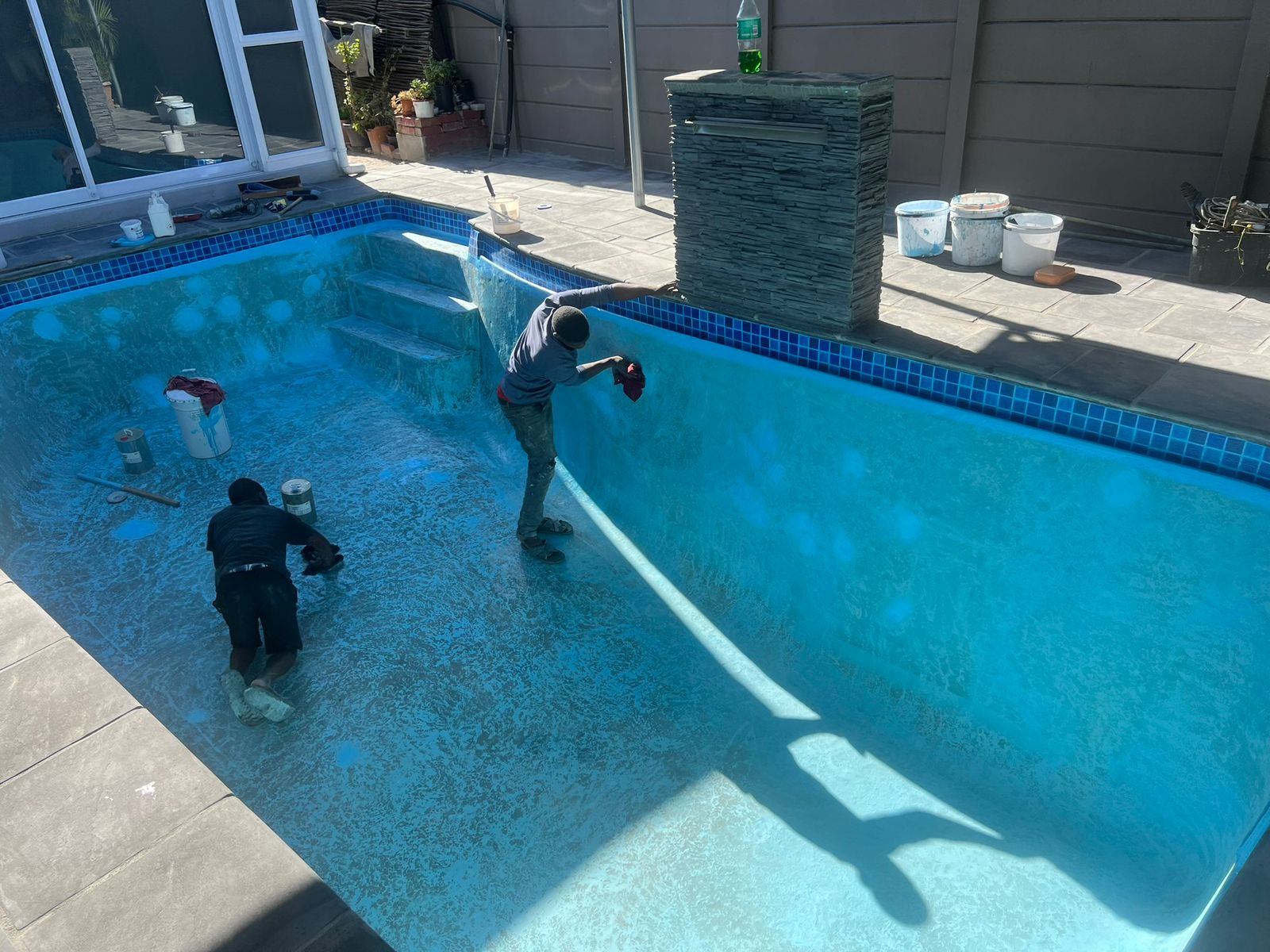
If years of hard water have left your pool surface pitted, stained or crumbling, a fresh finish is the most lasting fix. A professional marbelite pool resurfacing service in Cape Town restores a smooth, sealed surface that resists scale and is far easier to keep clean. For a longer-term, low-maintenance option, many owners upgrade to a fibreglass pool lining, whose non-porous surface gives minerals very little to cling to.
What About the Cost?
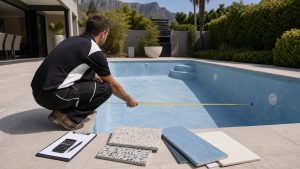
The cost of tackling hard water depends on how far it has progressed. Regular testing and small water changes are inexpensive and prevent bigger bills. Once scale has damaged the surface or equipment, factors such as pool size, the condition of the existing finish, access to the site and the type of resurfacing chosen all influence the price. Rather than guessing, it pays to get a proper on-site assessment so the quote reflects your actual pool.
Get Expert Help in Cape Town
Hard water is a slow, quiet problem, but it is one you can stay ahead of with regular testing, sensible water management and the occasional professional intervention. If your surface is already showing the wear that hard water leaves behind, the team at Aquatic Pools can assess the damage and recommend the right solution for your pool. Get in touch for a no-obligation assessment and keep your pool clear, smooth and swim-ready all year round.