A crack in your swimming pool is one of those problems that rarely stays small. What starts as a thin line in the plaster can quietly let water seep out, undermine the shell, and turn into a costly repair if it’s ignored. Across the Western Cape, where clay-rich soils, hot summers and cold winter nights are the norm, pool owners see cracks more often than they’d like. The good news is that most cracks are fixable once you understand what caused them. Here’s a practical look at why pool cracks happen and how to put them right.
Why Swimming Pools Crack
Cracks fall into two broad groups: surface cracks in the finish, and structural cracks in the shell itself. Telling them apart matters, because the repair for each is very different. A hairline crack in the marbelite might be purely cosmetic, while a crack that runs through the concrete can leak and worsen over time.
Ground Movement and Soil Conditions
The single biggest culprit in our region is unstable ground. Many Cape Town suburbs sit on expansive clay soils that swell when they’re wet and shrink when they dry out. This constant movement puts pressure on a rigid concrete shell, and over the years that stress shows up as cracks. Pools built on poorly compacted fill, or on sloping sites without proper engineering, are especially prone to it.
Poor Original Construction
Not every pool is built to the same standard. Insufficient reinforcing steel, a shell poured too thin, or concrete that cured too quickly in summer heat all leave a pool vulnerable. These weaknesses may not appear for years, but the underlying fault was there from day one.
Hydrostatic Pressure
When groundwater builds up behind or beneath an empty pool, it pushes hard against the shell. This is why draining a pool completely, without a working hydrostatic relief valve, is risky. The pressure can lift or crack the floor. It’s also why you should never fully empty a pool during the rainy months without professional advice.
Age and Finish Fatigue
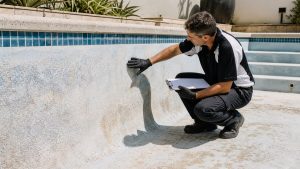
Surface finishes simply wear out. Marbelite, in particular, becomes thin, chalky and brittle after fifteen to twenty years of pool chemicals and sunlight. As it ages it loses flexibility, and small crazing cracks spread across the surface. This is usually a finish problem rather than a structural one, though it still needs attention before water works its way underneath.
How to Tell How Serious a Crack Is
Before deciding on a repair, it helps to gauge the severity. A few signs to watch for:
- Losing water faster than normal evaporation, which points to a leak through the crack.
- Cracks wider than a few millimetres, or ones you can feel a lip on, suggesting movement in the shell.
- Cracks that keep growing or reappear after patching, which usually indicates an ongoing structural cause.
- Fine spider-web crazing across the finish, typically cosmetic and linked to an ageing surface.
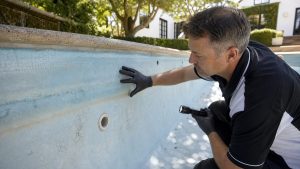
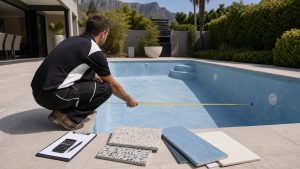
If you’re unsure, it’s always worth having a professional assess it. A specialist can run a leak test and tell you whether you’re dealing with a surface issue or something deeper.
How to Fix Pool Cracks
The right repair depends entirely on the cause. Patching over a structural crack without addressing the movement behind it is a waste of money, because it will simply crack again.
Repairing Surface Cracks
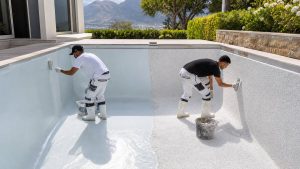
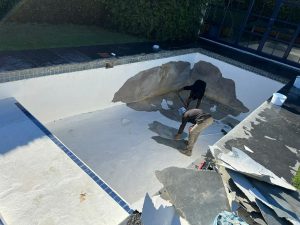
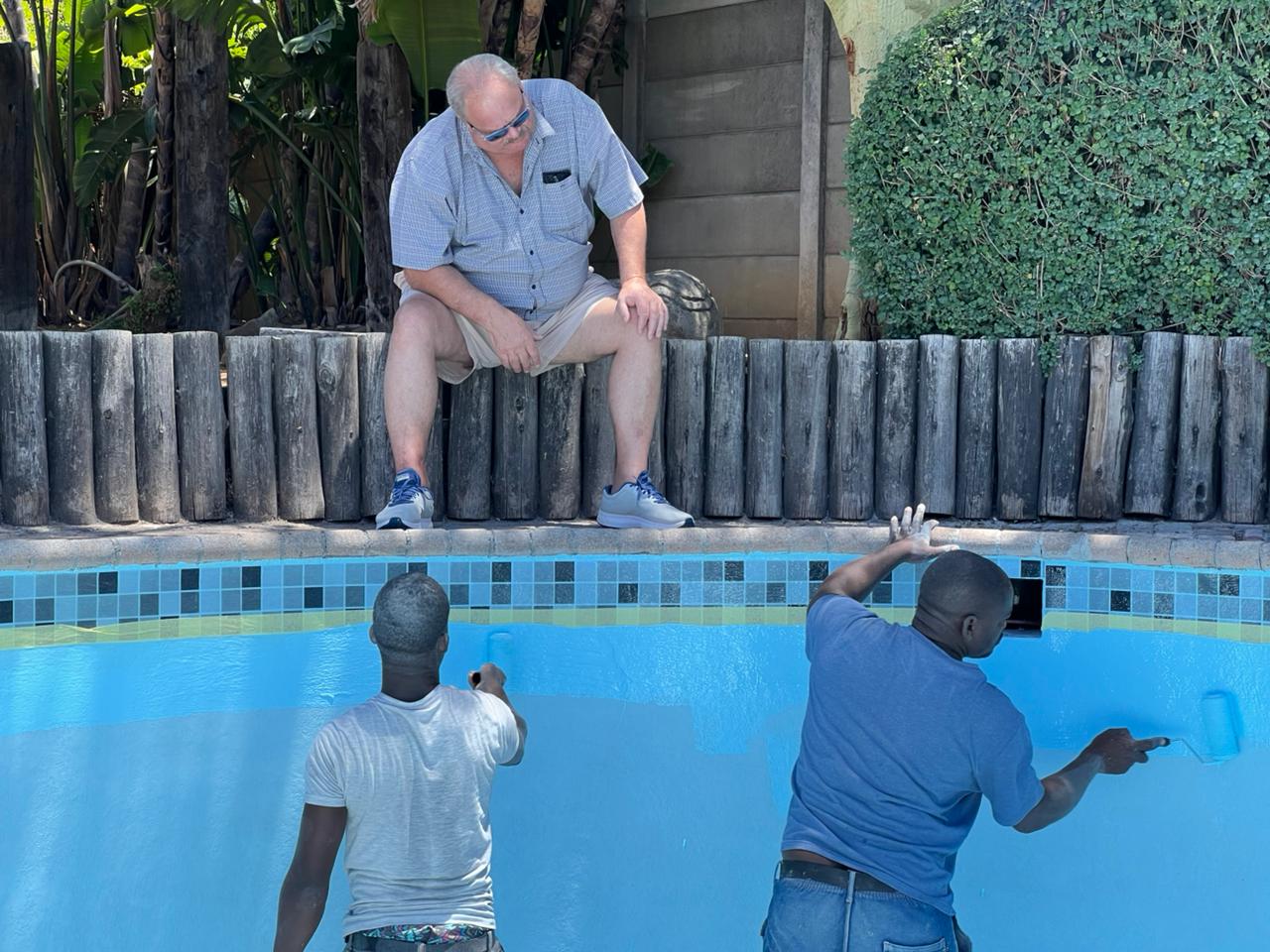
Minor crazing and hairline cracks in the finish can often be repaired as part of a resurfacing job. Rather than patching one spot and leaving a visible mismatch, most owners choose to refresh the whole surface. Our marbelite pool resurfacing in Cape Town restores a smooth, watertight finish and gives an ageing pool a fresh lease of life.
Repairing Structural Cracks
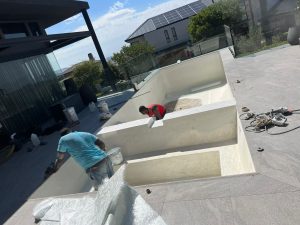
Cracks that run through the shell need proper structural repair. This usually means cutting out and cleaning the crack, then filling it with a flexible, waterproof material designed to move slightly with the shell. In severe cases, the underlying ground issue must be dealt with first, otherwise the repair won’t last. Once the structure is sound, a new finish is applied over the top.
Considering a Fibreglass Lining
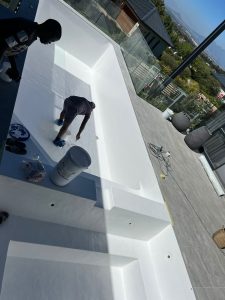
For pools that crack repeatedly, a fibreglass pool lining is often the most durable long-term answer. Fibreglass has a degree of flex that rigid finishes lack, so it copes better with minor ground movement and bridges hairline cracks. It also creates a completely sealed, smooth surface that resists algae and is gentle on the feet.
Preventing Future Cracks
You can’t change the soil your pool sits on, but you can reduce the risk of new cracks. Keep the water balanced so the finish isn’t attacked by aggressive chemistry, avoid draining the pool fully unless a professional advises it, and fix small leaks early before they undermine the shell. Regular maintenance and an occasional professional inspection go a long way.
Get an Expert Opinion
Pool cracks are rarely a do-it-yourself job, especially when the structure is involved. If you’ve spotted a crack and you’re not sure how serious it is, the safest step is to have it looked at properly. Take a look at our pool renovation services to see how we approach repairs, or get in touch for an assessment and we’ll help you find the right fix before a small crack becomes a big one.