If you have ever wondered why one pool pump seems to struggle while another of the same horsepower moves water effortlessly, the answer almost always comes down to a single, often-overlooked number: Total Dynamic Head. Understanding this figure is the difference between a pump that turns your water over efficiently and one that burns electricity while never quite doing its job. Here in Cape Town, where pool designs, elevation changes and long pipe runs vary enormously from one property to the next, getting this right matters more than most owners realise.
What Total Dynamic Head Actually Means
Total Dynamic Head, usually shortened to TDH, is a measure of the total resistance your pump has to overcome to circulate water through the entire system and back into the pool. It is expressed as a height of water in metres (or feet), which can feel abstract at first. Think of it this way: the pump is not just pushing water forward, it is effectively lifting it against a combination of gravity, friction and equipment resistance. The taller that imaginary column of water, the harder the pump works.
Crucially, TDH is dynamic. It only exists while water is moving. A static measurement of how high your pump sits above the pool is only one small piece. The moving water fighting its way through pipes, valves, filters and heaters is where most of the real resistance lives.
The Two Sides of Head Loss
To estimate TDH you need to understand where the resistance comes from. Broadly, it falls into two categories.
Suction and Discharge Head
This is the resistance on the way to the pump and on the way back out to the pool. Suction head covers everything drawing water toward the pump, including the skimmer, main drain and the pipe run leading in. Discharge head covers the return side, where water is pushed through the filter and back into the pool, often against a rise in elevation.
Friction and Head Loss
Friction is the silent culprit. Every metre of pipe, every bend, every fitting and every piece of equipment adds drag as water rushes past. Narrow pipes and sharp elbows are especially costly. This friction loss grows quickly as flow rate increases, which is why simply fitting a bigger pump rarely solves a poor-flow problem, it can actually make friction losses worse.
The main contributors to head loss usually include:
- Length and diameter of the suction and return pipework
- Number of elbows, tees and 90-degree bends in the run
- Resistance through the filter, especially as it collects dirt
- Valves, unions, and any inline chlorinator or heater
- Vertical rise between the water level and the equipment
Why TDH Drives Pump Selection
Every pump has a performance curve that plots how much water it can move at a given head. Move up the curve (more resistance) and flow drops off; move down (less resistance) and flow increases. If you choose a pump without knowing your TDH, you are effectively guessing where on that curve your system will land.
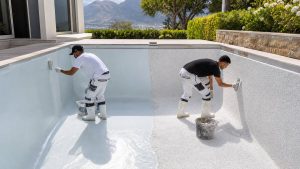
Get it wrong in one direction and the pump under-delivers, leaving dead spots, cloudy water and poor filtration. Get it wrong the other way and you oversize, wasting energy and shortening equipment life. Matching the pump to your actual TDH means you hit the right turnover rate, filter effectively and keep running costs sensible, which is especially valuable given South African electricity tariffs. A correctly matched pump also protects the surface of the pool by keeping water balanced and circulating, something worth considering alongside any fibreglass pool lining or marbelite resurfacing work, where consistent water quality helps the new finish last.
How to Estimate Your Total Dynamic Head
You do not need to be an engineer to get a workable estimate. The process follows a logical sequence.
Step by Step
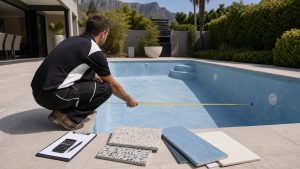
Start by measuring the vertical rise from the pool water level to the highest point in the system. Next, walk the pipe run and note its length, diameter and every fitting along the way. Each bend and fitting can be converted into an equivalent length of straight pipe using standard reference tables, which keeps the maths simple. Add the filter’s rated resistance at your target flow, then combine all of these figures into a single head value in metres.
Once you have that number, you compare it against pump performance curves to find a model that delivers your required flow rate at that head. Because the calculation depends on real measurements of your specific pipework, two pools that look identical can have very different TDH values.
Getting It Right for Your Pool
Total Dynamic Head is not the most glamorous part of owning a pool, but it quietly determines whether your circulation system is efficient, effective and affordable to run. If you are installing a new pump, retrofitting old plumbing or troubleshooting weak flow, taking the time to work out your TDH pays for itself many times over. It is also worth sorting out flow and circulation as part of any broader pool renovation, so a new surface and a correctly sized pump work together.
If the calculations feel daunting, or you would rather have someone assess your setup on site, the team at Aquatic Pools can help you size and specify the right equipment for your property. Reach out through our contact page and we will point you in the right direction.