
The little pressure gauge on top of your pool filter is one of the most useful, and most ignored, gadgets in your whole system. It quietly tells you how hard your filter is working and when it needs attention. If you have ever wondered what a normal pool filter pressure range actually is, or why the needle keeps creeping up, this guide walks you through what the numbers mean for a typical Cape Town pool.
What the Filter Pressure Gauge Measures
Your pump pushes water through the filter media, whether that is sand, glass, a cartridge, or DE. The gauge measures the resistance the water meets as it passes through. Clean media offers little resistance, so pressure is low. As dirt, sunscreen, leaves, and fine debris build up, the water struggles to get through and the pressure rises. In short, the gauge is really a cleanliness meter for your filter.
Because every pool, pump, and plumbing layout is slightly different, there is no single magic number that suits everyone. What matters far more is your own pool’s baseline and how far the reading drifts from it.
The Typical Normal Range
For most residential sand and glass-media filters, the gauge sits somewhere in the region of roughly 10 to 25 psi when the system is clean and running normally. Many Cape Town backyard pools settle comfortably in the lower-to-middle part of that band. The exact figure depends on your pump size, pipe diameter, the height of the filter above the water, and the type of media inside.
The single most important step is to note the reading right after a fresh backwash or a media clean, while the water is flowing freely and the filter is spotless. That figure is your clean starting pressure, and it becomes the reference point for everything that follows.
Why Your Baseline Matters More Than a Chart
Two identical-looking pools two streets apart in Somerset West can have different clean pressures simply because of pump strength and plumbing. This is why chasing a number from a random online chart can mislead you. Once you know your own clean baseline, you can spot problems early, long before the water turns cloudy.
When to Backwash or Clean the Filter
The common rule of thumb is to backwash or clean the filter once the pressure climbs about 7 to 10 psi above your clean baseline. At that point the media is loaded with trapped debris and flow through the system has dropped noticeably. Waiting far past this stage puts strain on the pump and lets circulation suffer, which is when algae and cloudy water tend to take hold.
- Record your clean pressure immediately after every backwash so you always have a fresh reference.
- Check the gauge weekly, ideally at the same point in your pump’s daily cycle.
- Backwash a sand or glass filter when the reading is roughly 7 to 10 psi over baseline.
- Rinse or replace cartridges on the same rising-pressure principle rather than on a fixed calendar.
- After heavy south-easter winds or a pool party, expect faster pressure build-up and check more often.
High Pressure and Low Pressure Warning Signs
Abnormally high pressure usually means a dirty or clogged filter, but it can also point to closed or partly shut return valves, or media that has caked and channelled over the years. If the pressure spikes and will not drop after a proper backwash, the media itself may be past its best and due for replacement.
Unexpectedly low pressure is often more concerning. It can signal a blockage before the pump, such as a clogged skimmer basket or pump basket, a low water level letting the pump draw air, or a leak on the suction side. Low flow with low pressure means your pool is not turning over properly, and poor circulation is the enemy of clear water.
Cape Town Seasonal Notes
Our summers bring more swimmers, more sunscreen, and those famous south-easterly winds that dump leaves and grit into the water, so filters load up quickly and pressure rises faster. In the cooler, wetter Cape winter you may run the pump for shorter periods, and it is easy to let a gradual pressure climb go unnoticed. A quick weekly glance at the gauge, whatever the season, keeps small issues from becoming big ones.
When the Gauge Points to a Bigger Problem
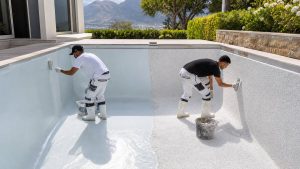
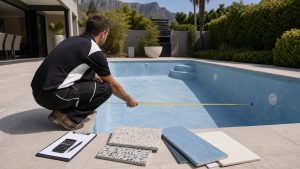
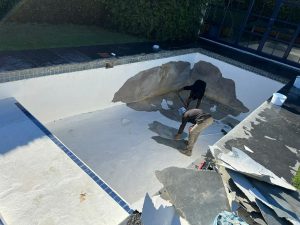
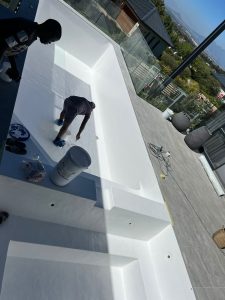
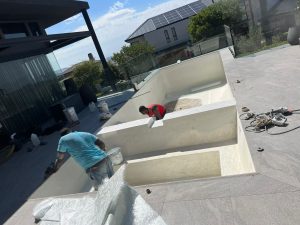
Sometimes stubborn pressure issues are a symptom of an ageing pool shell or a failing surface rather than the filter itself. Rough, porous, or flaking interiors shed material that clogs the filter faster and unbalances the water. If you are fighting constant filtration headaches alongside a tired-looking pool, it may be worth looking at a durable new lining such as a fibreglass pool lining to give the whole system a clean, smooth surface to work with. A fresh marbelite resurfacing finish does the same job.
A healthy filter, sitting in its normal pressure range, is one of the clearest signs that your pool is genuinely well cared for. Keep an eye on that little gauge, learn your own baseline, and act when it drifts. If you would like a professional to assess your setup or you are planning a full pool refresh, take a look at what we do across the Aquatic Pools range or simply get in touch with our Cape Town team for friendly, local advice.