Borates are one of the most underrated additives in modern pool care. Add them correctly and you get water that feels softer, resists pH swings and fights algae without constant chemical babysitting. The tricky part is dosing: borax is cheap and easy to find, but adding too little does nothing while adding too much can push levels out of range. This guide walks you through what borates do, the ideal target range and how to estimate how much borax your pool actually needs.
What Borates Actually Do in Pool Water
Borates work quietly in the background, and once they are dialled in you barely think about them again. Their three main benefits are worth understanding before you reach for the borax box.
- pH buffering: Borates act as a secondary buffer alongside your alkalinity. They slow the natural tendency of pool water to drift upward in pH, which means fewer acid additions and steadier chlorine performance.
- Algae suppression: At the right concentration borates make it harder for algae to photosynthesise. They are not a substitute for chlorine, but they take pressure off your sanitiser, especially during hot Cape Town summers.
- Silky water feel: Many pool owners notice the water feels smoother and looks a little more sparkling once borates are present. It is a subtle but genuinely pleasant change.
The Target Borate Range
For a residential pool the accepted sweet spot is 30 to 50 ppm of borates. Below about 30 ppm you get very little buffering or algae benefit, and above 50 ppm you are simply wasting product with no extra reward. Aiming for roughly 40 ppm gives you a comfortable middle ground with a little headroom before the next top-up.
Borates are stable and do not get consumed the way chlorine does. They only leave your water through splash-out, backwashing and rain overflow, so once you reach your target you may only need to top up once or twice a season.
Estimating How Much Borax You Need
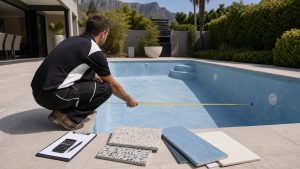
The first thing any borate calculator needs is your pool volume. If you do not know it, measure length, width and average depth in metres and multiply them together, then multiply by 1000 to convert cubic metres to litres. Accurate volume is the single biggest factor in getting your dose right.
A simple rule of thumb
As a general guideline, raising borates by around 10 ppm takes roughly 600 to 650 grams of standard borax per 10,000 litres of water. To go from zero to a 30 ppm target in a typical mid-size pool you are therefore looking at several kilograms of borax added in stages. Because brands and product purity vary, always work from the dosing instructions on your specific product and treat any calculator figure as a starting estimate rather than an exact prescription.
Add in stages and retest
Rather than dumping the full amount in at once, add roughly half, let it circulate for a day, then test and add the remainder. This avoids overshooting and gives the borax time to fully dissolve and distribute.
Do not Forget to Lower Your pH
Borax is alkaline, so every dose you add will push your pH upward. This is the step people most often miss. As you add borax, plan to add a matching amount of acid, usually muriatic acid or dry acid, to bring pH back down into the 7.2 to 7.6 range. Test frequently during the process. A common approach is to add a portion of borax, add acid, retest, and repeat until both your borate level and pH sit where you want them.
Testing and Safety
You cannot manage what you cannot measure, so pick up a dedicated borate test strip or kit. Standard test kits do not read borates, and they are the only reliable way to confirm you are in the 30 to 50 ppm window. Test before dosing, after dosing and periodically through the season.
- Always add borax to water in front of a running return jet, never add water to chemicals.
- Keep borax and acid well apart when handling and storing them.
- Wear gloves and eye protection, and keep children and pets away until everything has circulated and levels are confirmed safe.
- Note that pool-grade borate products are formulated for swimming pools, while household borax works but may contain additives, so read the label.
Getting the Most From a Well-Balanced Pool
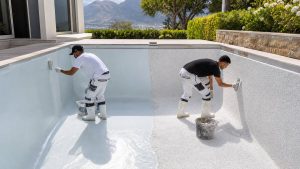
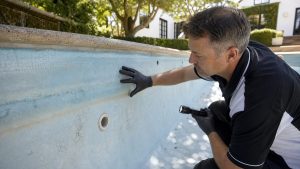
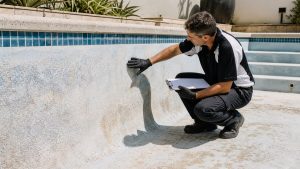
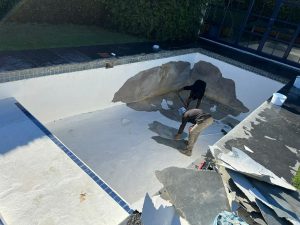
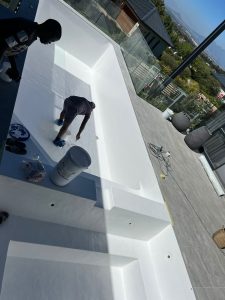
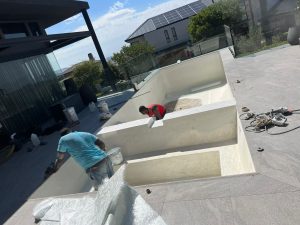
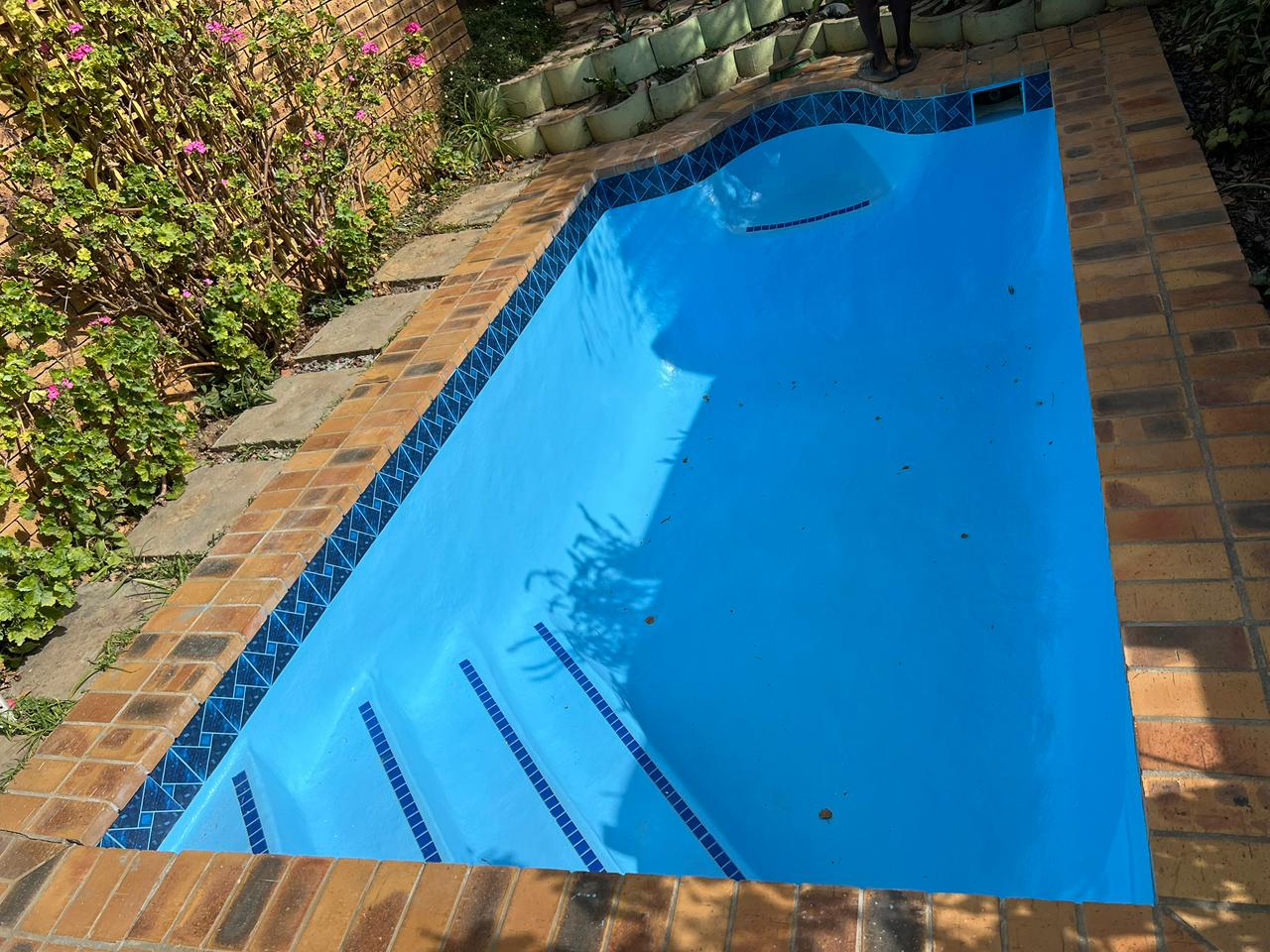
Borates are the finishing touch on water that is already balanced and well maintained. If your pool struggles to hold balance no matter what you add, the problem may run deeper than chemistry, an ageing or porous surface can constantly leach and interfere with your readings. In that case, resurfacing options such as marbelite pool resurfacing or a durable fibreglass pool lining can give you a smooth, non-porous shell that holds chemistry far more predictably.
Once your surface and balance are sorted, borates keep the water feeling great with very little ongoing effort. If you are unsure about your pool volume, its condition or the right dosing plan, the team at Aquatic Pools can help you get it right. Feel free to get in touch for advice tailored to your pool here in Cape Town.