Balanced water is the foundation of a healthy swimming pool, and pH sits right at the centre of it. A good pool pH calculator helps you work out exactly how much acid or soda ash you need to bring your reading back into the ideal band. In this guide we explain what the numbers mean, how to lower pH when it climbs too high, how to raise it when it drops, and why keeping pH in range protects both your swimmers and your pool surface. Whether you have a marbelite, plaster or fibreglass pool, the same principles apply.
What Is The Ideal Pool pH Level?
pH measures how acidic or alkaline your water is on a scale from 0 to 14. For swimming pools, the ideal range is 7.2 to 7.6. Sitting in this window keeps the water comfortable for swimmers, protects your equipment and surfaces, and lets your sanitiser do its job. Below 7.2 the water turns acidic and aggressive; above 7.6 it becomes alkaline and cloudy, and your chlorine loses its bite.
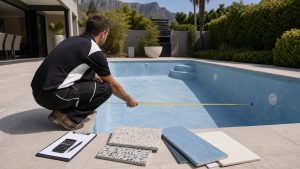
A pool pH calculator simply takes your current reading, your pool volume and your target pH, then estimates the dose of chemical needed. It removes the guesswork so you avoid the trap of overshooting and chasing the number back and forth.
Why pH Matters So Much
pH influences almost everything else in your pool. Get it wrong and you waste chemicals, damage surfaces and end up with water that never looks quite right. Here is what is at stake:
- Chlorine effectiveness: As pH rises, chlorine becomes far less active. At a pH of 8.0 a large portion of your chlorine is effectively asleep, which means algae and bacteria get the upper hand even when your test shows plenty of chlorine.
- Swimmer comfort: Water that is too acidic or too alkaline stings eyes and dries out skin. Balanced water feels soft and causes no irritation.
- Surface protection: Low pH slowly etches and roughens marbelite and plaster, while high pH encourages scale and calcium deposits.
- Equipment life: Acidic water corrodes metal fittings, ladders, heaters and pump components over time.
How To Lower Pool pH
If your test comes back above 7.6, you need to add acid to bring it down. The two most common options are muriatic acid (hydrochloric acid) in liquid form, or dry acid (sodium bisulphate) in granular form. Both work well; liquid acid is fast and economical, while dry acid is easier and safer to store and handle.
Always add acid to the water, never water to acid, and pour it slowly into the deep end with the pump running so it disperses evenly. Wait a few hours, let the pump circulate, then retest before adding any more. This patience is exactly where a pool pH calculator earns its keep, because it gives you a sensible starting dose instead of a blind guess.
How To Raise Pool pH
When your reading falls below 7.2, the water is acidic and needs to be raised. The standard product is soda ash (sodium carbonate). Dissolve it in a bucket of pool water first, then pour the solution around the perimeter with the pump running. Soda ash also nudges total alkalinity upward, so add it gradually and retest.
If you regularly battle low pH, the cause is often low total alkalinity, which we cover next. Fixing the underlying alkalinity usually stabilises pH so you stop fighting it every week.
pH And Total Alkalinity Work Together
Total alkalinity (TA) is the buffer that stops your pH from swinging wildly. Think of it as the shock absorber for pH. The recommended TA range is roughly 80 to 120 ppm. When alkalinity is too low, pH becomes unstable and bounces around after every rain shower or top-up. When it is too high, pH tends to drift upward and resists coming down.
The correct order is to balance total alkalinity first, then fine-tune pH. If you adjust pH while alkalinity is out of range, you will simply be chasing the reading. Once TA is settled, pH becomes far easier to hold steady.
Testing Tips For Reliable Readings
- Test at least twice a week in summer, and after heavy rain, big swim parties or topping up with fresh water.
- Collect your sample elbow-deep, away from the returns, for a representative reading.
- Use fresh reagents or test strips; expired kits give misleading results.
- Make one adjustment at a time, let the pump circulate, then retest before dosing again.
Protecting Your Pool Surface
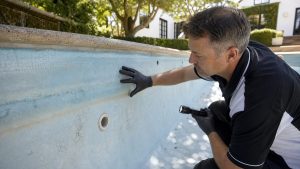
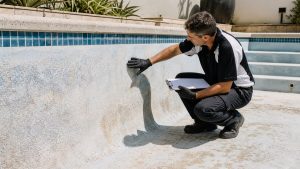
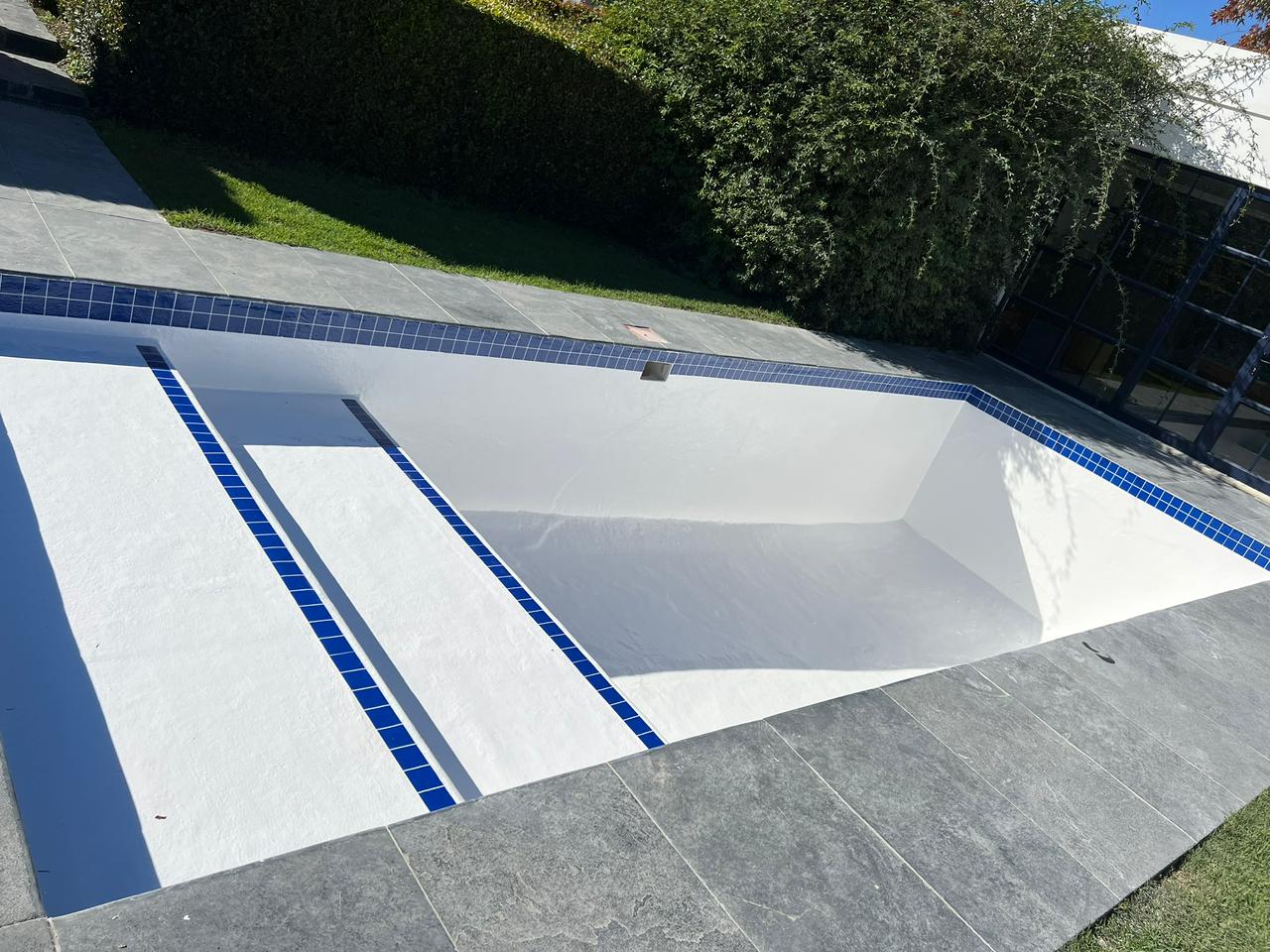
Consistently balanced pH is one of the simplest ways to extend the life of your interior finish. Acidic water gradually etches marbelite and plaster surfaces, leaving them rough and prone to staining, while balanced water keeps them smooth for years. Fibreglass is more forgiving, but sustained pH swings can still dull the gelcoat, so a fibreglass pool lining still benefits from disciplined water care.
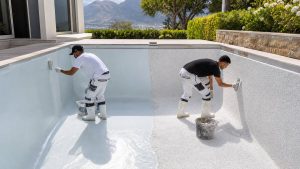
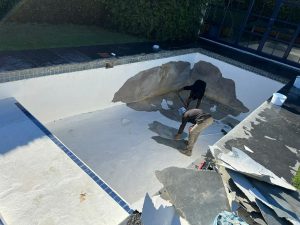
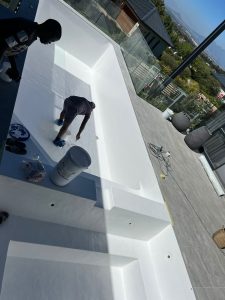
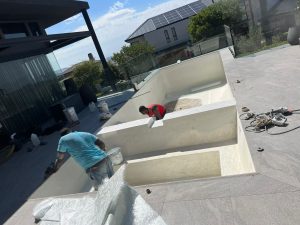
If your surface is already showing signs of acid etching, calcium scale or persistent staining, no amount of chemical balancing will fully restore it. At that point resurfacing is the answer, and our team at Aquatic Pools can assess whether a refresh is worthwhile.
Keep Your Water In Range
Balancing pH is not complicated once you understand the moving parts: aim for 7.2 to 7.6, sort out total alkalinity first, lower pH with acid and raise it with soda ash, and always retest before adding more. A pool pH calculator turns those steps into simple, repeatable doses so your water stays clear, comfortable and gentle on every surface. If you would rather hand the whole job over, get in touch with us and we will help you keep your pool in perfect condition.