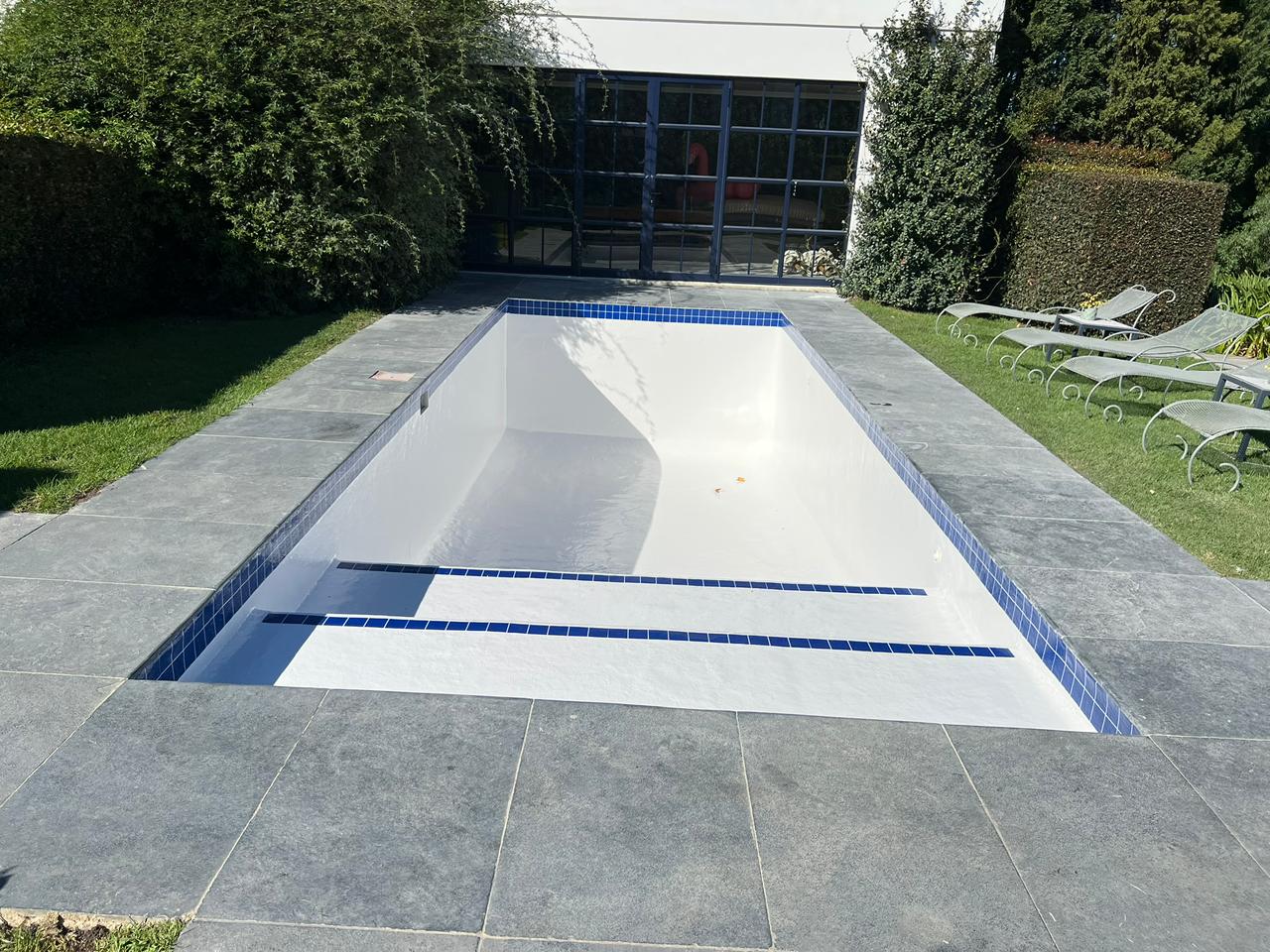
Owning a pool in Strand is one of the great pleasures of coastal Cape Town living. With warm summers, the southeaster rolling in off False Bay, and the beach just minutes away, a backyard pool gets plenty of use here. But the same coastal conditions that make Strand so appealing — salty air, strong sun, and shifting sandy soils — are also hard on pool surfaces. Over time, even a well-built pool can start to show cracks, rough patches, or fading. When that happens, fibreglass pool relining is one of the most effective ways to bring it back to life.
What Is Fibreglass Pool Relining?
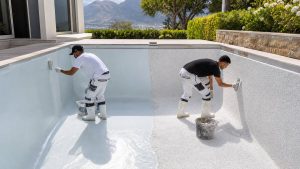
Fibreglass pool relining is the process of applying a new fibreglass and gelcoat layer over an existing pool shell. Rather than demolishing and rebuilding, the old surface is prepared, repaired, and then coated with layers of fibreglass matting and resin, finished with a smooth, colour-fast gelcoat. The result is a fresh, watertight lining that seals leaks, covers old damage, and restores the pool to a like-new condition. It works on concrete, marbelite, and older fibreglass pools alike.
If you are weighing up your options, it helps to understand how a professional fibreglass pool lining is built up in layers, because the quality of each stage determines how long the finished surface will last.
Why Strand Pools Benefit from Relining
Strand sits right on the coast, and that location brings specific challenges for pool owners. Salt-laden air accelerates surface wear, intense sun bleaches older finishes, and the sandy, sometimes unstable ground beneath many local properties can put stress on a pool shell. Marbelite and plaster surfaces are especially prone to becoming rough, chalky, and stained in these conditions.
Fibreglass relining answers these problems well because the finished surface is:
- Non-porous and smooth, so algae and dirt have far less to cling to
- Highly resistant to salt, chemicals, and UV degradation
- Flexible enough to cope with minor ground movement without cracking
- Quicker and less disruptive to install than a full rebuild
- Gentle underfoot, which matters for a family pool used all summer
Signs Your Strand Pool Needs Relining
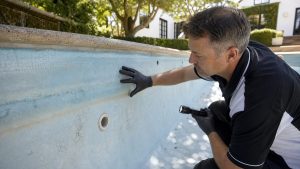
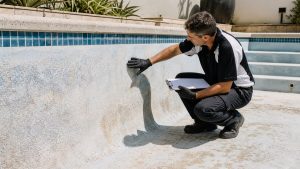
Pools rarely fail overnight. Instead, they give you warning signs that the surface is nearing the end of its life. Keep an eye out for rough or chalky patches that scratch skin and swimwear, persistent staining that no amount of scrubbing removes, or hairline cracks spreading across the interior. A pool that keeps losing water despite a healthy pump and plumbing is another strong clue that the lining has failed somewhere.
If you are noticing several of these issues at once, relining is usually more cost-effective than patch repairs that only buy a season or two. A proper reline addresses the whole surface at once, so you are not chasing new problems every few months.
Relining Versus Resurfacing
Homeowners often ask whether they should reline in fibreglass or opt for a fresh plaster-style finish. Both have their place. A traditional marbelite pool resurfacing can restore a classic look, while fibreglass offers a tougher, lower-maintenance surface that tends to hold up better against Strand’s coastal wear. The right choice depends on your pool’s current condition, your budget, and how much ongoing maintenance you want to take on.
What the Relining Process Looks Like
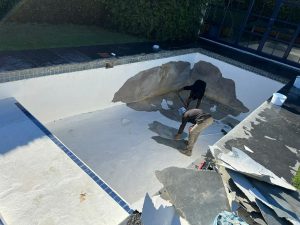
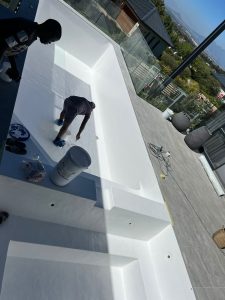
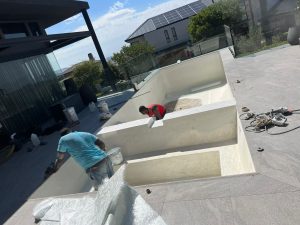
A typical fibreglass reline follows a clear sequence. First the pool is drained and the old surface is thoroughly cleaned and inspected. Any cracks, hollow spots, or damaged sections are cut out and repaired so the new layer bonds to a sound base. The surface is then keyed and primed before fibreglass matting and resin are applied and rolled out to remove air. Finally, the gelcoat topcoat is applied in your chosen colour and left to cure before the pool is refilled and balanced.
Weather matters for this kind of work, and Strand’s wind and coastal humidity mean timing the job well is important. Experienced local installers plan around the conditions so the resin and gelcoat cure properly, giving you a hard-wearing finish that lasts for years.
Caring for Your Newly Relined Pool
One of the biggest advantages of a fibreglass surface is how little upkeep it demands. Because the gelcoat is smooth and non-porous, brushing is easier, chemical use tends to drop, and staining is far less likely to take hold. Keeping your water balanced and running the filtration regularly is usually enough to keep the surface looking sharp through many summers of swimming.
Get Expert Fibreglass Relining in Strand
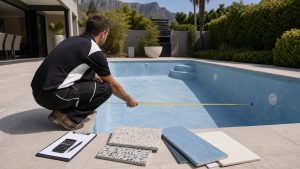
If your Strand pool is looking tired, leaking, or rough underfoot, relining could give it a whole new lease on life without the cost and upheaval of a rebuild. The team at Aquatic Pools works with pools across the Helderberg and greater Cape Town area and can advise on the best approach for your specific pool and site. To arrange an assessment or ask a question about your pool, simply get in touch with our team and we will help you plan the way forward.