If you own a swimming pool in Cape Town or anywhere across the Western Cape, you have probably heard people swear by either pool chlorine or ordinary household bleach to keep the water clear. Both do broadly the same job, but they are not identical, and the wrong choice over time can quietly work against your pool surface and your pocket. Here is a straightforward, local look at chlorine versus bleach so you can sanitise confidently and protect your investment.
What Chlorine and Bleach Actually Are
The confusion is understandable because both rely on the same active sanitiser. Household bleach is a liquid sodium hypochlorite solution, usually fairly weak. Pool chlorine, whether granular, in tablet form, or as liquid, is a more concentrated and pool-specific product designed to raise your free chlorine to a safe swimming range without adding unnecessary extras to the water.
When either dissolves, it releases hypochlorous acid, the compound that kills bacteria and algae. So in a chemical sense they are cousins. The differences that matter are in strength, additives, and how predictably each behaves in a large body of water sitting under the strong Western Cape sun.
Strength and Value
Pool chlorine is far more concentrated than supermarket bleach, so you need a great deal more bleach to achieve the same sanitising effect. That makes bleach look cheap per bottle but often poor value per swim. Cost factors to weigh up include how much product you actually get through, how quickly it degrades in heat and sunlight, and whether you are buying convenient tablets or bulk liquid.
Additives You Do Not Want
Many household bleaches include fragrances, thickeners, or other additives meant for laundry, not pools. These can cloud water, upset your chemical balance, and leave residues. Pool-grade products are formulated to avoid this, which is one reason most pool professionals steer owners toward proper pool chlorine.
Why the Western Cape Climate Changes the Answer
Our long, bright summers and intense UV break down unstabilised chlorine quickly. This is why stabiliser, or cyanuric acid, matters so much locally, and why relying on plain bleach can mean chasing your chlorine level all day. A few conditions make correct dosing especially important here:
- High summer temperatures that speed up chlorine loss and encourage algae.
- Strong UV that destroys unstabilised chlorine within hours.
- Heavy bather loads over holidays and long weekends.
- Wind-blown dust and organic debris that increase chlorine demand.
- Water-wise habits, where a well-maintained pool avoids costly draining and refilling.
The Surface Question: Protecting Your Pool
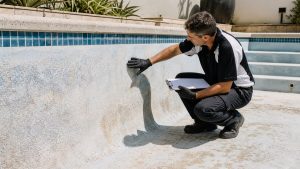
Sanitiser choice is not only about clear water; it is about the shell that holds it. Overdosing, undiluted pouring, and wild swings in chlorine can etch, bleach, and prematurely age a pool surface. This is a bigger risk with unpredictable household bleach, where the concentration and your dosing are harder to control.
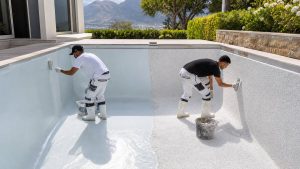
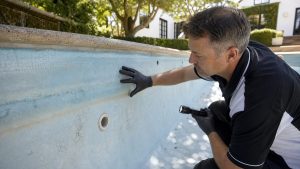
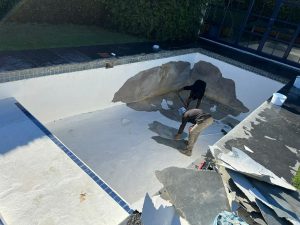
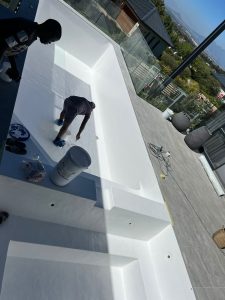
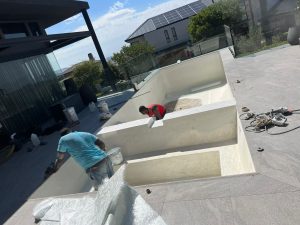
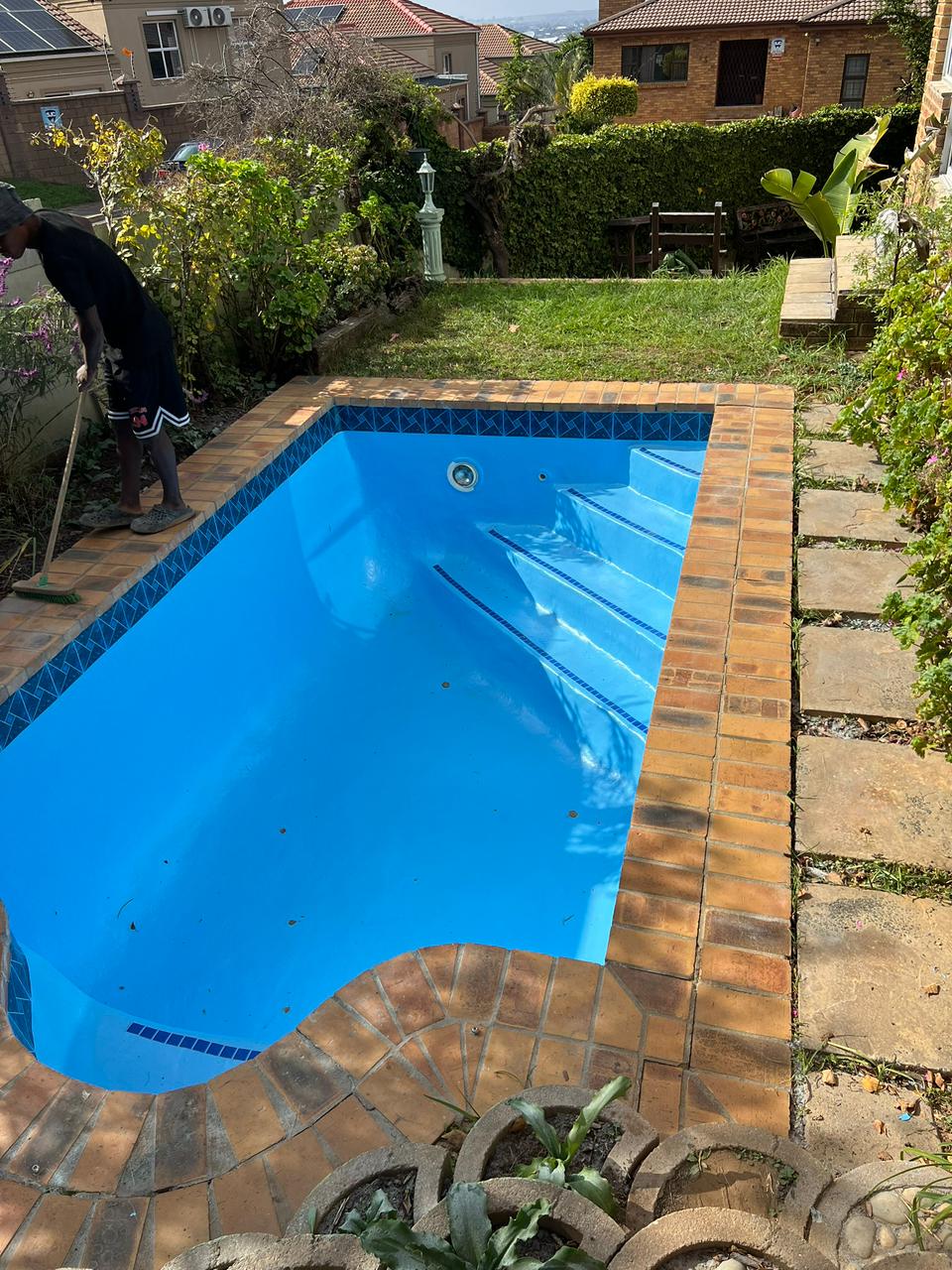
Marbelite and plaster surfaces are particularly sensitive to aggressive or uneven chemical treatment. If your pool already shows staining, roughness, or fading, that is often a sign it is due for professional attention rather than more chemicals. Our marbelite pool resurfacing in Cape Town restores a smooth, sealed finish that is far easier to keep balanced.
Owners looking for a lower-maintenance future frequently ask about fibreglass pool lining, which creates a non-porous surface that resists staining and tends to hold chemical balance more steadily. A stable surface simply forgives the occasional dosing mistake better than a worn, porous one.
A Practical Recommendation
For nearly every South African pool owner, purpose-made pool chlorine is the better everyday choice. It is more concentrated, additive-free, and designed to work with stabiliser under our sun. Reserve household bleach for genuine emergencies when nothing else is on hand, and even then dilute and dose carefully.
- Test your water regularly, especially in peak summer.
- Keep stabiliser in range so your chlorine lasts longer.
- Never pour concentrated product directly onto the pool surface.
- Address surface damage early rather than masking it with extra chemicals.
Get Local, Expert Help
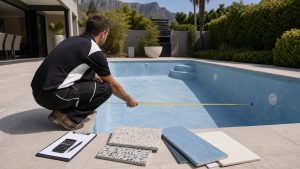
Water chemistry and surface condition go hand in hand. If you are unsure why your pool keeps losing chlorine, clouding up, or showing wear, it is worth having a professional look before small issues become expensive ones. You can explore our full range of services on the Aquatic Pools website, or simply get in touch with our team for advice tailored to your pool and your corner of the Western Cape.