A slowly dropping water level is one of the most frustrating problems a Cape Town pool owner can face. With our long, dry summers and water restrictions never far from mind, a leaking swimming pool is not just an inconvenience — it wastes a precious resource and, left unchecked, can undermine paving, damage pool plant and inflate your water bill. The good news is that most leaks are traceable and repairable once you know what to look for. This guide walks you through detecting, diagnosing and fixing a leaking pool in the Cape context.
Is your pool actually leaking?
Before assuming the worst, rule out evaporation. During a hot, windy Cape summer a pool can lose a surprising amount of water to the air alone. The simplest way to tell the difference is the bucket test.
- Fill a bucket with pool water and place it on the first step, so the water level inside and outside the bucket matches.
- Mark both levels and switch off the pump and any auto-fill for 24 hours.
- If the pool has dropped noticeably more than the bucket, you have a genuine leak rather than evaporation.
- Repeat the test with the pump running to see whether the leak worsens under pressure, which points to the plumbing.
Common causes of pool leaks
Leaks in Cape Town pools tend to fall into a few familiar categories. Older marbelite and plaster pools often develop hairline cracks as the shell moves with our clay-rich soils and seasonal wet-and-dry cycles. Fibreglass pools can suffer at joints or where the gelcoat has worn. Then there is the plumbing — skimmer boxes, return jets, suction lines and the pump pad are all common culprits, and a leak here can be invisible from the poolside.
Structural leaks
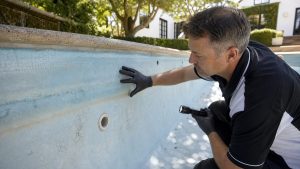
Cracks in the shell, failed expansion joints, and gaps around lights, steps and fittings are typical structural leaks. A crack that runs through the waterline tile line or shows a stain trail is usually easy to spot; finer ones may need a dye test, where a small amount of dye is released near a suspected crack to see if it gets drawn in.
Plumbing leaks
If the pool loses more water with the pump running, suspect the pressure side (returns). If it loses more with the pump off, the suction side or a low-lying crack is more likely. Underground pipe leaks are the trickiest and often benefit from professional pressure testing rather than guesswork.
Repair options
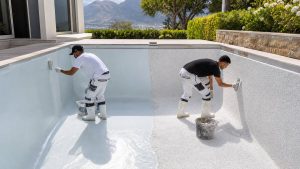
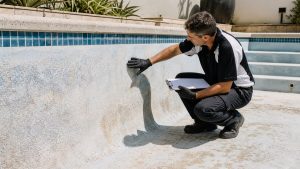
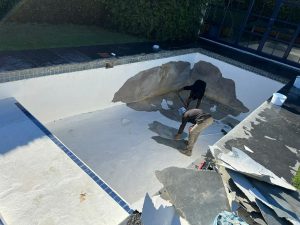
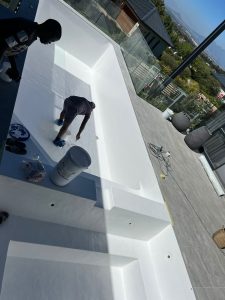
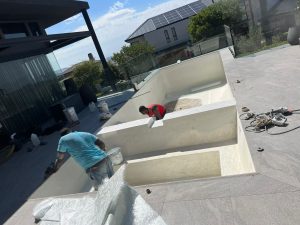
The right fix depends entirely on your pool’s construction and the severity of the problem. Minor cracks in a marbelite pool can sometimes be patched, but where the surface is widely crazed or the marbelite is porous and past its best, a full marbelite pool resurfacing is a far more durable answer than repeated spot repairs. For owners wanting a long-term, low-maintenance surface, converting to a fibreglass pool lining seals the entire shell in one continuous, flexible membrane that resists the cracking that plagues older rendered pools.
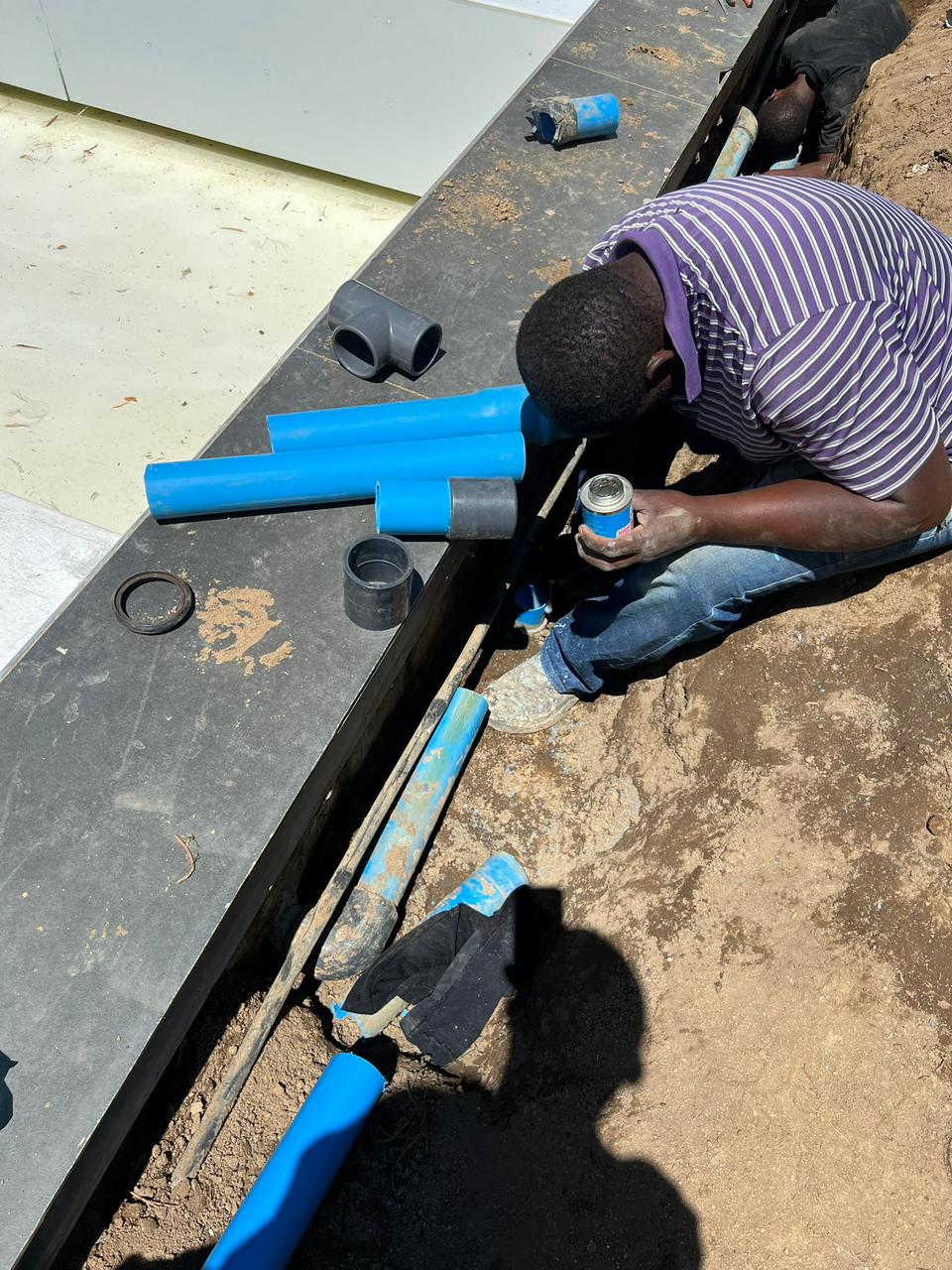
Fitting-related leaks — skimmers, lights and return eyeballs — are usually sealed with pool-grade putty or by replacing perished gaskets. Plumbing leaks may involve exposing and re-joining a section of pipe, or rerouting a line that has failed. Whatever the cause, matching the repair to the pool’s material and age is what separates a lasting fix from a quick patch that fails again next season.
What affects the cost of a repair
Every pool is different, so rather than a fixed figure it helps to understand the factors that drive the price. Broadly, the cost depends on:
- The type of leak — a surface fitting is quick, while an underground pipe or a full resurface is a bigger job.
- Your pool’s construction — marbelite, plaster or fibreglass each call for different materials and methods.
- The extent of the damage — an isolated crack versus a shell that has reached the end of its life.
- Access and site conditions, including how much paving or coping needs to be lifted to reach the problem.
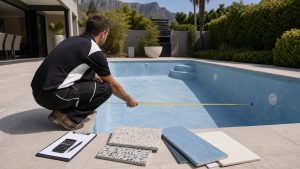
A proper on-site assessment is always worth it, because chasing the wrong cause wastes both time and money.
When to call in a professional
DIY sealing of a visible fitting or a hairline surface crack is within reach for many owners. But if the bucket test confirms significant loss, if the leak shifts with the pump, or if the shell is widely cracked, it is time to bring in specialists with proper detection equipment. The team at Aquatic Pools works with pools across the Cape Peninsula and can pinpoint a leak accurately before recommending the most cost-effective repair. If your pool is losing water and you would rather not guess, get in touch for an assessment and stop that slow leak before it becomes an expensive one.