If you own a pool in Cape Town or anywhere across the Western Cape, you already know how quickly the water cools once the summer fades. A solar pool heater is one of the most cost-effective ways to stretch your swimming season without sending your electricity bill through the roof. But how does the technology actually work, and is it worth fitting to your pool? Let’s break it down in plain terms for local pool owners.
The Basic Idea Behind Solar Pool Heating
A solar pool heater does something wonderfully simple: it uses free energy from the sun to warm your pool water. Instead of relying on a gas burner or an electric element, it circulates your existing pool water through a set of solar collectors, usually mounted on your roof. The water absorbs heat as it passes through, then flows back into the pool a few degrees warmer. Repeat this thousands of times a day and the whole pool gradually climbs to a comfortable temperature.
Because the Western Cape enjoys long, sunny summers and plenty of clear autumn days, solar heating suits our climate particularly well. It won’t turn a winter pool into a hot tub, but it can comfortably add several weeks to either end of your swimming season.
The Main Components
A typical solar pool heating system is made up of four working parts, each with a clear job:
- Solar collectors — the panels or tubing (often black polypropylene) that soak up the sun’s heat and transfer it to the water passing through them.
- Your pool pump — in most cases the existing filtration pump pushes water up to the collectors and back, so no separate pump is needed.
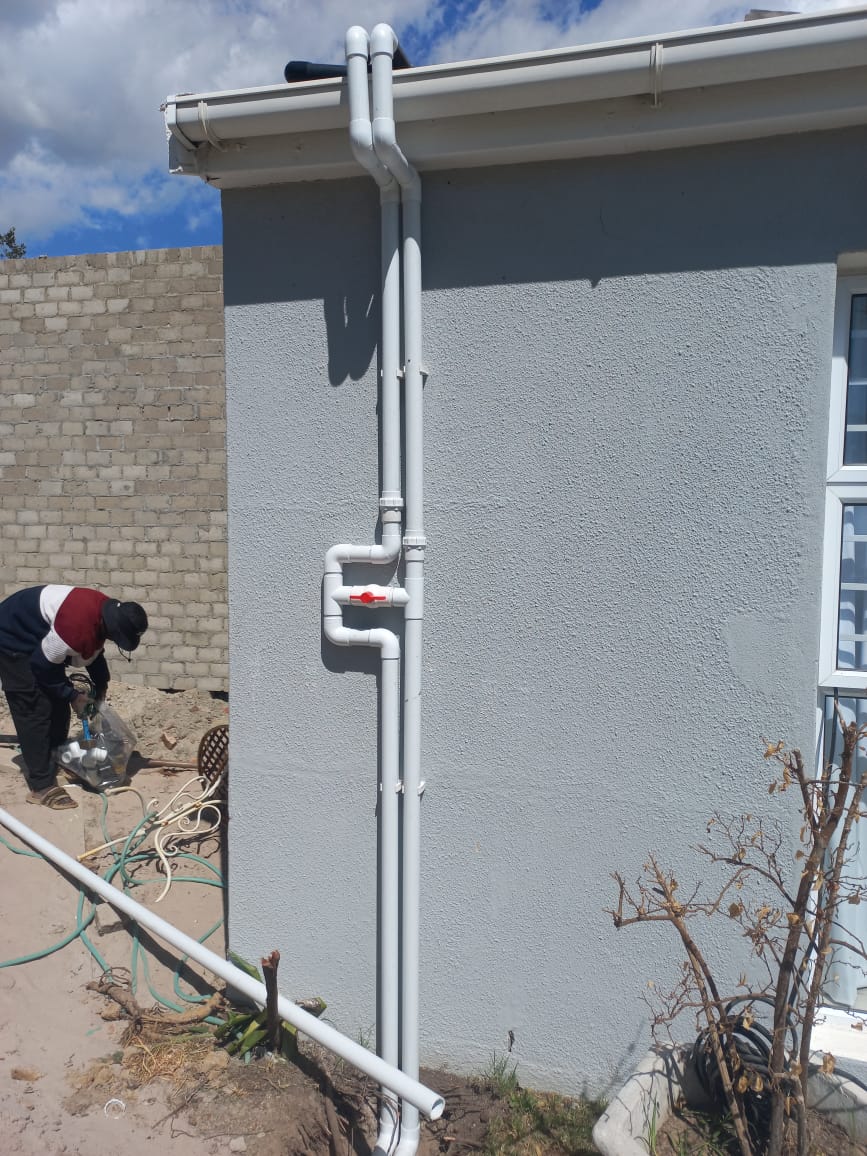
- A flow control or diverter valve — this sends water to the collectors when heating is useful and bypasses them when it isn’t.
- A controller and sensors — these compare the roof temperature to the pool temperature and only run the system when the panels can actually add warmth.
The clever bit is the controller. On a cool, overcast day it keeps the water in the pool rather than pumping it up to cold panels, which would waste heat instead of gaining it.
How the Cycle Actually Runs
When the sun is out and the collectors are warmer than the pool, the controller opens the diverter valve. Water is drawn from the pool, pushed through the filter, and then up to the roof-mounted collectors. As it snakes through the panels it picks up heat, then returns to the pool. Over the course of a sunny day the temperature can rise noticeably. At night, or when there’s no heating benefit, the valve simply keeps water circulating through the filter as normal.
Glazed vs Unglazed Collectors
There are two broad types of solar collectors. Unglazed collectors are the more common, affordable option for outdoor pools — simple black mats or tubes with no glass cover. Glazed collectors have a protective glass panel and insulation, which lets them capture heat even in cooler weather, but they cost more. For most Cape Town homes, unglazed collectors offer the best balance of price and performance, especially if the goal is to extend the season rather than heat through winter.
What Affects Performance?
Several factors decide how well a solar system heats your particular pool:
- The surface area of collectors relative to your pool’s size — more panel area means faster, more reliable heating.
- Roof orientation and shade — north-facing, unshaded roofs perform best in the Southern Hemisphere.
- Whether you use a pool cover — a cover dramatically reduces overnight heat loss and evaporation, and makes solar heating far more effective.
- Wind exposure, which is worth considering given how breezy parts of the Cape can be.
Is a Solar Heater Right for Your Pool?
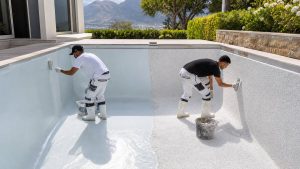
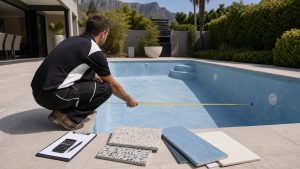
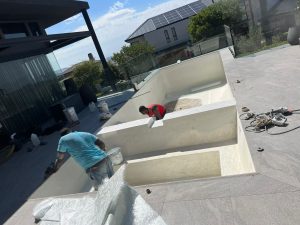
Solar heating pairs beautifully with a well-maintained, watertight pool. If your pool surface is old, cracked or losing water, you’ll be heating water that’s slowly escaping — so it’s worth getting the shell sorted first. A smooth, sealed finish such as marbelite pool resurfacing not only looks better but helps retain heat, while a durable fibreglass pool lining gives you a non-porous surface that holds up well against the elements.
The upfront outlay for a solar system depends on your pool size, roof access and the number of collectors you need, but the running cost is close to nothing since the sun does the work. That combination of low ongoing cost and a longer swimming season is what makes solar so popular with local homeowners.
Getting the Groundwork Right
Before adding any heating, it pays to have your pool structure and surfaces in good shape. If you’re planning a renovation or simply want expert advice on whether your pool is ready for solar heating, the team at Aquatic Pools can assess your setup and point you in the right direction. Feel free to get in touch for a chat about your pool and the best way to enjoy it for more of the year.
The Bottom Line
A solar pool heater works by capturing free heat from the sun and moving it into your pool through collectors, your pump and a smart controller. For the sunny Western Cape, it’s a sensible, low-running-cost way to swim more comfortably from spring right through to autumn — especially when your pool surface is sound and paired with a good cover.