A leaking pool pump is one of the most common problems we see across Cape Town, and more often than not the culprit is a worn shaft seal. If you have noticed water pooling under the motor, a whining pump, or the motor tripping your DB board, the shaft seal has probably failed. The good news is that replacing a pool pump shaft seal is a job many handy pool owners can tackle in an afternoon with the right parts and a bit of patience.
What Is A Pool Pump Shaft Seal?
The shaft seal is a two-part mechanical seal that sits between the wet end of the pump (where water flows) and the dry electric motor. One half spins with the shaft while the other stays fixed against the seal plate, and a smooth ceramic-and-carbon face keeps water from creeping into the motor. In our coastal climate, salt, chlorine and long summer running hours wear that seal face down, and once it goes, water finds its way straight onto the motor bearings.
Signs Your Shaft Seal Has Failed
- Water dripping from the underside of the pump, between the wet end and the motor.
- A rusty or corroded motor shaft and end bell.
- Grinding, squealing or humming noises when the pump runs.
- The pump tripping the earth leakage on your distribution board.
- Loss of prime or reduced water flow to the pool.
Tools And Parts You Will Need
Before you start, buy the correct seal for your pump make and model — a Speck, Quality, Waterco or Hayward pump each takes a specific seal, so take a photo of the pump label to your local pool shop. You will also want a fresh diffuser O-ring and a tub of silicone-based pool lube while you are in there.
- Replacement mechanical shaft seal (matched to your pump).
- A set of spanners, a screwdriver and an Allen key set.
- Silicone lubricant and a clean cloth.
- Fine sandpaper or a wire brush for cleaning the shaft.
Step-By-Step: Replacing The Shaft Seal
1. Isolate The Power
Switch the pump off at the DB board and, if you can, physically unplug it. Never work on a pump that is still live — our number one safety rule. Close the isolating valves or lower the water level below the pump so it stops draining while you work.
2. Remove The Motor From The Wet End
Undo the bolts that clamp the motor housing to the pump body and gently pull the motor and seal plate away. The impeller is threaded onto the shaft, so hold the motor shaft steady from the back (there is usually a slot or flat for a spanner) and unscrew the impeller anti-clockwise.
3. Swap The Seal Halves
Prise the fixed ceramic half out of the seal plate and push the new one in — clean, dry hands only on the polished face, as skin oils shorten its life. Slide the spring-loaded rotating half onto the shaft with the carbon face pointing outward. A smear of silicone lube on the rubber cup helps it seat without tearing.
4. Reassemble And Test
Refit the impeller, diffuser and a new O-ring, bolt the motor back to the pump body, then re-prime and switch on. Watch for leaks for the first few minutes and listen for smooth, quiet running.
When To Call In The Professionals
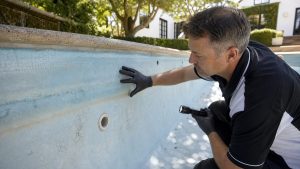
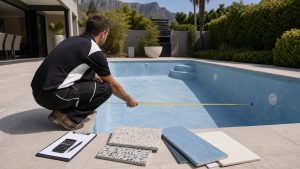
If the motor bearings are already rumbling, the shaft is badly pitted, or you simply would rather not open up the pump, it is worth getting help. A seal replaced too late can cost you a whole motor. At Aquatic Pools we service and repair pool equipment right across the Cape Town area, and we can source hard-to-find seals for older pumps. Pump trouble often shows up alongside other wear, so it is a good moment to have the pool checked over — from the shell to the circulation.
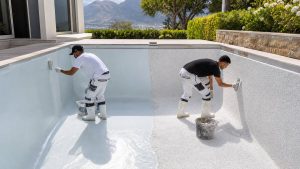
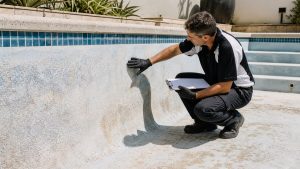
Many of the older pools we look after also need attention to the pool surface itself. If your interior is chalky or cracked, our marbelite resurfacing service can bring it back to life, while a fully sealed, low-maintenance finish is available through our fibreglass pool lining option.
We handle everything from a quick seal swap to a full refurbishment. Feel free to get in touch with our team for honest advice tailored to your pool.
Keeping Your New Seal Lasting Longer
Once the new shaft seal is in, keep your pump primed at all times — running a pump dry is the fastest way to burn out a fresh seal. Balance your water chemistry, back-wash the filter regularly, and give the pump a rest during off-peak months. Look after it and a good quality shaft seal should give you several trouble-free Cape Town summers.