Calcium hardness is one of the quietest numbers on your test kit, yet it has an outsized effect on the lifespan of your pool’s interior. Get it wrong and you either etch a soft plaster finish or grow a crust of scale on the waterline. This calcium hardness calculator guide walks you through the ideal range, how much calcium chloride to add when levels are low, and how to lower hardness by replacing water when levels climb too high. If your surface already shows the damage, our team at Aquatic Pools can help you plan a fix around Cape Town’s hard-water conditions.
What Is Calcium Hardness and Why It Matters
Calcium hardness measures the amount of dissolved calcium in your pool water, reported in parts per million (ppm). Water is naturally “hungry” for calcium. When there is too little dissolved, it draws calcium out of your plaster, marbelite, grout and even metal fittings. When there is too much, calcium falls out of solution and deposits as scale.
The generally accepted ideal range is 200-400 ppm, with 250-350 ppm being the comfortable target for most plaster and marbelite pools. Fibreglass pools tolerate the lower end of the range because the surface is non-porous and does not need calcium to stay intact.
Effects of Low and High Calcium Hardness
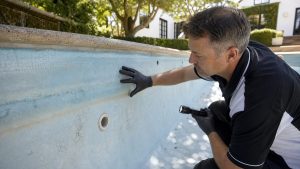
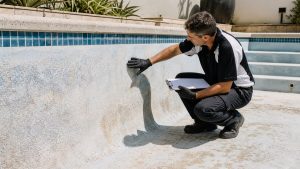
- Too low (below 150 ppm): Water leaches calcium from cement-based surfaces, causing etching, pitting and a rough, chalky feel on marbelite or plaster.
- Too high (above 400 ppm): Calcium carbonate scale forms on the waterline, in pipework and on the heater element, and the water can turn cloudy.
- In range (200-400 ppm): The water sits in balance with the surface, protecting your interior and keeping the pool clear.
Because so much of the Western Cape sits on limestone and dolomite, top-up water can already carry a fair amount of calcium, so test before you dose.
How Much Calcium Chloride to Add to Raise Hardness
When your reading is below the ideal range, you raise it with calcium chloride (often sold as a hardness increaser). A useful rule of thumb is that adding roughly 115 grams of calcium chloride per 10,000 litres raises hardness by about 10 ppm. From there you scale up to the gap you need to close and your pool’s volume.
Working Out Your Dose
Follow this simple sequence:
- Test your current calcium hardness and subtract it from your target (for example, 300 ppm target minus 180 ppm current = 120 ppm to add).
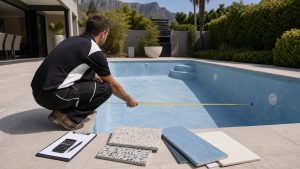
- Find your pool volume in litres. Length x width x average depth in metres x 1,000 gives a close estimate for a rectangular pool.
- Multiply the 115 g per 10,000 L per 10 ppm figure up to your volume and the ppm gap.
Always pre-dissolve calcium chloride in a bucket of water rather than pouring granules straight into the pool, because it releases heat as it dissolves. Add it slowly near a return jet with the pump running, then re-test after the water has circulated for a few hours. Raise in stages rather than chasing the full jump in one dose.
How to Lower Calcium Hardness by Replacing Water
There is no practical chemical that removes calcium from pool water, so the reliable way to reduce hardness is to dilute it with fresh, lower-hardness water. This is a partial drain and refill.
The Dilution Method
The proportion of water you replace roughly matches the proportion of hardness you remove, provided your fill water is softer than the pool. If your pool sits at 500 ppm and your tap water is around 100 ppm, replacing about a quarter of the volume brings you meaningfully closer to target. Drain in stages, refill, then re-test rather than emptying the pool in one go.
- Never fully drain a fibreglass or marbelite pool without professional guidance, as an empty shell can float, crack or lose its bond.
- Check your fill water’s hardness first; if it is also very hard, dilution helps less and you may need to manage saturation with pH and alkalinity instead.
- Re-balance pH and total alkalinity after any large water change.
Calcium Hardness and Your Pool Surface
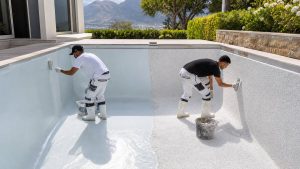
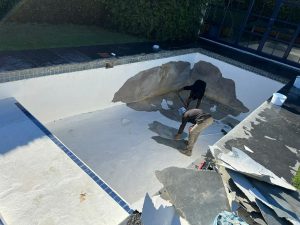
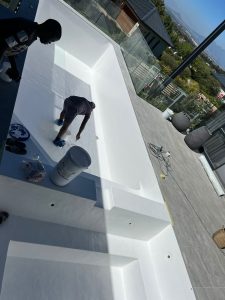
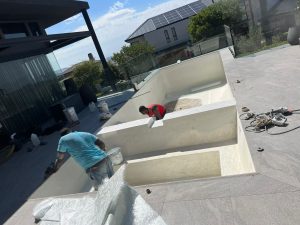
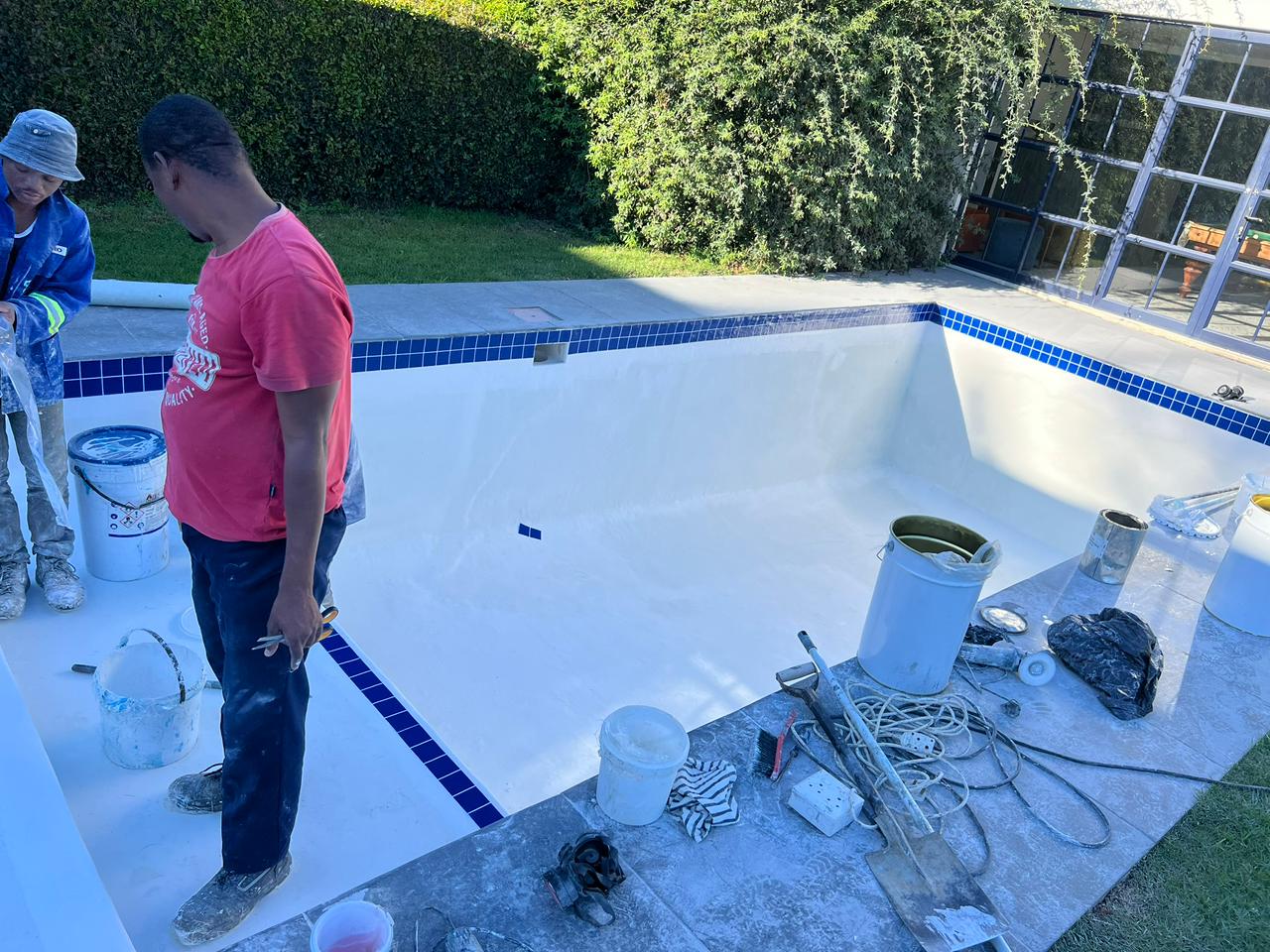
Balancing matters most for cement-based interiors. A marbelite finish relies on calcium staying in solution to avoid being slowly dissolved away, which is why chronically low hardness leads to that gritty, eroded texture. If your surface is already etched or delaminating, resurfacing is often more cost-effective than fighting the chemistry forever.
By contrast, a fibreglass pool lining is inert, so it does not feed calcium into the water or suffer etching. Owners who are tired of constantly balancing an old plaster pool sometimes switch to fibreglass for exactly this reason.
Keep It Balanced Long Term
Test calcium hardness monthly, and always after heavy rain or a big top-up. Keep it inside the 200-400 ppm band, adjust pH and alkalinity alongside it, and your interior will thank you with years of extra life. If your numbers keep drifting or your surface is showing wear, get in touch and we will assess whether balancing, resurfacing or relining is the smarter long-term move.