There are few things more off-putting than lifting the pool cover on a warm Cape Town morning and finding water that is green, cloudy, or tinged with brown instead of that inviting sparkle. Pool water discolouration is one of the most common complaints we hear from homeowners across the Western Cape, and the good news is that almost every colour tells a story. Once you know what your water is trying to say, fixing it becomes far less daunting. In this guide we unpack the most common shades of discoloured pool water, what causes them locally, and the practical steps you can take to get back to clear, swimmable water.
Why Pool Water Changes Colour
Pool water is essentially a chemistry set that responds to sunlight, temperature, rainfall, and how often the pool is used. In our Cape climate, hot summer days speed up chlorine loss, while the wet winter months and the famous Cape wind blow leaves, dust, and organic debris straight into the water. Add the odd Berg wind stirring up sand and pollen, and it is easy to see why the balance tips so readily. Discolouration is usually the visible result of one of three things: an algae bloom, a chemical imbalance, or dissolved metals reacting with your sanitiser.
Green Water: The Algae Problem
Green is the colour most Cape Town pool owners dread, and it nearly always points to algae. When chlorine levels drop, algae spores that are always present in the water seize their chance and multiply quickly, especially in the summer heat. A faint green tint means the bloom is just starting; a deep, murky green means it has taken hold, sometimes overnight.
To tackle green water:
- Test and balance your pH first, aiming for roughly 7.2 to 7.6, because chlorine works poorly outside this range.
- Shock the pool with a strong dose of chlorine to kill the algae.
- Brush the walls, steps, and floor to dislodge algae clinging to the surface.
- Run the filter continuously until the water clears, backwashing as needed.
- Add a good-quality algaecide as a follow-up defence once the water is blue again.
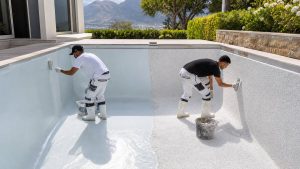
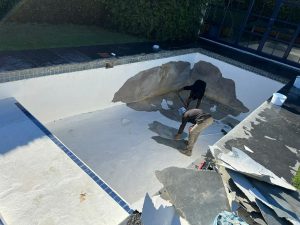
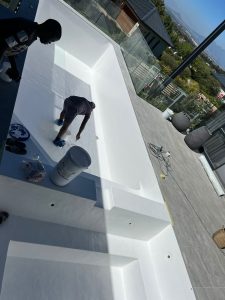
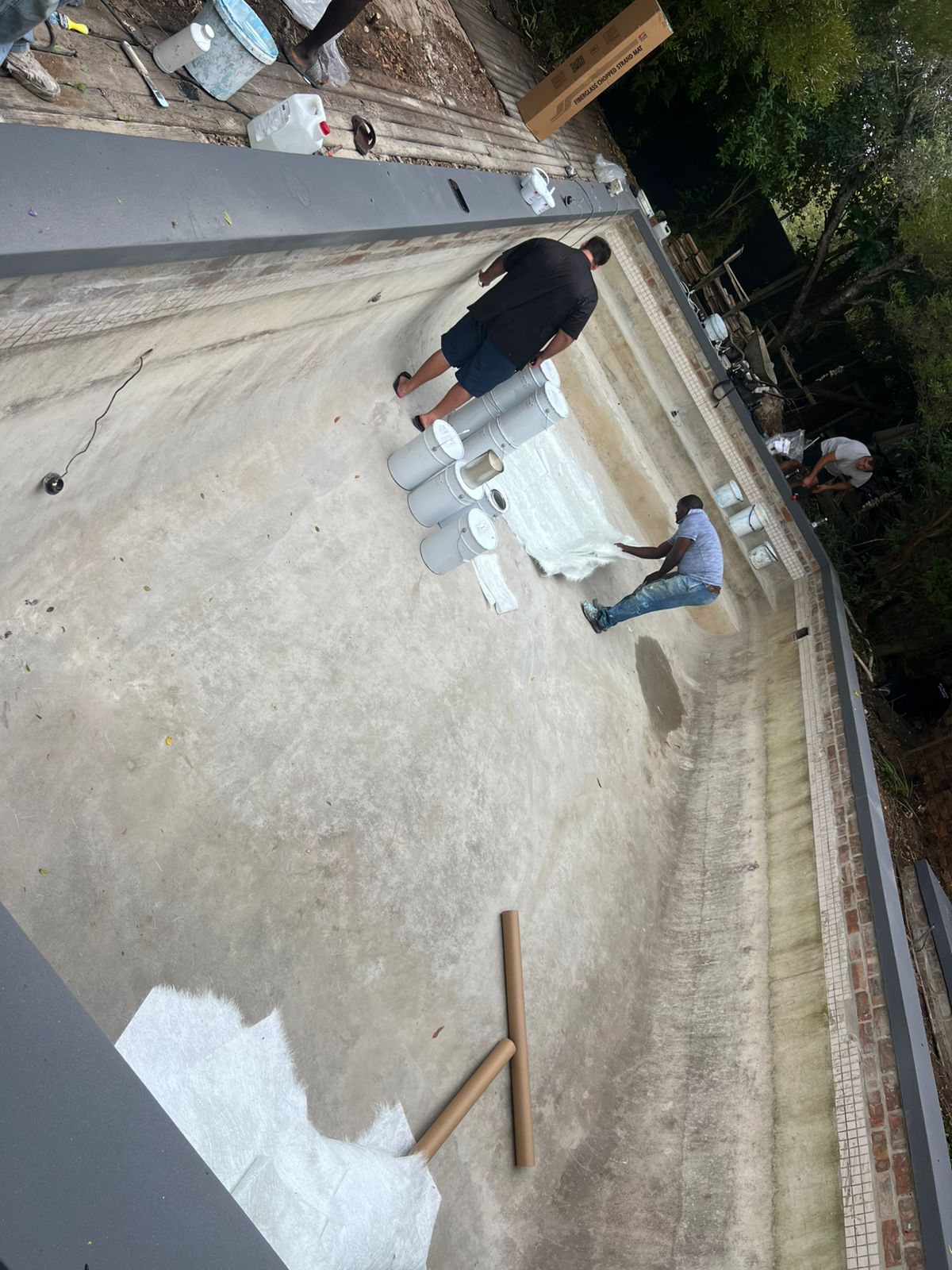
If your pool keeps turning green no matter how diligent you are, the surface itself may be to blame. Rough, porous, or failing plaster gives algae countless places to anchor, and no amount of chlorine will win that battle. In those cases, a fresh marbelite pool resurfacing can make ongoing maintenance dramatically easier.
Cloudy or Milky White Water
Cloudy water that looks hazy or milky rather than green is usually a sign of a chemical imbalance or poor filtration rather than algae. High pH, high total alkalinity, or very hard water can cause tiny particles to stay suspended, scattering light and robbing the pool of its clarity. It can also follow a heavy rain, a big pool party, or a filter that is clogged and no longer doing its job.
Start by testing your water and correcting the balance, then check that the filter is clean and running long enough each day. A clarifier can help bind the fine particles together so the filter can trap them. If the cloudiness lingers despite balanced chemistry, your filtration system may simply be undersized or worn.
Brown, Red, or Black Staining
Brown or reddish water often means dissolved metals, typically iron or manganese, that come out of solution when you add chlorine and oxidise. Borehole water, common on smallholdings around the Cape, is a frequent culprit. Black or grey discolouration usually indicates a stubborn strain of black algae rooting into the surface.
Dealing with Metal Stains
For metal-related discolouration, a sequestering agent (metal remover) will bind the metals so they can be filtered out rather than staining your interior. Avoid over-chlorinating until the metals are under control, as that only accelerates the staining.
When the Surface Is the Real Issue
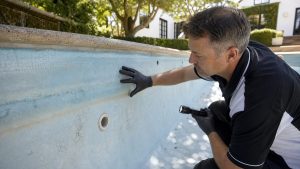
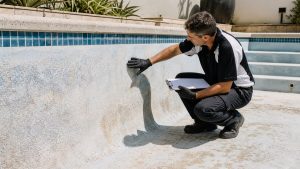
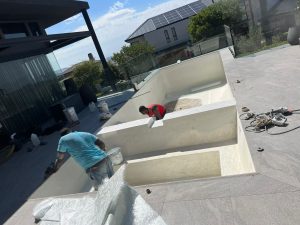
Persistent stains that will not brush or treat away often point to an ageing interior that has become porous or chemically etched. If your marbelite is thin, chalky, or patchy, or if you are weighing up a longer-term solution, a fibreglass pool lining gives a smooth, non-porous finish that resists staining and algae far better than a worn plaster surface.
Preventing Discolouration in the First Place
Consistency is everything. Test your water at least weekly in summer, keep your chlorine and pH within range, brush and skim regularly, and make sure your filter runs long enough for your pool volume. Keeping organic debris out during our windy months goes a long way too. A sound, well-maintained interior surface is the foundation of all of this, which is why resurfacing at the right time saves money and frustration in the long run.
Get Local Expert Help
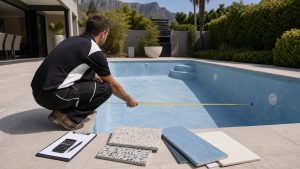
If your pool water keeps turning colours no matter what you try, the underlying cause may be structural rather than chemical. Our team knows Cape Town pools, water, and conditions inside out. Learn more about what we do on our homepage, or get in touch for honest advice on whether a clean, resurface, or reline is what your pool really needs to stay crystal clear.