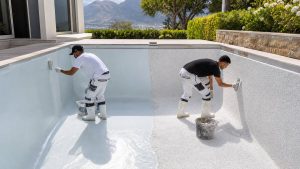
If you have recently had your pool resurfaced with marbelite or fresh plaster, you might have noticed a fine, cloudy film settling on the floor and walls. This is commonly known as pool plaster dust, and while it looks alarming, it is a normal part of a new plaster surface curing. In the Western Cape, where hard water and warm summers put extra strain on new finishes, knowing how to treat and prevent it will keep your pool crystal clear and protect your investment for years to come.
What Is Pool Plaster Dust?
Pool plaster dust is a chalky, white residue that forms as a freshly plastered or marbelite surface cures underwater. As the cement-based finish sets, tiny particles of calcium and cement lift off the surface and float through the water before settling at the bottom. When you brush it, it billows up in a soft cloud, much like disturbing flour. It is different from algae or ordinary dirt, and it typically appears within the first few weeks after a marbelite pool resurfacing project.
Why It Happens
There are two main reasons plaster dust forms. The first is the natural curing process, where a small amount of surface material is released as the plaster hardens. The second, and more troublesome cause, is unbalanced water chemistry. When your water is too soft or the pH sits too low, the water becomes aggressive and actually etches the new surface, pulling calcium out of the plaster and creating far more dust than curing alone would produce.
How to Treat Plaster Dust
The good news is that plaster dust is straightforward to deal with if you stay consistent in the first month. The key is patience and regular maintenance rather than harsh chemicals. Here is a practical routine that works well for Western Cape pools:
- Brush daily. Use a soft-bristle brush to sweep the walls and floor towards the main drain at least once a day for the first two to three weeks. This lifts the dust so your filtration can remove it.
- Run your filter longer. Extend your pump cycles so the water passes through the filter more often. Backwash or clean the filter more frequently than usual, as it will trap a lot of fine material.
- Balance your water carefully. Keep pH between 7.4 and 7.6, alkalinity around 80 to 120 ppm, and ensure your calcium hardness is not too low. Balanced water stops the surface from being etched further.
- Vacuum to waste. If dust keeps settling, vacuum directly to waste rather than through the filter so you physically remove the particles from the pool.
Repeat this cycle daily and you will see the water clearing steadily. Most plaster dust resolves within two to four weeks once the surface has fully cured and the chemistry is stable.
How to Prevent Plaster Dust
Prevention starts before the water even goes back into the pool, which is why the quality of the resurfacing work matters so much. A properly applied and troweled finish releases far less dust than a rushed or poorly mixed one. This is where working with an experienced team makes a real difference to the long-term result.
Get the Start-Up Right
The refill and start-up period is critical. Fill the pool in one continuous session to avoid a hard water line, and test and balance the water as soon as it is full. Many Western Cape pool owners find that the local water sits on the softer side, so adding calcium hardness during start-up helps protect a new plaster or marbelite surface from etching.
Consider Your Surface Options
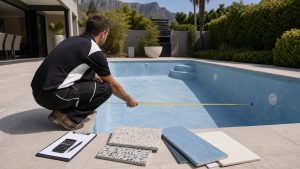
If you have battled with recurring plaster dust or a chalky finish across several seasons, it may be worth reviewing your surface choice altogether. A fibreglass pool lining creates a smooth, non-porous shell that does not release calcium the way cement-based plaster does, eliminating plaster dust entirely. It is a popular upgrade for owners who want a lower-maintenance pool.
When to Call in the Professionals
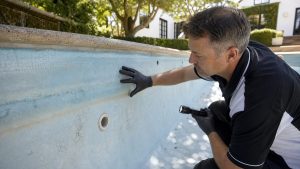
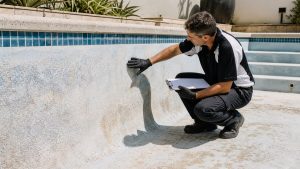
If your water stays cloudy for longer than a month, the dust keeps returning after brushing, or you notice rough patches and streaking on the surface, it is a sign that something more than normal curing is at play. Ongoing etching can shorten the life of your finish, so it is best to have it assessed early. Our team can inspect the surface, check your water balance, and recommend the right course of action.
Plaster dust is a common and manageable phase of a newly resurfaced pool. With daily brushing, good filtration, and carefully balanced water, your pool will settle into a clear, durable finish. If you would like expert help with a resurface, a fibreglass upgrade, or simply getting your water right, get in touch with our Cape Town team or browse the full range of services on our pool renovation website.