Few things test a pool owner’s nerves like watching a Cape Town cold front roll in over a full pool. The wind picks up, the rain comes sideways, and the question surfaces: should you leave the pump running, or switch it off until the weather clears? It is one of the most common questions we get from homeowners across the Western Cape, and the honest answer is that it depends on how heavy the rain is and how safe your electrical setup is. This guide breaks down what to do in light showers, what to do in a proper storm, and how load-shedding changes the equation for South African pool owners.
Light rain: keep the pump running
During a light, steady drizzle there is usually no reason to switch your pump off. In fact, keeping it running is often the better choice. Rain dilutes your pool water, disturbs the surface, and washes airborne dust, pollen and debris into the pool. A running pump keeps the water circulating through the filter, which helps clear that incoming debris and keeps your chemistry evenly mixed rather than letting it stratify.
Rainwater is also slightly acidic and free of the chlorine your pool relies on, so a decent shower can nudge your pH and sanitiser levels off balance. Circulation during and after the rain makes it far easier to rebalance the water once the weather clears. If your area gets frequent gentle winter rain, as much of the Cape does, simply running your normal filtration cycle through the wet spell is the sensible default.
What to check after light rain
- Test and rebalance your pH and chlorine once the rain stops.
- Empty the skimmer and pump baskets, which fill faster with washed-in leaves.
- Watch your water level and backwash the filter if the pool has overflowed.
- Brush and net any debris that the storm blew across the surface.
Heavy storms: switch it off
A serious storm is a different story. When there is lightning, damaging wind, or torrential rain, the safest move is to switch the pump off at the isolator and leave it off until the weather passes. There are two clear reasons for this.
First, electrical safety. Your pool pump is a mains-powered motor sitting outdoors, often in a plant room or box that is not fully weatherproof. Wind-driven rain can force water into places it should never reach, and a nearby lightning strike can send a surge down the line that damages the motor or the electronics. An idle, isolated pump is a pump that cannot be fried by a power surge.
Second, debris overload. Storms dump leaves, twigs, grit and sometimes soil straight into the pool. If the pump keeps pulling that load through the system, you risk clogging the baskets and impeller, straining the motor, and forcing muddy water through your filter media. Letting the heavy debris settle first, then vacuuming to waste afterwards, is gentler on your equipment and far more effective.
Protecting the pump during severe weather
- Isolate the pump at the DB board or isolator switch, not just at the timer.
- Keep the plant room or pump cover closed to limit water ingress.
- Clear the surrounding area of loose objects that could be blown into the equipment.
- Wait until the storm has fully passed before switching anything back on.
The load-shedding factor
Here in South Africa, storms and load-shedding often arrive together, and that combination deserves its own thought. When the grid comes back on after an outage, the return of power can bring a voltage spike. If your pump was left switched on at the timer when the power dropped, it may lurch straight back to life on an unstable supply, which is hard on the motor and its capacitor.
Where possible, switch your pump off manually before a scheduled load-shedding slot during bad weather, and turn it back on once the supply has settled. A quality surge protector on your pool circuit is a worthwhile investment given how often our grid cycles on and off. If your pump has been struggling to start, humming, or tripping the breaker after these events, the capacitor is a common casualty and worth checking before it fails completely.
Don’t forget your pool surface
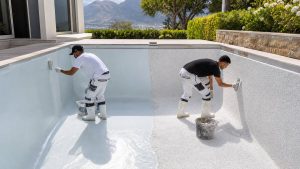
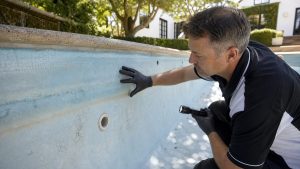
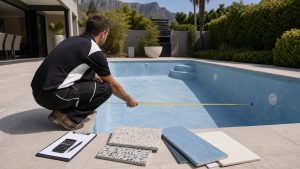
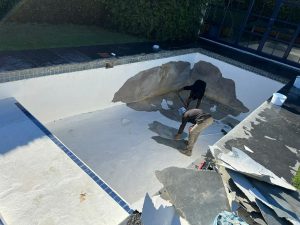
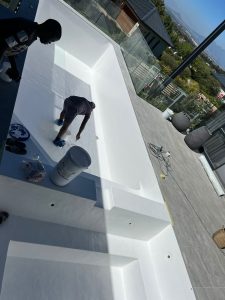
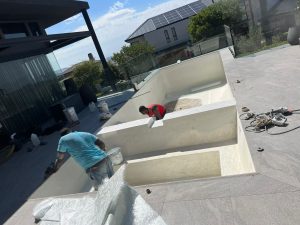
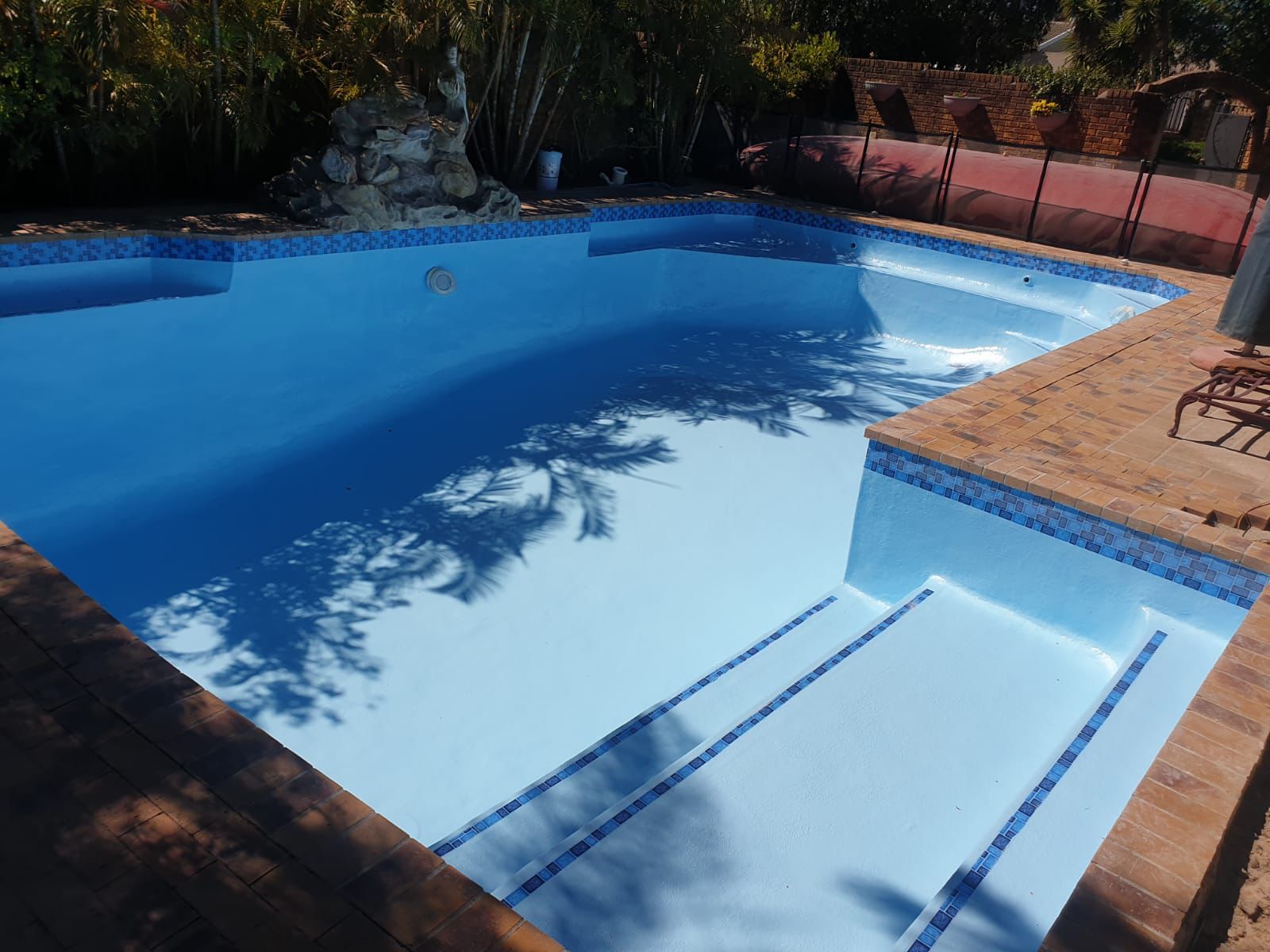
Frequent rain, runoff and fluctuating chemistry all take a toll on the shell of your pool, not just the plant room. Acidic rainwater and neglected balancing can accelerate staining and surface wear over time, especially on older interiors. If you are noticing rough patches, chalky marbelite, or a shell that never quite looks clean after the wet season, it may be time to look beyond the pump. Our team handles full marbelite pool resurfacing in Cape Town as well as durable fibreglass pool lining that stands up far better to the elements.
The bottom line
Run your pump through light rain to keep the water circulating and easier to rebalance, but switch it off and isolate it during heavy storms, lightning, or unstable load-shedding conditions. A little judgement protects both your equipment and your electrical safety. If you would like a hand keeping your pool healthy through the Cape’s wet winters, or you are ready to give a tired pool a proper refresh, take a look at our full range of services on the Aquatic Pools site or get in touch with our team for expert advice.