Your pool skimmer box works quietly in the background, drawing surface water and floating debris into the filtration system before it sinks and clouds your pool. It is easy to ignore until something goes wrong. In Cape Town, where summer heat, salty coastal air and the occasional freeze in the higher-lying suburbs all take their toll, skimmer boxes are one of the more common failure points on an older pool. Knowing when to repair the box and when to replace it can save you water, money and a great deal of frustration.
What the skimmer box does and why it fails
The skimmer box is the rectangular opening set into the wall at the waterline. As the pump runs, it pulls surface water through the throat of the skimmer, past a floating weir door and into a basket that catches leaves and insects. From there the water travels down to the pump and filter. Because the box is cast into the pool shell and connected to underground plumbing, any movement, corrosion or ground shift can compromise it.
The most common reasons a skimmer box starts to fail include:
- Cracks in the plastic body from age, UV exposure and thermal expansion
- A failed seal where the box meets the pool shell, allowing water to seep behind the structure
- Broken or brittle weir doors and lost or cracked baskets
- Deteriorating grout or marbelite around the throat of the skimmer
- Ground movement that shears the pipe connection beneath the box
Signs your skimmer box needs attention
The clearest warning sign is unexplained water loss. If your pool level keeps dropping to just below the skimmer mouth and then stabilises, you almost certainly have a leak at or around the skimmer. That behaviour is a classic tell: the water falls until it reaches the crack, then stops. Damp or spongy ground near the skimmer, air bubbles blowing back into the pool through the returns, and a pump that keeps losing prime are all further clues.
Repair or replace? How to decide
A hairline crack in the upper, above-water section of a plastic skimmer can often be repaired with a suitable pool-grade epoxy or plastic weld, especially if the box is otherwise sound. The same goes for a perished weir door or a broken basket, which are simple, inexpensive parts to swap out. If the damage is cosmetic or limited to easily accessible components, repair is the sensible first step.
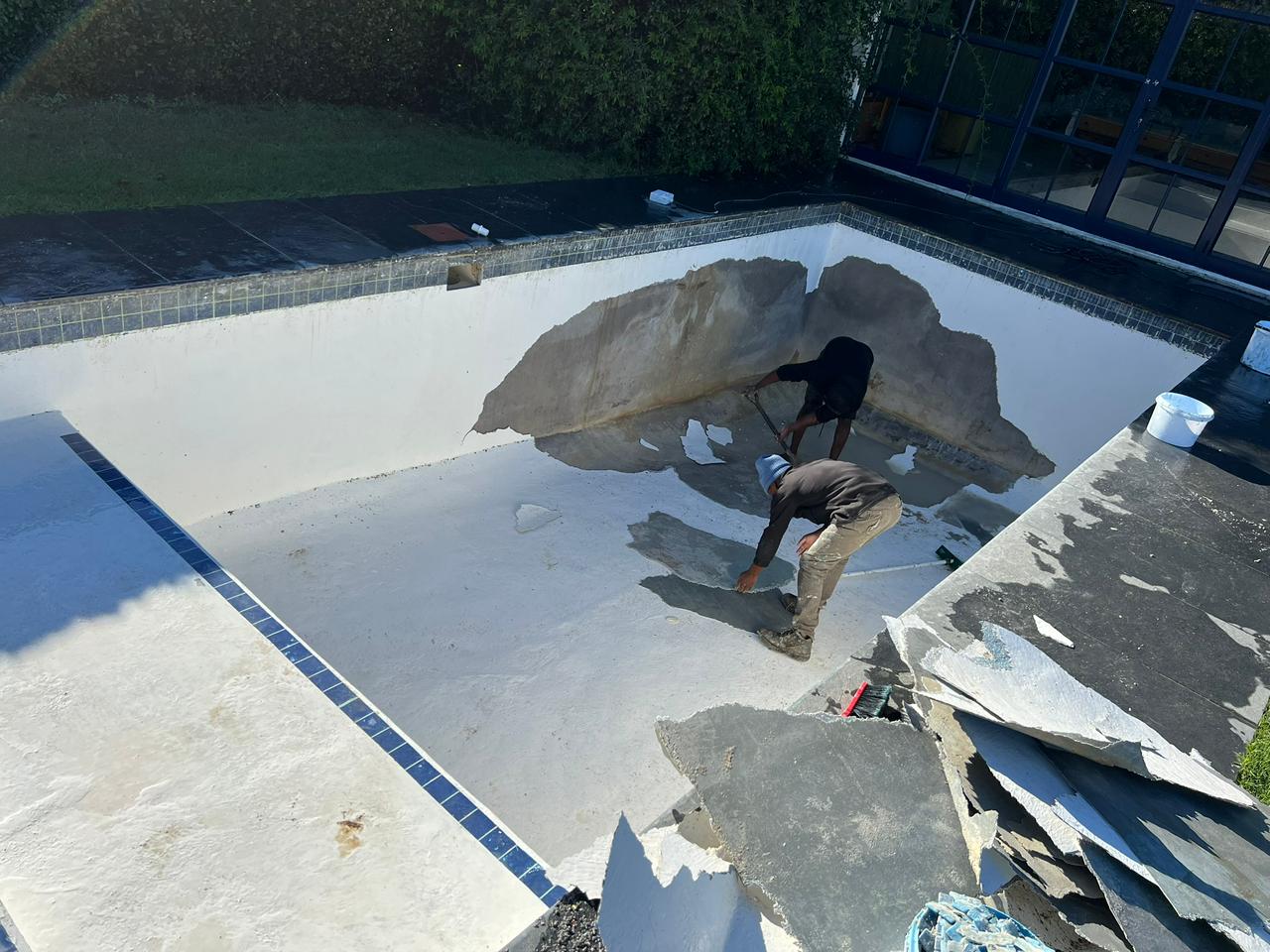
Replacement becomes the better option when the crack runs below the waterline, when the box has separated from the pool shell, or when the underground pipe connection has failed. These leaks are difficult to seal reliably and tend to return. On marbelite and fibreglass pools alike, a failing skimmer that has been leaking for a while can also undermine the surrounding surface, so the repair often needs to be done alongside broader resurfacing work. If your pool is already showing its age, it is worth reading up on marbelite pool resurfacing in Cape Town to understand how skimmer replacement fits into a full refurbishment.
What a professional replacement involves
Replacing a skimmer box is more involved than a quick patch. The old unit has to be cut out of the pool shell, the plumbing checked and reconnected, and the new box bonded and sealed into place before the surrounding surface is made good. On a fibreglass pool the box is integrated with the shell, so a neat, watertight finish matters enormously; our overview of fibreglass pool lining explains how these surfaces are built up and sealed. Done properly, a replacement should outlast the rest of your pool interior.
Preventing future skimmer problems
A little routine care goes a long way. Empty the skimmer basket regularly so debris does not rot and clog the throat, keep your water level roughly halfway up the skimmer opening so the weir can work, and replace brittle weir doors before they jam. In our windier Cape suburbs, clearing leaves after a south-easter blows through will spare your basket a lot of strain. During a proper renovation it is also worth having the skimmer inspected even if it looks fine, since access is easiest while the pool is drained.
When to call in the experts
If you have tried a simple repair and the water loss continues, or if you suspect the leak is below the waterline or in the plumbing, it is time to bring in a professional rather than keep topping up the pool. A specialist can pressure-test the lines, pinpoint the exact fault and advise whether a targeted repair or full replacement makes more sense for your pool. To learn more about our renovation work across the Western Cape, visit our home page, or get in touch for an assessment of your skimmer and surrounding pool surface.