Total alkalinity is one of the most misunderstood numbers on your test kit, yet it quietly controls how stable your pool water stays from week to week. Think of it as a buffer that stops your pH from bouncing around every time it rains or the sun beats down on your Western Cape pool. Get alkalinity right and everything else — pH, chlorine efficiency, comfort for swimmers — becomes far easier to manage. This guide walks you through the ideal range, what to add to raise or lower it, and how to work out the dose for your own pool volume.
What Total Alkalinity Actually Does
Total alkalinity (TA) measures the concentration of dissolved carbonates and bicarbonates in your water. These compounds resist sudden changes in pH by neutralising acids and bases as they enter the pool. When alkalinity is too low, pH becomes unstable and can swing sharply, leading to eye irritation, corrosion of metal fittings and etching of plaster or marbelite surfaces. When it is too high, the water tends to drift towards a high pH, which encourages cloudy water and scale build-up.
In short, alkalinity is the shock absorber and pH is the steering. You want the shock absorber set correctly before you fine-tune anything else.
The Ideal Alkalinity Range
For most residential pools, aim for a total alkalinity of 80 to 120 ppm (parts per million). The exact target within that band depends on your surface:
- Plaster, marbelite and pebble finishes: aim for the lower-to-middle part of the range, around 80–100 ppm.
- Fibreglass and vinyl pools: the middle-to-upper part, roughly 100–120 ppm, often suits these surfaces well.
- Pools using stabilised chlorine tablets: the lower end helps counter the acidic drift these tablets cause over time.
Always test with a reliable kit or take a water sample to a pool shop. Test alkalinity before you adjust pH, because changing alkalinity almost always nudges pH as well.
How to Raise Low Alkalinity
If your reading sits below 80 ppm, you need to add sodium bicarbonate — the same compound sold as bicarbonate of soda, and often labelled “alkalinity increaser” at pool suppliers. It raises TA with only a gentle effect on pH.
As a working guide, roughly 1.5 kg of sodium bicarbonate per 50 000 litres of water raises total alkalinity by about 10 ppm. So a standard 50 000-litre pool that needs to climb from 60 ppm to 100 ppm requires an increase of 40 ppm, which works out to around 6 kg of bicarb.
How to Add It Safely
- Add no more than about half the calculated dose at a time.
- Broadcast it slowly across the deep end with the pump running.
- Wait 6 to 8 hours, let it circulate, then retest before adding more.
Adding in stages prevents overshooting and gives the water time to mix fully.
How to Lower High Alkalinity
When alkalinity climbs above 120 ppm, you lower it with acid — usually hydrochloric acid (sold locally as pool acid or muriatic acid) or dry acid (sodium bisulphate). Acid reduces both alkalinity and pH, so expect to nudge pH back up afterwards with aeration.
The amount depends on how far above range you are and your pool volume, but acid is potent, so restraint matters. Add small amounts, circulate, and retest. A common technique is the “slug” method: pour a measured dose into one spot in the deep end with the pump off, let it sit briefly, then run the pump to lower alkalinity efficiently.
Safety First With Acid
- Always add acid to water, never water to acid.
- Wear gloves and eye protection, and work in a well-ventilated area.
- Never mix acid with chlorine products.
Building Your Own Alkalinity Calculator
You do not need special software — just three numbers: your current alkalinity, your target, and your pool volume in litres. The simple formula for raising alkalinity is:
Bicarb needed (kg) = (Target ppm − Current ppm) ÷ 10 × 1.5 × (Pool litres ÷ 50 000)
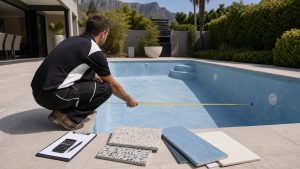
For example, a 30 000-litre pool going from 70 ppm to 100 ppm needs: 30 ÷ 10 × 1.5 × 0.6 = about 2.7 kg of sodium bicarbonate. Round sensibly and add in stages. If you are unsure of your pool volume, measure length, width and average depth in metres and multiply, then multiply by 1 000 to get litres.
When Balancing Isn’t Enough
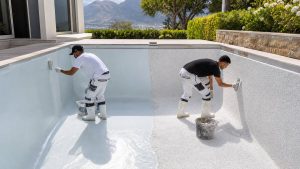
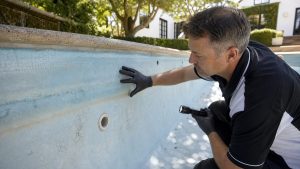
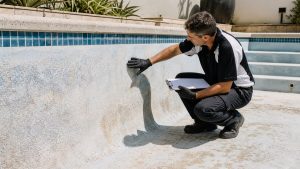
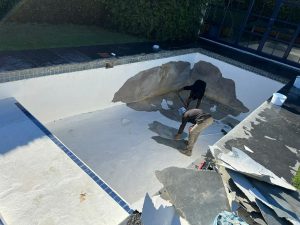
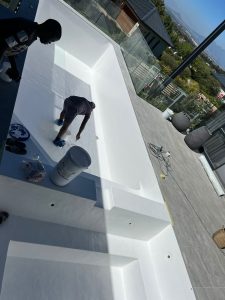
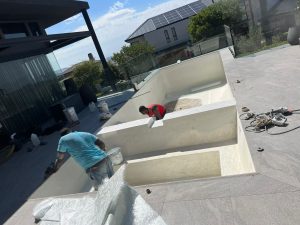
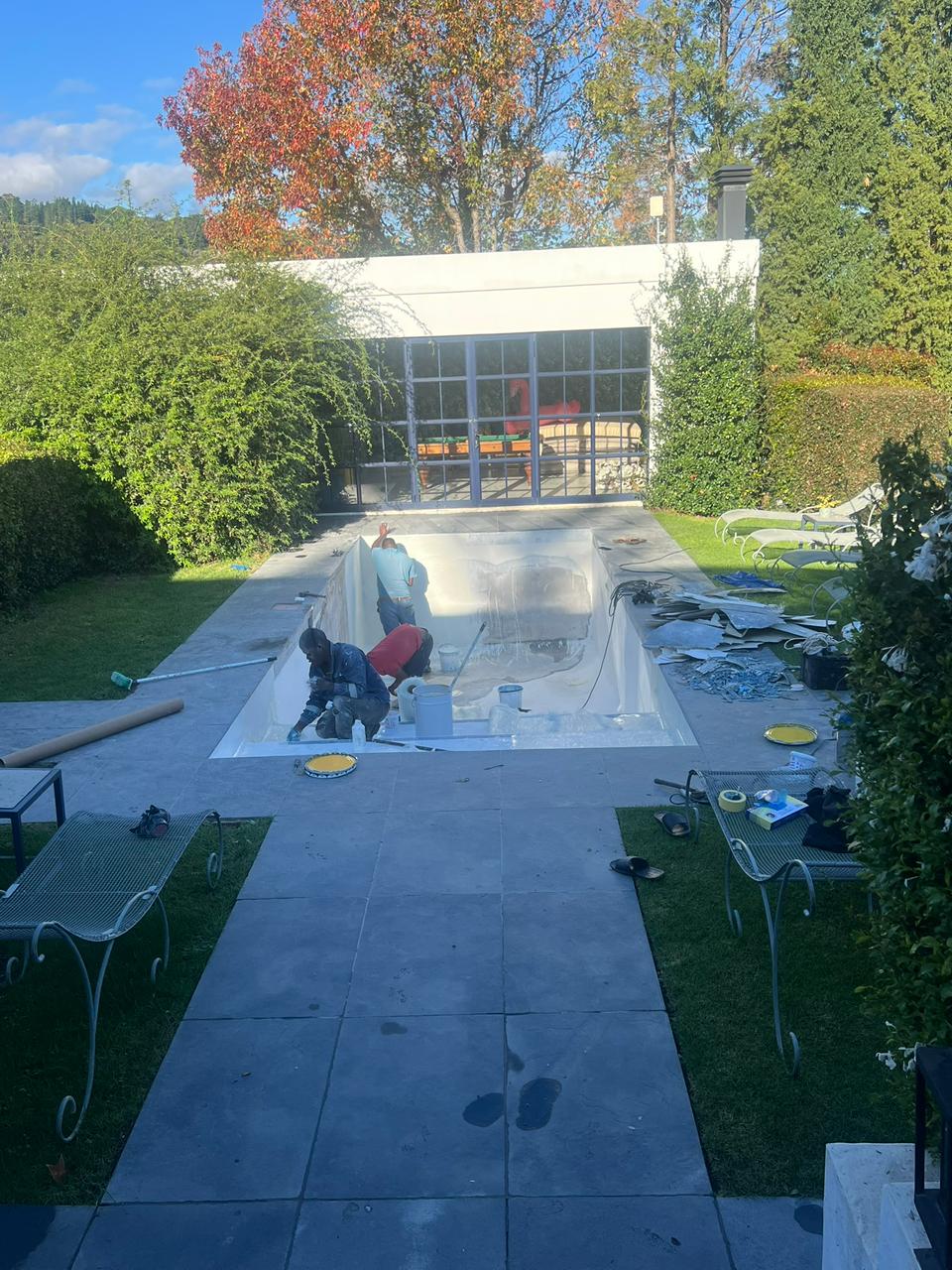
Persistent alkalinity problems sometimes point to a deeper issue — a porous or degraded surface leaching minerals, or fill water that is unusually hard. If your marbelite is rough, chalky or constantly hungry for chemicals, resurfacing may solve the root cause. Our team handles marbelite pool resurfacing in Cape Town as well as durable fibreglass pool lining that gives you a smoother, more chemically stable finish.
Balanced water is the foundation of a pool that stays clear with minimal effort. If you would rather have the whole job checked over by professionals, browse the services on the Aquatic Pools website or simply get in touch for advice tailored to your pool and your corner of the Western Cape.