Cloudy water, a faint chlorine smell, or a green tinge after a hot Cape Town weekend usually means one thing: your pool needs a shock treatment. But guessing the dose leads to wasted chemicals, damaged surfaces, or water that still isn’t safe to swim in. This guide works like a pool shock calculator, walking you through how to estimate the right amount of shock based on your pool volume and current chlorine level, and how to do it safely.
What Does “Shocking” a Pool Actually Do?
Shocking means adding a large, deliberate dose of chlorine (or a non-chlorine oxidiser) to rapidly raise the free chlorine level. This burns off chloramines, kills algae and bacteria, and clears organic waste like sunscreen, sweat, and leaves that normal daily chlorine can’t keep up with. The goal is to reach a point called breakpoint chlorination, which we explain below.
Step 1: Know Your Pool Volume
Every dosing calculation starts with volume in litres. If you don’t already know it, estimate with a simple formula:
- Rectangular pool: length × width × average depth × 1000 = litres
- Circular pool: diameter × diameter × average depth × 785 = litres
- Oval pool: length × width × average depth × 893 = litres
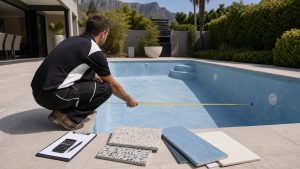
A typical suburban pool of around 8m × 4m with an average depth of 1.5m holds roughly 48,000 litres. Accurate volume matters, so if your pool has an irregular shape or you’re unsure, our team can measure it during a site visit.
Step 2: Test Your Current Chlorine and Combined Chlorine
Use a good test kit or strips to read two values: free chlorine (FC) and total chlorine (TC). The difference between them is combined chlorine (chloramines), the stuff that irritates eyes and smells strongly. The larger that gap, the more shock you need.
As a working rule, aim to reach a free chlorine level roughly ten times your combined chlorine reading. If combined chlorine is 1.0 ppm, you’re targeting about 10 ppm of free chlorine to hit breakpoint.
Understanding Breakpoint Chlorination
Breakpoint is the threshold where you’ve added enough chlorine to destroy chloramines completely rather than just partially. Under-dose and you create more combined chlorine and worse odour. That’s why a proper shock is a big, single dose, not a series of small top-ups.
Step 3: Estimating the Dose
Most granular calcium hypochlorite shock is around 65-70% available chlorine. As a general guide, roughly 15-20 grams of this granular shock per 1,000 litres raises free chlorine by about 3 ppm. So a 48,000-litre pool needing a solid shock would use in the region of 700g to 1kg of granular product for a standard treatment, and more for heavy algae.
Always treat these figures as estimates and follow the dosing panel on your specific product, since concentrations vary between brands. When in doubt, start on the conservative side, retest, and add more.
Granular vs Liquid Shock
- Granular (calcium hypochlorite): Strong, cost-effective, and easy to store, but it can raise calcium hardness over time and should be pre-dissolved in a bucket of water before adding.
- Liquid (sodium hypochlorite): Fast-acting and easy to pour, with no calcium build-up, but it’s bulkier and loses strength in storage.
- Non-chlorine (potassium monopersulfate): Oxidises contaminants without raising chlorine, useful when you want to swim sooner, but it won’t kill algae.
Step 4: Apply It Safely
Chlorine shock is a powerful chemical, so handle it with care:
- Shock in the early evening so the sun doesn’t burn off the chlorine before it works.
- Run the filter pump for at least 8 hours after dosing to circulate the treatment.
- Pre-dissolve granular shock and add it to the water, never add water to the chemical.
- Wear gloves and eye protection, and never mix different shock products together.
- Wait until free chlorine drops back below about 3 ppm before swimming again.
When Shocking Isn’t Enough
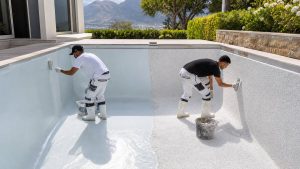
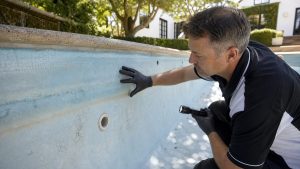
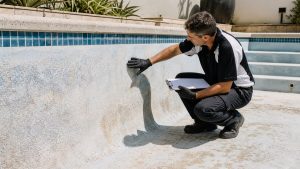
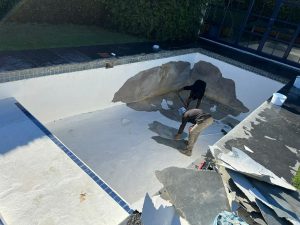
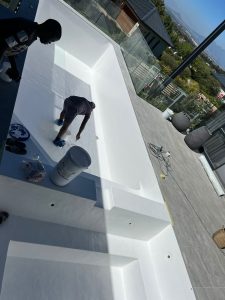
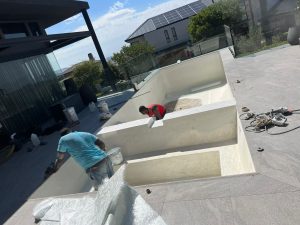
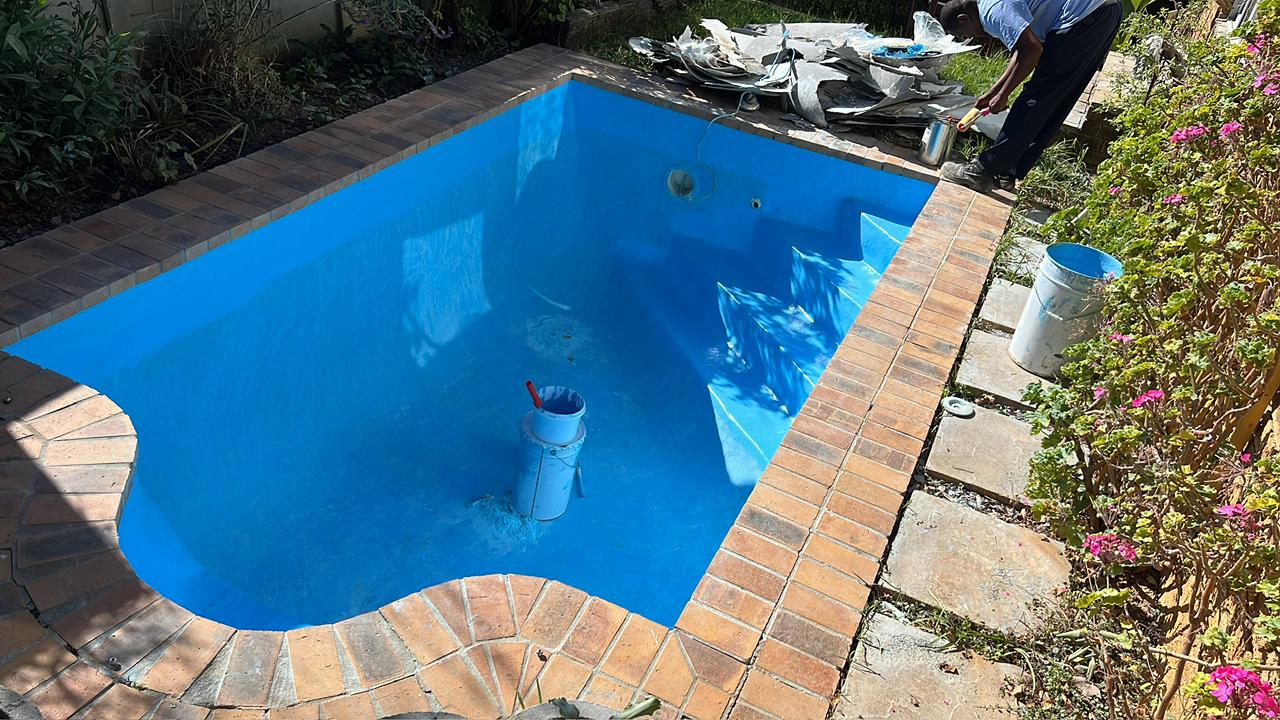
If your pool keeps going cloudy or green no matter how carefully you dose, the problem may not be chemistry at all. A failing surface, hairline cracks, or a porous, chalky finish give algae somewhere to cling and make balanced water almost impossible to maintain. In those cases, resurfacing is the real fix. We handle marbelite pool resurfacing in Cape Town for exactly this. We also fit durable fibreglass pool lining that gives you a smooth, non-porous surface far easier to keep clear.
Keep Your Water Balanced
A shock treatment is a reset, not a routine. Test weekly, keep your pH between 7.2 and 7.6 so the chlorine works efficiently, and shock roughly every one to two weeks in peak summer or after heavy use. Get the balance right and you’ll spend less on chemicals and more time actually enjoying the water. To learn more about looking after your pool or to book a professional assessment, visit Aquatic Pools.