Few things frustrate a pool owner more than walking outside to a green, cloudy pool after a warm Cape Town weekend. Algae blooms are the most common water-quality problem local pools face, and our climate — hot dry summers, the odd humid spell, and strong Southern Suburbs sun — gives algae plenty of chances to take hold. The good news is that once you understand what algae is, why it appears, and how to stay ahead of it, keeping your water clear becomes routine rather than a battle.
What Is Pool Algae?
Algae are microscopic plant-like organisms that arrive on the wind, on swimwear, or on garden debris. A few spores are harmless, but when they find warm water, sunlight, and something to feed on, they multiply fast — sometimes turning a sparkling pool green overnight. Beyond looking unpleasant, algae make surfaces slippery, clog filters, and consume the chlorine your pool needs to stay sanitised.
The Main Types of Algae
Not all algae behave the same way, and knowing which type you are dealing with shapes how you treat it.
Green Algae
By far the most common, green algae float freely and cling to walls and floors. They respond well to chlorine and brushing, which makes them the easiest to clear — as long as you act quickly.
Mustard (Yellow) Algae
This dusty, yellow-brown algae favours shaded corners and steps. It is more chlorine-resistant than green algae and often returns if you do not scrub every surface thoroughly.
Black Algae
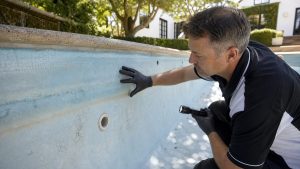
The toughest of the lot, black algae form dark spots with deep roots that dig into rough or porous surfaces. Older marbelite and cracked plaster give black algae exactly the footholds they need, which is why surface condition matters so much.
Why Algae Blooms Happen in Cape Town
Several conditions common to our region push a pool towards an algae bloom:
- Warm water and strong sun during summer speed up algae growth and burn off chlorine faster.
- Low or unbalanced chlorine, often after a busy weekend of swimming or a heatwave.
- Poor circulation from running the pump too few hours a day, leaving dead spots where algae settle.
- Wind-blown debris — the Cape Doctor carries leaves, dust and spores straight into open pools.
- Rough or damaged surfaces that trap algae and shelter them from brushing and chemicals.
How to Prevent Algae
Prevention is far easier than treatment. A consistent routine keeps blooms from ever getting started:
- Keep chlorine within the recommended range and test the water regularly, especially in summer.
- Maintain balanced pH — when pH drifts high, chlorine becomes far less effective.
- Run your pump long enough each day to circulate and filter the entire volume.
- Brush walls, steps and shaded corners weekly to dislodge spores before they colonise.
- Skim debris promptly and rinse swimwear and toys that may carry spores.
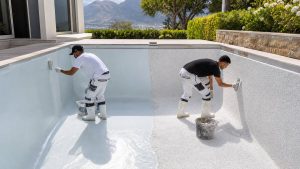
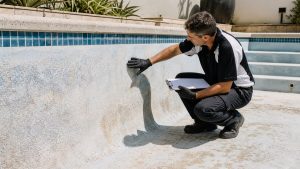
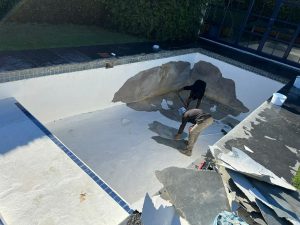
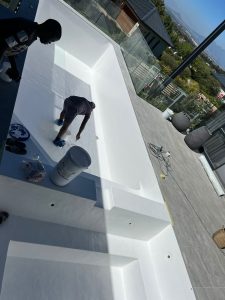
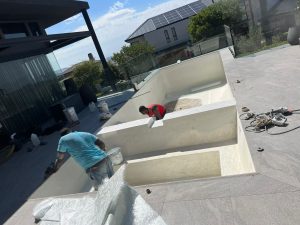
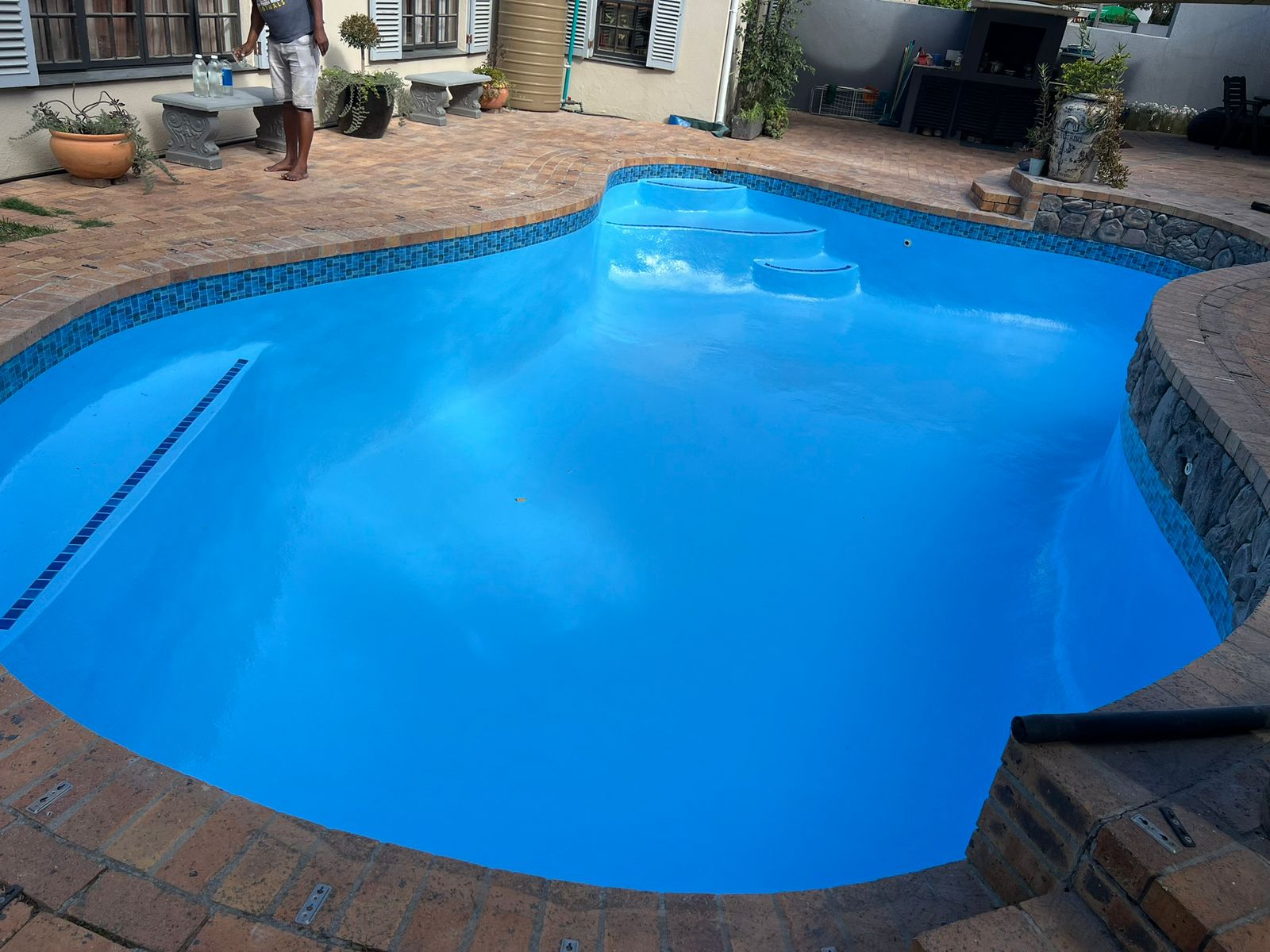
A smooth, well-sealed interior surface is one of the strongest defences of all. Algae struggle to anchor on non-porous finishes, which is why a sound lining does much of the work for you. If your pool is showing chalky patches, rough spots or hairline cracks, it may be time to consider marbelite pool resurfacing in Cape Town or a durable, algae-resistant fibreglass pool lining to remove the footholds algae rely on.
How to Treat an Algae Outbreak
If your pool has already turned, work through these steps methodically rather than reaching straight for a single miracle product:
- Test and balance the pH first so your chlorine can do its job.
- Brush every surface — walls, floor, steps and corners — to break up the algae.
- Shock the pool with a strong dose of chlorine, repeating for stubborn mustard or black algae.
- Run the filter continuously until the water clears, backwashing or cleaning it as needed.
- Vacuum settled dead algae to waste once the bloom dies off.
Green algae often clear within a day or two of proper treatment. Mustard and black algae take more persistence, and recurring outbreaks usually point to a deeper cause — frequently a worn or porous surface that no amount of chlorine will fully fix.
When to Call in the Experts
If you are shocking your pool every few weeks and the algae keep coming back, the problem is rarely your chemicals — it is the surface underneath. Persistent black algae, chalky marbelite, or a lining that feels rough underfoot are all signs the interior needs attention. Restoring a smooth, sealed finish not only clears the algae for good but also cuts your ongoing chemical costs.
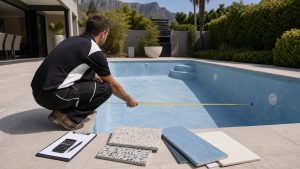
At Aquatic Pools we help Cape Town pool owners tackle stubborn algae at the root, from resurfacing tired interiors to installing long-lasting fibreglass linings. If you are tired of fighting the same green pool every summer, get in touch for advice tailored to your pool.