If you own a salt-chlorinated pool in Cape Town or anywhere across the Western Cape, one question comes up again and again: how much salt do I actually need to add? Too little and your chlorinator stops producing chlorine, leaving your water vulnerable to algae under the summer sun. Too much and you risk scale, corrosion and a low-salt light that never seems to switch off. The good news is that working it out is straightforward once you know two numbers: your pool’s volume and the gap between your current and target salt level.
Why Salt Levels Matter in a Saltwater Pool
A saltwater pool is not chlorine-free. Instead, dissolved salt passes through a salt chlorinator (also called a salt cell), which uses electrolysis to convert it into chlorine that sanitises the water. The chlorine eventually reverts back to salt, so the salt is recycled rather than consumed. That means once your pool is at the right level, you top up only occasionally — usually after heavy rain, splash-out, backwashing or a partial refill dilutes the water.
Most residential chlorinators are designed to run within a specific salt range. A common target sits somewhere between 3000 and 3500 ppm (parts per million), but this varies by brand and model. Always check the plate or manual on your own chlorinator before dosing, because running outside the recommended band can trip safety cut-offs or shorten the life of the cell.
Step One: Know Your Pool Volume
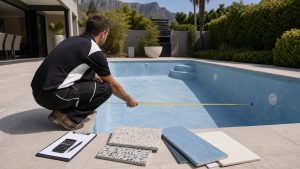
Everything starts with volume. If you already know your pool holds, say, 40 000 litres, you are halfway there. If not, you can estimate it from the dimensions:
- Rectangular pool: length × width × average depth × 1000 = litres (using metres).
- Circular pool: diameter × diameter × average depth × 785 = litres.
- Irregular or freeform shapes: break the pool into simple sections, work each out, then add them together.
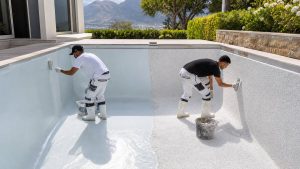
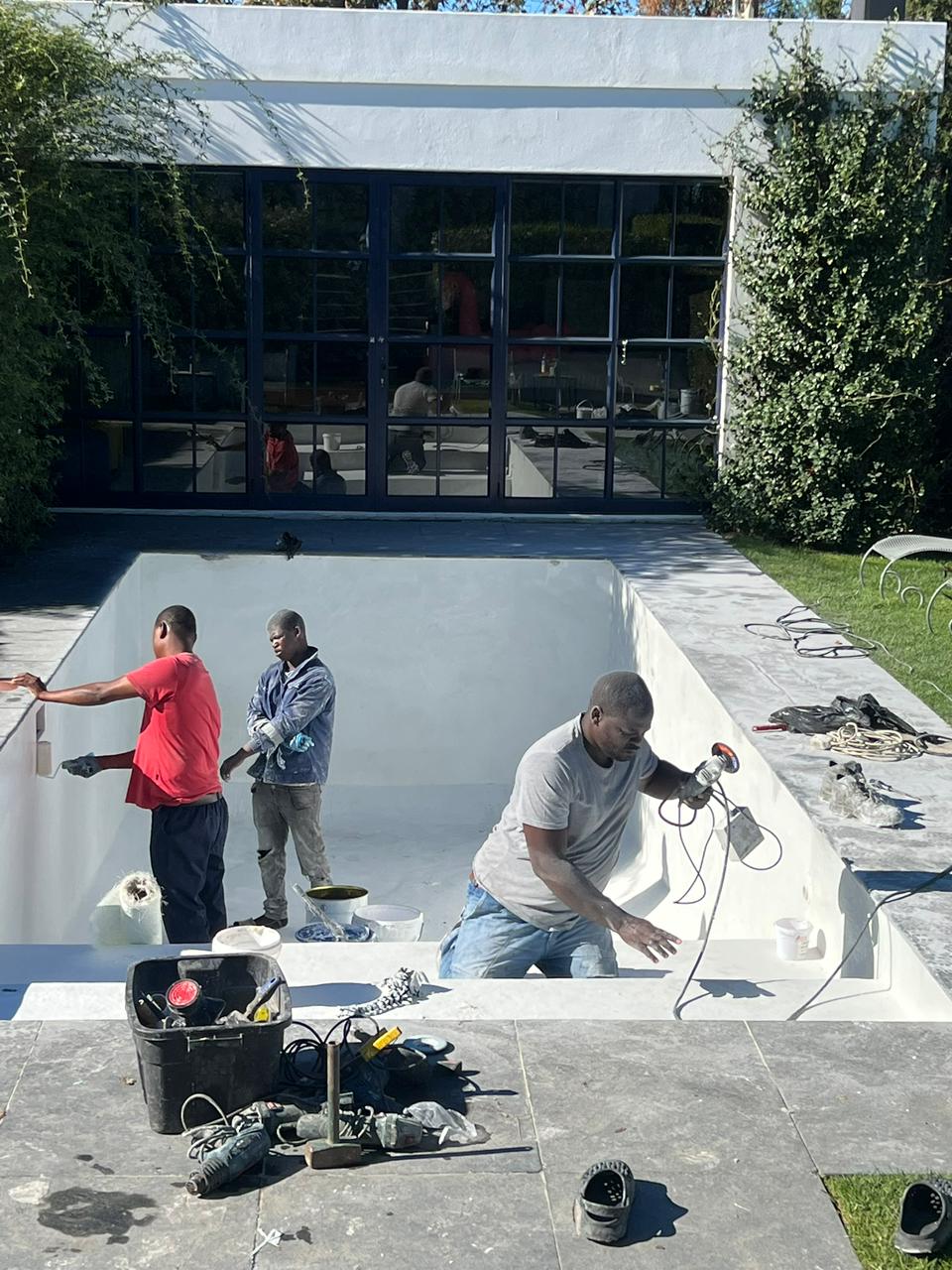
Average depth matters for pools that slope from a shallow to a deep end — add the shallowest and deepest depths together and divide by two. If your pool has been resurfaced or reshaped, such as after a marbelite pool resurfacing project, re-measure rather than relying on old figures, because the internal volume may have changed.
Step Two: Test Your Current Salt Level
Before adding anything, measure what is already in the water. You can use test strips designed for salt, a handheld digital salt meter, or ask your local pool shop to run a sample. Many modern chlorinators also display an estimated salt reading, though these can drift over time and are best confirmed with an independent test.
Write down your current reading in ppm. The difference between this figure and your target is what your calculation is based on. If your reading already sits within the manufacturer’s band, you may not need to add anything at all.
Step Three: The Pool Salt Calculator Method
The core formula is simpler than it looks. To raise your salt level, work out how many grams per litre you need to add, then multiply by your volume:
- Subtract your current ppm from your target ppm to find the gap, the same approach behind our pool alkalinity calculator.
- 1 ppm is equal to 1 gram of salt per 1000 litres of water.
- So salt needed (kg) = (target ppm − current ppm) ÷ 1000 × pool litres ÷ 1000.
As a worked example, imagine a 40 000-litre pool reading 2500 ppm with a target of 3200 ppm. The gap is 700 ppm. That works out to 0.7 grams per litre, which across 40 000 litres is 28 000 grams — or 28 kg of pool salt. Always round to whole bags and add slightly less than you think you need; it is far easier to add more salt than to dilute an over-salted pool.
Adding the Salt Safely
Use salt specifically sold for pools, and broadcast it slowly across the surface with the pump running on circulation. Brush any granules off the pool floor so they dissolve rather than sitting against the surface. Give it 24 hours of circulation before re-testing, and keep the salt cell’s diagnostic function in mind — wait for the water to mix fully before trusting a new reading.
When Salt Problems Point to Something Bigger
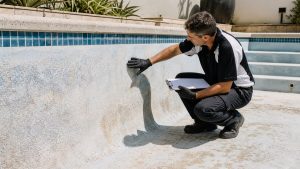
If you find yourself constantly topping up salt, the issue may not be the salt at all. Persistent water loss can signal a leak, while staining, roughness or a chalky feel often means the interior surface is failing. In older pools, a worn shell can be renewed with fibreglass pool lining to seal and smooth the surface, which also makes water balance easier to maintain going forward.
Getting your salt level right is one of the simplest ways to keep a Cape Town pool clear, gentle on the skin and cheap to run. If you are unsure about your volume, your chlorinator’s ideal range, or whether a bigger repair is on the cards, the team at Aquatic Pools is happy to help. Our full range of pool services covers repairs, resurfacing and salt systems alike.
Feel free to get in touch for advice tailored to your pool.